
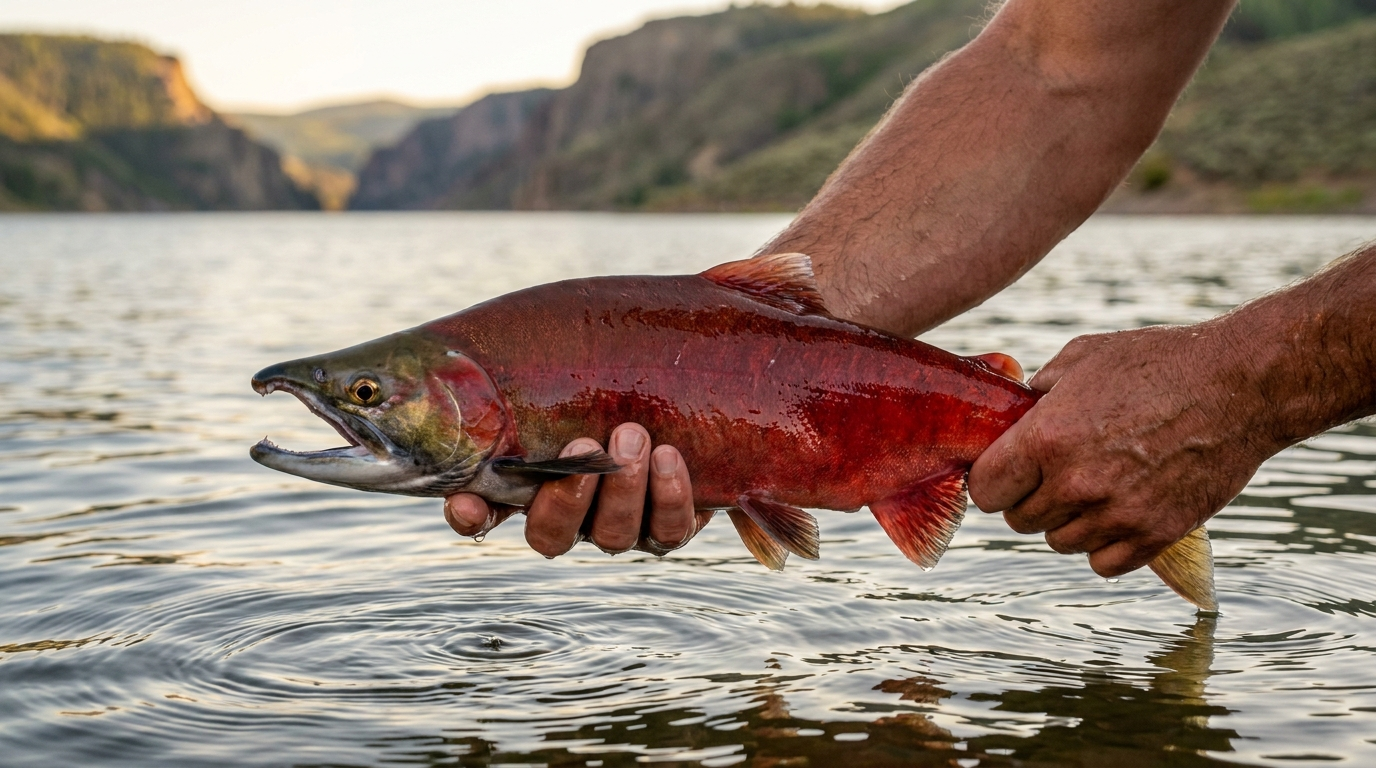
Blue Mesa Reservoir is Colorado's largest lake and one of the best kokanee salmon fisheries in the entire Rocky Mountain West - that combination alone makes it a destination I take seriously. The lake trout fishery in the deep water near the dam reaches into extreme depths, and the rainbow and brown trout populations are strong throughout the lake's three basins. Fishing at over 7,500 feet elevation in Curecanti Canyon is an experience I genuinely cannot wait to have.
Today's Bite Score · October 8, 2026
Very favorable conditions for catching fish
🌘Waning Crescent
Blue Mesa Reservoir Fishing Report
October FishingMonthly fishing report · October patterns and techniques
Blue Mesa Reservoir anglers are finding conditions shifting as October progresses, with water temperatures beginning to moderate from summer highs. Fish behavior is changing this month as cooler conditions influence feeding patterns and movement throughout the reservoir. Water levels and clarity continue to play a role in fish location and angler success at this popular destination.
Anglers are finding that both warm-water and cold-water species remain active in October at Blue Mesa. Trout, which were stressed during warmer summer months when water temperatures approached and exceeded 71 degrees, are becoming more responsive as conditions cool. Kokanee salmon and other species in the reservoir are also showing increased feeding activity this month. Fish are beginning to transition to deeper structure and cooler water pockets as they adjust to seasonal changes.
The bite is most productive for anglers using techniques suited to October conditions at Blue Mesa. Live bait presentations and trolling remain effective methods this month for targeting multiple species throughout the water column. Anglers should focus on areas with adequate depth and structure, adjusting their approach based on water temperature and species behavior. Early morning and late afternoon periods often produce the best results as anglers work to land fish quickly and efficiently.
Get More Fishing Report Specifics
Tap a topic button below for a report on current conditions.
Tap a topic above to get a current report for Blue Mesa Reservoir.
Answers are generated on demand and cached. No AI call fires until you tap a tab.
Blue Mesa Reservoir Fishing Guides
Looking for a Blue Mesa Reservoir fishing guide? Colorado's largest body of water sits at elevation with kokanee and trophy brown trout patterns that change dramatically by season — local guides track that movement all year long. Here are 4 fishing guides for Blue Mesa Reservoir that are worth checking out.
Blue Mesa Reservoir Fishing Strategies by Species
Seasonal patterns and techniques by target species · Verified against official sources
Kokanee salmon, rainbow trout, brown trout, lake trout, and northern pike are the primary sport fish at Blue Mesa Reservoir, a 9,180-acre Bureau of Reclamation reservoir on the Gunnison River in Gunnison County, Colorado. Blue Mesa Dam was completed in 1965. At 7,519 feet elevation, Blue Mesa is Colorado's largest body of water and is managed by Colorado Parks and Wildlife within Curecanti National Recreation Area (National Park Service). The lake is renowned as the premier kokanee salmon fishery in the Rocky Mountain West. Colorado Parks and Wildlife regulations apply. Verify current regulations at cpw.state.co.us before fishing.
Blue Mesa Reservoir Kokanee Salmon Fishing Report
Kokanee salmon are the signature species at Blue Mesa Reservoir and the reason most serious Colorado anglers make the trip to Gunnison County. Kokanee are landlocked sockeye salmon that were stocked in Blue Mesa in the 1960s and have established a reproducing population supplemented by annual Colorado Parks and Wildlife stocking. The lake produces exceptional kokanee, and the annual kokanee run in late summer and early fall - when fish transition from silver to their brilliant red spawning coloration and move toward the Gunnison River inlet and tributary streams - is one of the most spectacular fishing events in the Rocky Mountain West. CPW manages the kokanee program aggressively with both stocking and harvest regulation. Trolling is the primary kokanee technique at Blue Mesa. Small spoons, wedding ring spinners, and kokanee-specific lures trolled at 15 to 40 feet produce fish throughout the open-water season from May through September. The three basins of Blue Mesa - Iola, Cebolla, and the main dam basin - all hold kokanee, and locating the thermocline with a fish finder is essential for consistent trolling success. Colorado CPW installs kokanee counting stations and provides seasonal updates on fish distribution and trolling depths. The fall spawn run from late August through October concentrates fish near the Gunnison River inflow and draws crowds of anglers fishing jigs, small spinners, and casting spoons for the brilliantly colored spawning fish. Colorado Parks and Wildlife regulations apply to kokanee salmon at Blue Mesa: verify current size and bag limits at cpw.state.co.us before fishing.
Blue Mesa Reservoir Rainbow Trout Fishing Report
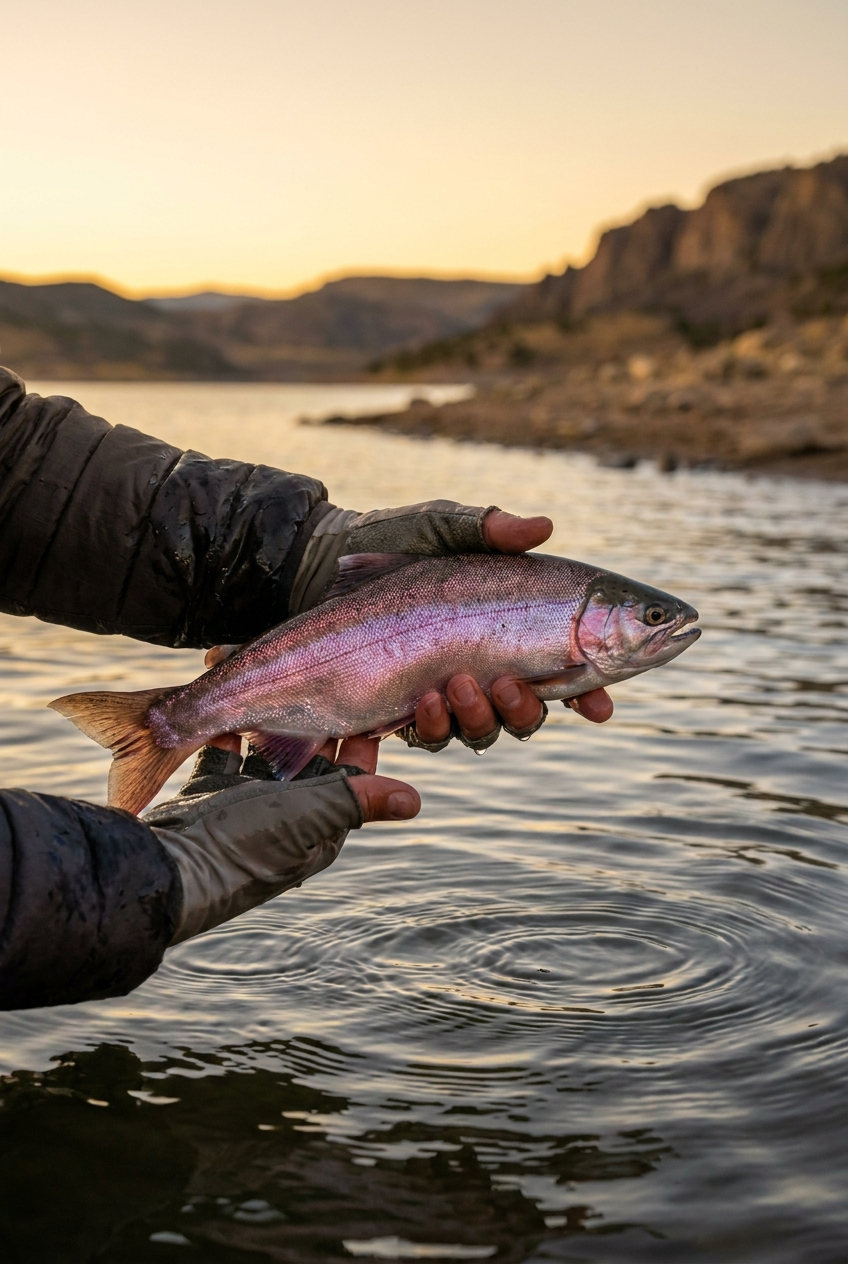
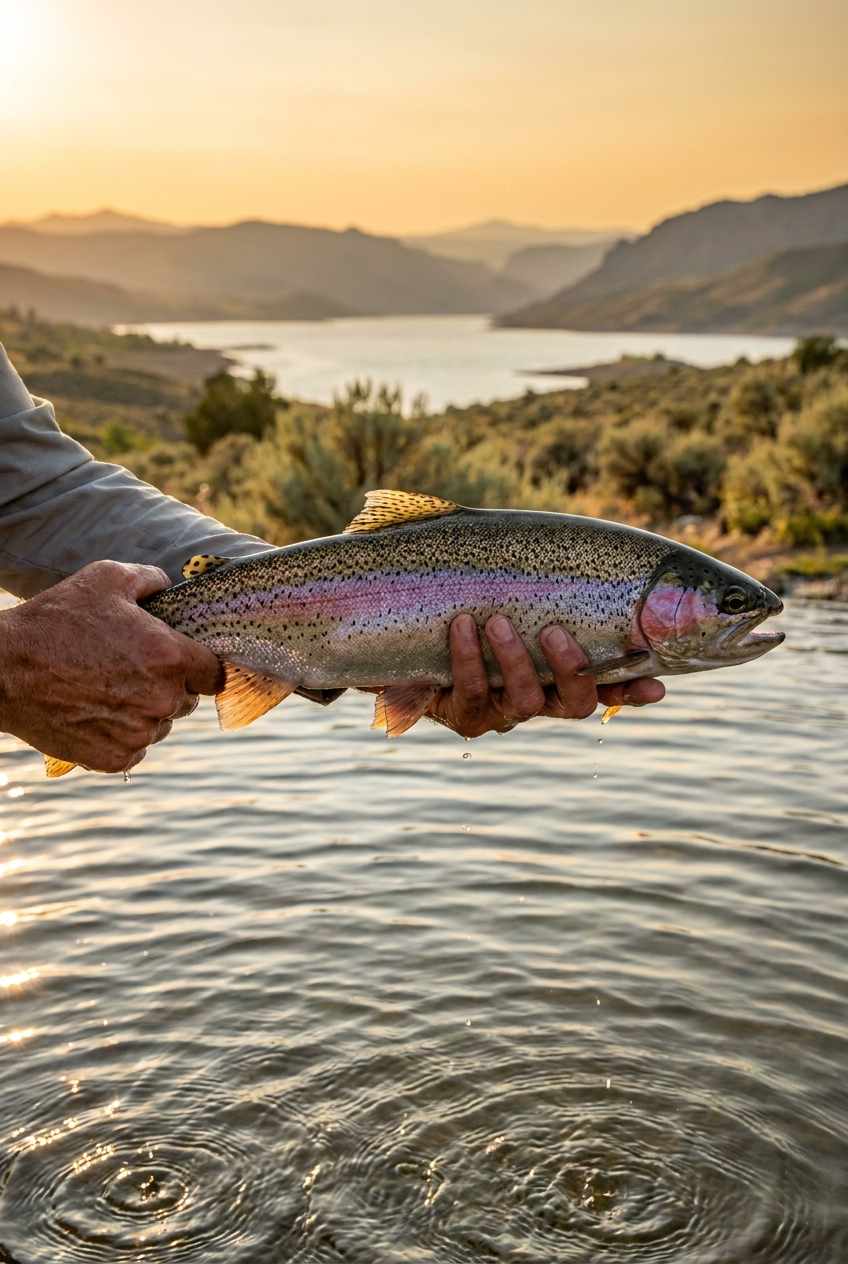
Rainbow trout are well-distributed throughout Blue Mesa Reservoir and are the most accessible trout species for shore anglers and trollers working the shallower sections of the lake. CPW stocks rainbow trout in Blue Mesa annually, and wild fish supplement the stocked population in the tributary streams. The Iola Basin at the upper end of the lake, the coves and bay areas near the Elk Creek marina, and the shallower sections along the Gunnison River arm all hold rainbow trout that are accessible to shore anglers and small-boat fishermen. Small spinners, PowerBait, and worms fished near the bottom from shore produce rainbow trout throughout the season. Trolling for rainbow trout at Blue Mesa is effective at shallower depths than the kokanee program - typically 5 to 20 feet along the lake margins and near the tributary inflows. Small spoons, minnow-imitating crankbaits, and spinner-and-worm combinations trolled slowly along the shoreline produce rainbow trout from late April through October. Shore fishing from the National Recreation Area campgrounds and access points with PowerBait or inflated worms on a slip sinker rig produces consistent rainbow trout throughout the season. The upper lake sections near the Gunnison River inflow at the Iola Basin hold particularly good early-season rainbow action when runoff brings fresh water into the reservoir. Colorado Parks and Wildlife regulations apply: verify current size and bag limits at cpw.state.co.us before fishing.
Blue Mesa Reservoir Brown Trout Fishing Report
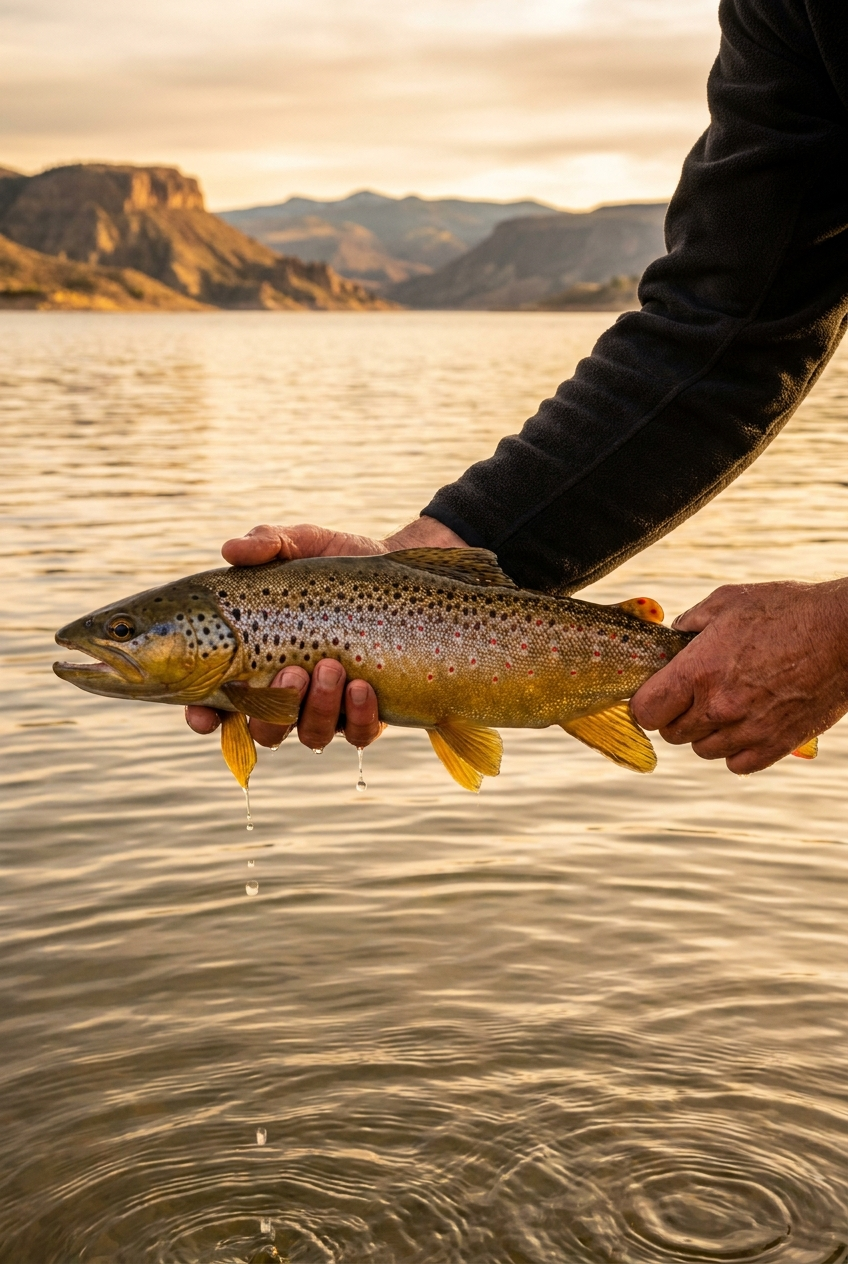
Brown trout are an important and often trophy-sized component of the Blue Mesa fishery. The lake's cold, deep water, extended growing season at elevation, and excellent forage base support brown trout reaching impressive sizes. Large brown trout at Blue Mesa relate heavily to the rocky shoreline transitions, the deeper cove structures, and the inlet areas where tributary streams enter the reservoir. The Gunnison River arm and the Cimarron River tributaries in the Iola Basin are key brown trout habitat zones where fish can access both the river and the lake throughout the season. Brown trout at Blue Mesa are most catchable in the evening, early morning, and overnight hours when large fish move shallower to feed on invertebrates and small forage fish along the rocky shoreline. Streamers trolled or cast along the rocky transitions at 5 to 18 feet produce the largest browns during the low-light periods. Fall is the prime brown trout season as fish enter pre-spawn mode and feed aggressively in October and November, moving into the shallower rocky areas and tributary inflows. A large articulated streamer or a Rapala-style minnow bait trolled slowly along the rocky cliff faces and boulder fields produces the biggest brown trout in the reservoir. Colorado Parks and Wildlife regulations apply: verify current size and bag limits at cpw.state.co.us before fishing, as trophy regulations may apply to large brown trout.
Blue Mesa Reservoir Lake Trout Fishing Report
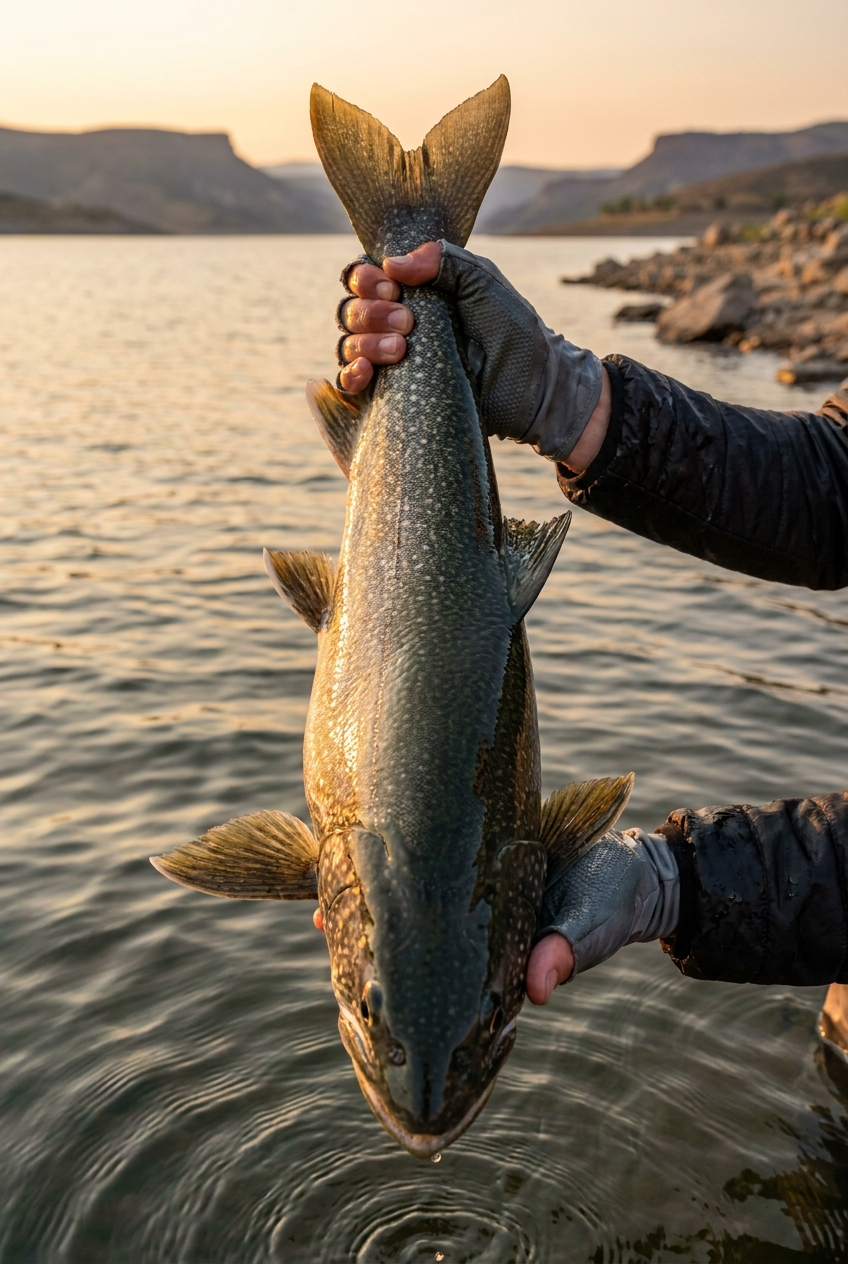
Lake trout - also called mackinaw - inhabit the deepest sections of Blue Mesa Reservoir and represent a specialized fishery requiring dedicated deep-water technique. The 338-foot maximum depth near Blue Mesa Dam provides ideal lake trout habitat, and fish occupy the 60 to 200-foot depth range throughout most of the year, moving somewhat shallower in early spring and fall when surface water temperatures are cold. Blue Mesa lake trout can reach very large sizes due to the deep cold water and abundant prey fish, including the kokanee salmon that make up a significant portion of their diet. Ice fishing for lake trout in winter is a significant Blue Mesa tradition, with anglers using tip-ups with large sucker meat or jigging large spoons and swimbaits at 40 to 100 feet through the ice from late November through March. Open-water lake trout fishing requires downriggers or lead-core line to reach fish in the 60 to 150-foot range during summer. Large jigging spoons worked vertically near the bottom in the deepest sections of the main basin and the area near the dam produce lake trout during open-water months. Fall lake trout fishing improves as water temperatures drop and fish move somewhat shallower on the main basin rock transitions. Colorado Parks and Wildlife regulations apply to lake trout at Blue Mesa: verify current size and bag limits at cpw.state.co.us before fishing.
Blue Mesa Reservoir Northern Pike Fishing Report
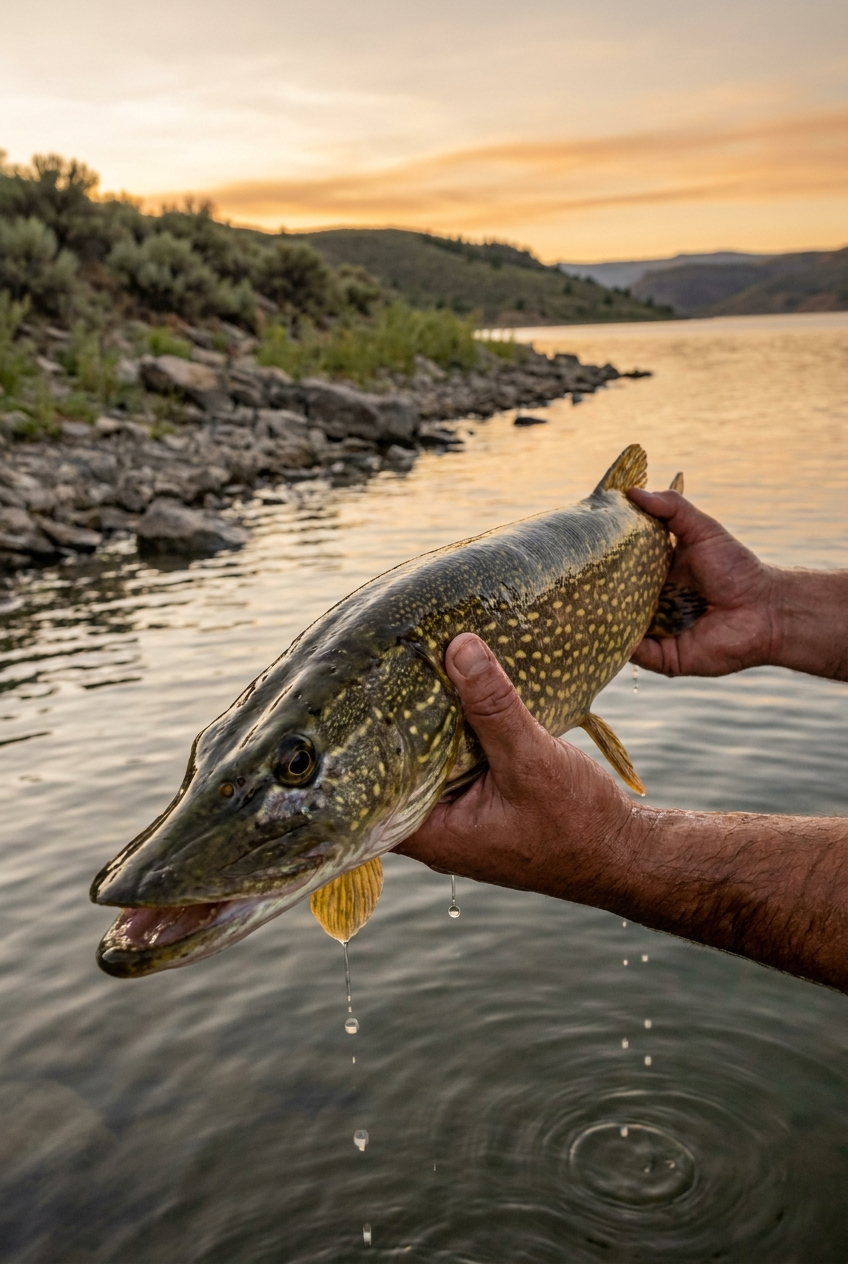
Northern pike are present in the upper Iola Basin and shallow cove areas of Blue Mesa Reservoir and provide aggressive fishing for anglers targeting the species in the warmer, shallower sections of the lake. Pike at Blue Mesa are primarily associated with the weed edges, rocky transitions, and the tributary mouth areas in the upper lake where water is shallowest and warmest. Large spinnerbaits, swimbaits, and flashy spoons retrieved quickly through the shallow transition areas produce pike strikes. CPW manages pike as a secondary species at Blue Mesa, and the population exists naturally in the upper lake sections. Spring is the most productive pike season at Blue Mesa as fish move into the very shallow water - sometimes just 2 to 4 feet - around the upper basin weeds and rocky margins during their spawning period, typically in March and April when ice is still retreating from the lake. Casting large spinnerbaits and swimbaits along the shallow weed edges and rock transitions produces the most aggressive pike of the year during this period. Summer pike retreat to the slightly deeper weed edges and rocky structure at 5 to 12 feet as water temperatures warm. Fall pike feeding builds through September and October, providing another reliable catching window before the lake freezes in winter. Colorado Parks and Wildlife regulations apply to northern pike: verify current size and bag limits at cpw.state.co.us before fishing.
Before you head out, check your line. If it's been sitting on the reel all winter or has seen a lot of rocks and timber, it's worth replacing before a serious trip. I order most of my braid from Reaction Tackle and have been happy with it.
Top Fish to Target in Blue Mesa Reservoir
Lures for Blue Mesa Reservoir
Tackle matched to this lake's species and structure.
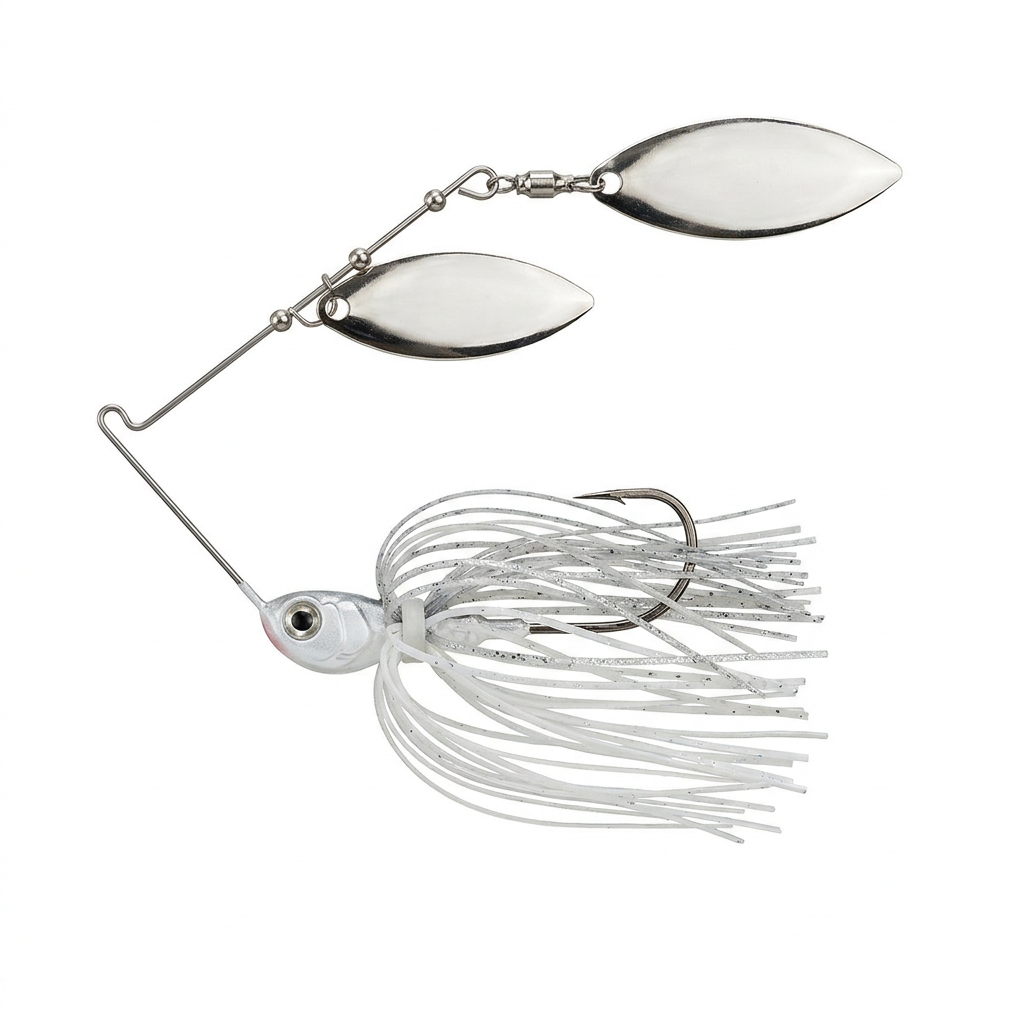
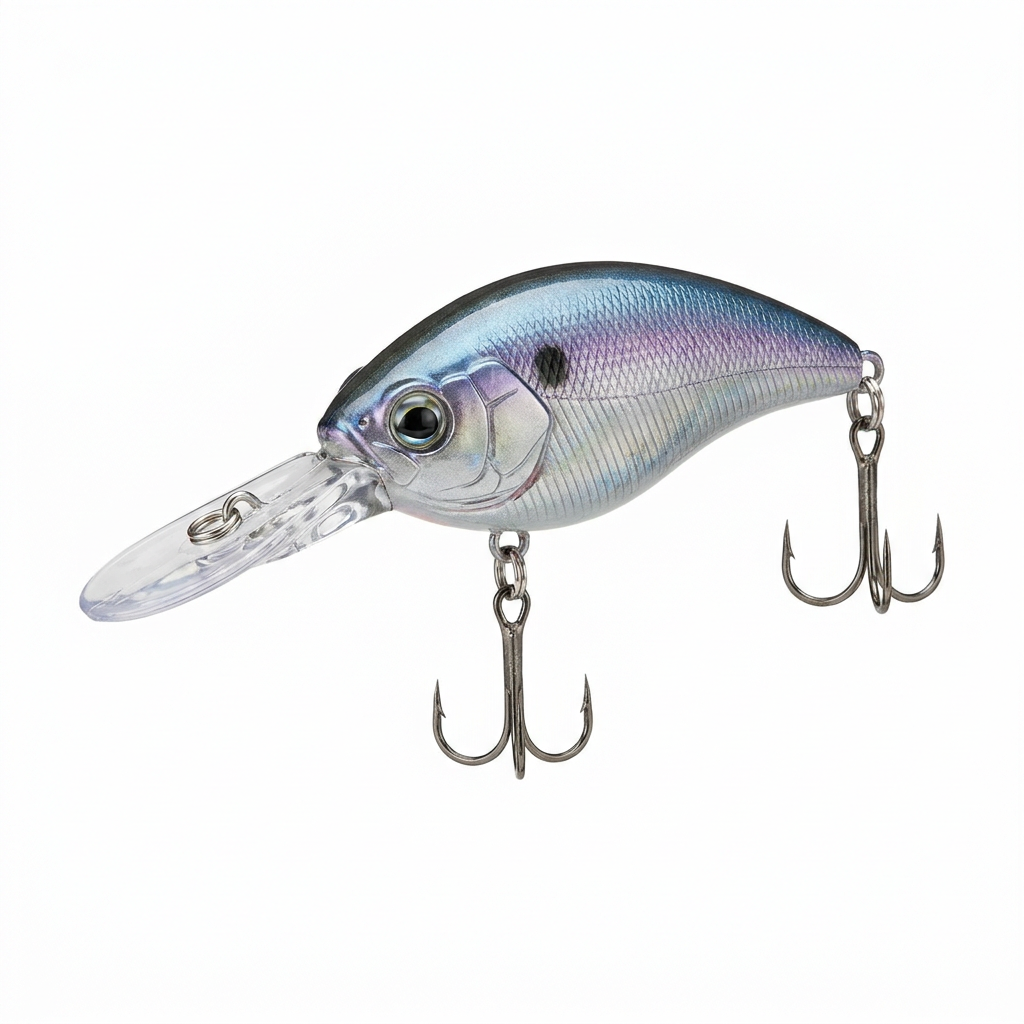
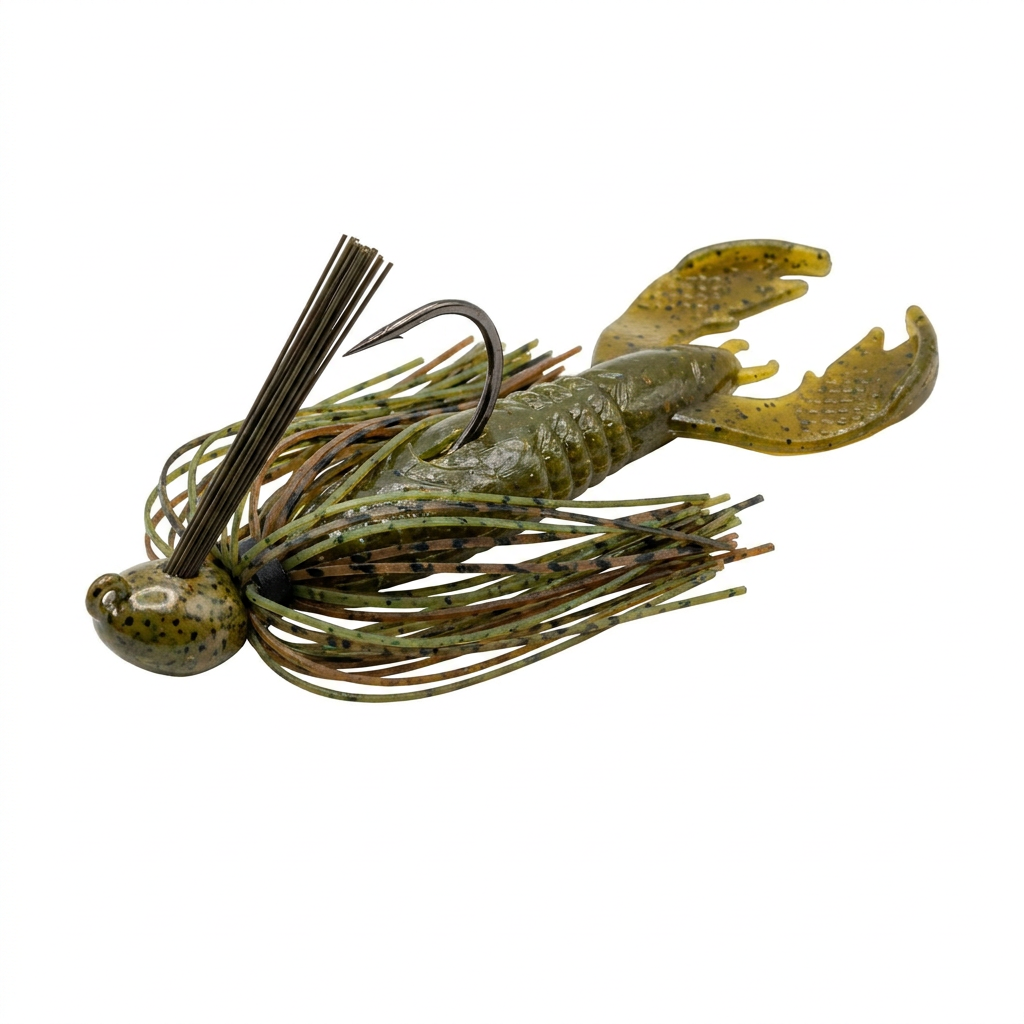
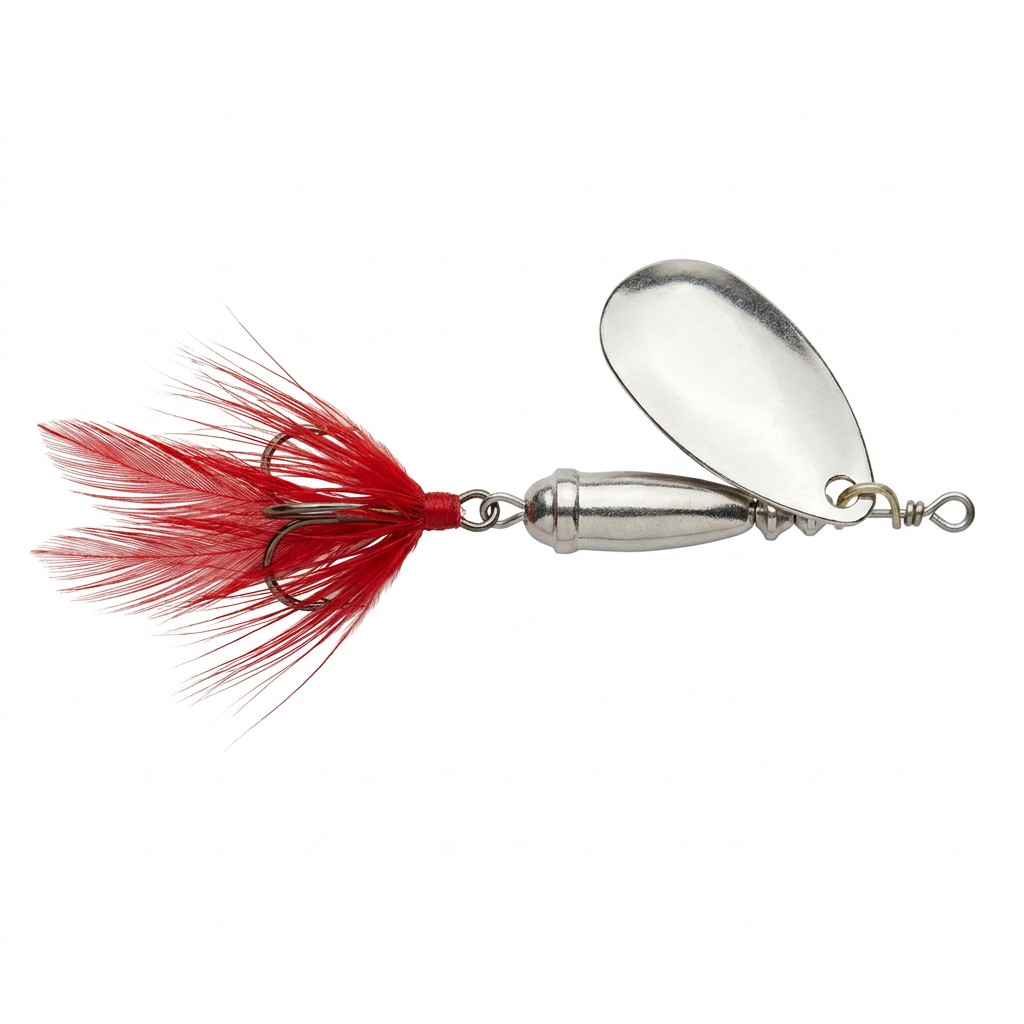
One thing I always check before a big trip is my main line. For most of the presentations that work here, you want braid. The sensitivity makes a real difference, especially when fish are finicky. I've been ordering from Reaction Tackle for a while now and haven't looked back.
About Blue Mesa Reservoir
Colorado's largest lake. Blue Mesa Reservoir is the largest body of water in Colorado, covering approximately 9,180 acres at full pool in Gunnison County at an elevation of 7,519 feet above sea level. The Bureau of Reclamation completed Blue Mesa Dam on the Gunnison River in 1965. The reservoir is the largest of three dams on the Gunnison River in the Curecanti National Recreation Area - the others being Morrow Point and Crystal reservoirs below Blue Mesa - and is the only one with boat access. The lake reaches a maximum depth of 338 feet near the dam and features three distinct basins: the main dam basin, the Cebolla basin, and the upper Iola basin near the Gunnison River inlet.
Premier kokanee salmon fishery. Blue Mesa Reservoir is regarded as the premier kokanee salmon fishery in the Rocky Mountain West. Colorado Parks and Wildlife manages an extensive kokanee stocking program and monitors the population through annual surveys and counting stations. The fall kokanee spawn run from late August through October, when landlocked sockeye salmon turn brilliant red and move toward the tributary inflows, is one of the most dramatic fishing events in Colorado. The combination of excellent trolling through summer and exciting spawn-run fishing in fall gives Blue Mesa kokanee anglers an extended productive season.
Curecanti National Recreation Area. Blue Mesa Reservoir is managed within Curecanti National Recreation Area, administered by the National Park Service in partnership with the Bureau of Reclamation and Colorado Parks and Wildlife. The recreation area provides campgrounds, boat ramps, and visitor facilities at Elk Creek Marina, Lake Fork, Stevens Creek, and other locations around the reservoir. The spectacular Gunnison River canyon geology - with Black Canyon of the Gunnison National Park just downstream - makes the setting of Blue Mesa among the most dramatic of any fishing destination in the continental United States.
Regulations and high-altitude considerations. Colorado Parks and Wildlife regulations apply to all species at Blue Mesa Reservoir. The combination of multiple species with different regulations - including possible trophy regulations on brown trout and lake trout - means anglers should carefully review the CPW regulations at cpw.state.co.us before fishing. The high elevation (7,519 feet) means weather can change rapidly, water temperatures stay cold even in summer, and the season for open-water fishing is compressed compared to lower-elevation lakes.