I've fished Okeechobee, and what surprised me most was catching some of the biggest bluegills of my life right off the bank along the dike road. You don't need a boat to have a great day here: bank and kayak anglers do just fine on this lake.
Today's Bite Score · October 8, 2026
Above average conditions worth planning a trip
🌘Waning Crescent
Lake Okeechobee Fishing Report
Updated October 2, 2026Synthesized from current fishing reports · Updated weekly
Lake Okeechobee is delivering excellent fishing conditions right now, with guides reporting that the bite is on fire this week. Anglers are finding that conditions have been ideal for pursuing trophy bass, and recent activity shows the lake is performing at a high level for quality catches.
Anglers are finding success right now with live wild shiners, which guides are reporting as the secret weapon for landing lunkers this week. The bite has been particularly strong for trophy bass, with recent catches qualifying for Florida's Trophy Catch program. Targeting areas where shiners are active is producing big bass and consistent action across multiple outings.
Live wild shiners are working best this week for trophy hunters at Lake Okeechobee. Recent reports show anglers connecting with nine-pound class bass and larger fish using this live bait approach. The past few weeks of excellent conditions have continued into this week, making it an ideal time to focus on trophy-sized bass.
Get More Fishing Report Specifics
Tap a topic button below for a report on current conditions.
Tap a topic above to get a current report for Lake Okeechobee.
Answers are generated on demand and cached. No AI call fires until you tap a tab.
Lake Okeechobee Fishing Guides
Looking for a Lake Okeechobee fishing guide? 467,000 acres of shallow marsh, lily pads, and emergent vegetation — without a guide who knows Big O, you'll spend the day lost in the grass and never find the fish. Go here → to check out our recommended fishing guides for Lake Okeechobee. Then scroll down on that page to see all of the Lake Okeechobee fishing guides.
Lake Okeechobee Fishing Strategies by Species
Seasonal patterns and techniques by target species · Verified against official sources
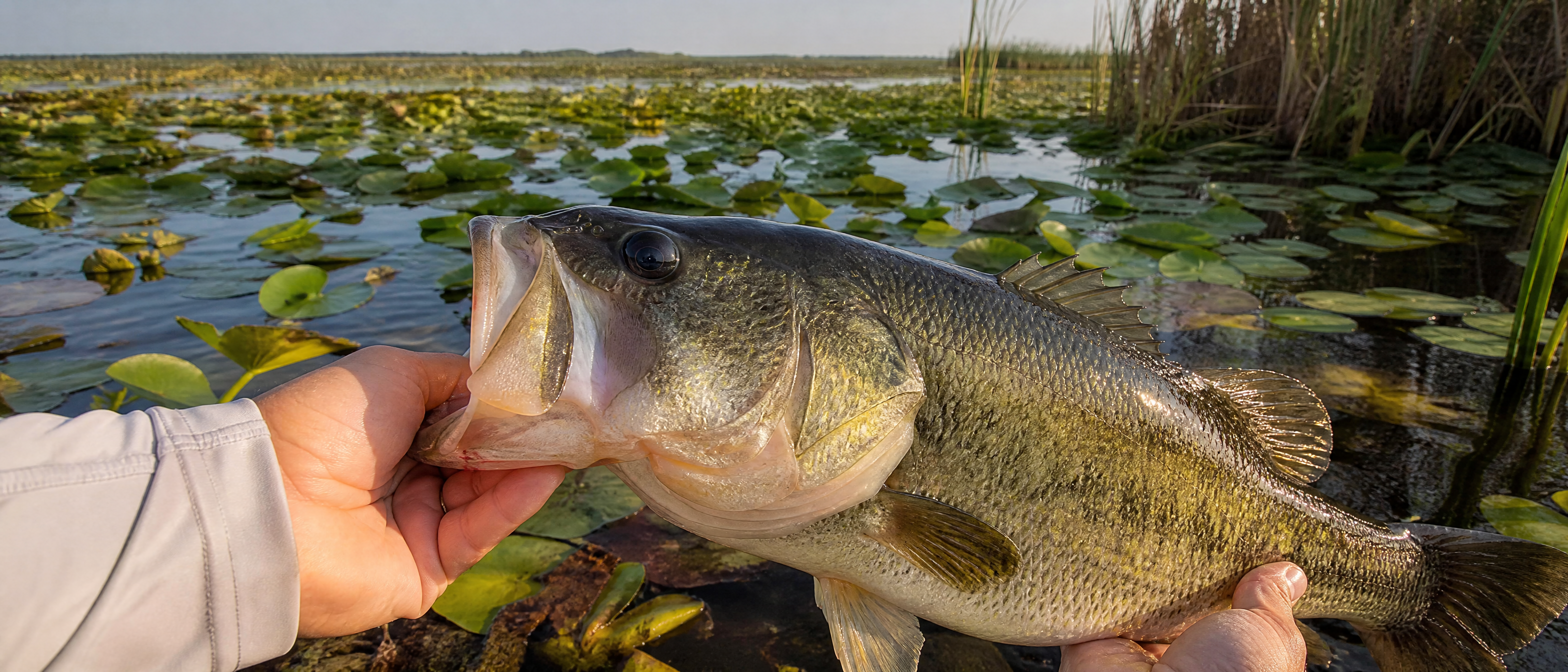
Largemouth bass are the primary draw at Lake Okeechobee: the Florida-strain fish evolved in this warm, shallow, vegetation-rich environment and the lake has produced bass over 15 pounds. Winter (December through February) is the peak trophy season when fish move onto the shallow muck flats and lily pad mats around the Monkey Box area and Harney Pond Canal; live golden shiners under a cork is the signature technique for the largest fish. Crappie (called "speckled perch" locally), bluegill, and catfish are abundant year-round, with the dike road providing excellent bank access throughout the lake. Verify current FWC bass regulations before fishing: Lake Okeechobee may carry special trophy size rules that differ from the Florida statewide standard.
Lake Okeechobee Largemouth Bass Fishing Report
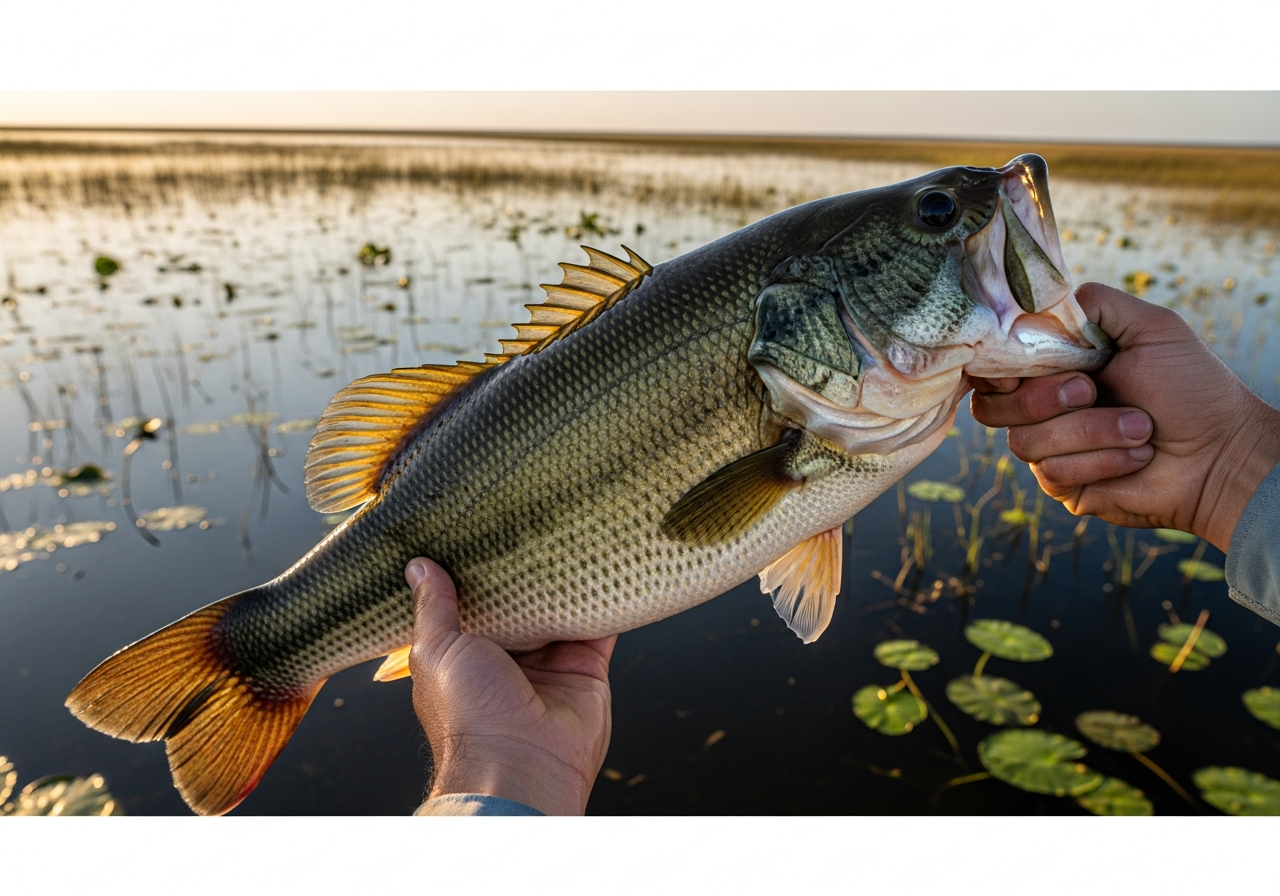
Lake Okeechobee is recognized globally as one of the great largemouth bass fisheries. The Florida-strain bass: a distinct genetic subspecies: thrives in Okeechobee's warm, shallow, vegetation-rich environment and grows to sizes rarely achieved by northern-strain fish. The lake has produced fish over 15 pounds and regularly yields 10-pound-class fish to anglers who know the water. Verify current FWC regulations before fishing: Lake Okeechobee has historically carried special trophy bass regulations including size restrictions that differ from the Florida statewide standard. Winter (December through February) is the prime season on Lake Okeechobee. The mild Florida winter is bass spawning and prespawn season: water temperatures in the mid-60s to low 70s trigger aggressive feeding and shallow movement. Bass push onto the shallow muck and sand flats throughout the lake, particularly in the Monkey Box area on the western end and near the Harney Pond Canal. A black and blue jig, a Texas-rigged worm, or a shiner fished beneath a float are the primary winter presentations. The shiner bite: using large wild-caught golden shiners fished under a cork: is the signature technique for trophy-class fish. The vast lily pad mats and emergent vegetation throughout the lake provide year-round bass habitat. A hollow-body frog worked across the mat surface in early morning and evening produces explosive strikes from fish holding under the vegetation. Punching a heavy jig or Texas-rigged creature bait through the thickest mat concentrations produces the largest fish. The key to fishing Okeechobee is locating the edge of firm vegetation: bass position where the soft muck meets firmer bottom, and the transitions between grass species and lily pads concentrate fish regardless of season. Summer bass fishing is productive in the early morning and evening when fish are active on the outer mat edges and in the open pockets within the vegetation. The heat of a Florida summer midday slows surface activity, but bass remain catchable in the shadiest, thickest mat concentrations throughout the day.
Lake Okeechobee Crappie Fishing Report
Crappie: called "speckled perch" locally: are abundant throughout Lake Okeechobee and provide excellent year-round fishing. FWC regulation: 10-inch minimum, 25-fish daily bag limit. The extensive dock structure, bridge pilings, and vegetation throughout the lake provide crappie habitat year-round. Spring crappie fishing peaks in February and March as fish move from deeper open water toward the emergent vegetation and boat dock pilings in 3 to 8 feet. Small jigs in chartreuse or white and live minnows fished vertically around the dock pilings and the pole and line-set brush create the most consistent action. The canal systems feeding into the lake also concentrate crappie during the spawn. Year-round crappie fishing on Okeechobee is among the best in Florida. The lake's warm water and abundant invertebrate forage produce fast-growing fish, and 10-inch-plus crappie are the norm rather than the exception.
Lake Okeechobee Bluegill Fishing Report
Bluegill are abundant throughout Lake Okeechobee and provide fast-action fishing from the shoreline and from boats working the vegetation edges. The warm, shallow lake is ideal bluegill habitat, with the combination of emergent vegetation, soft bottom, and abundant invertebrates supporting large populations of quality fish. Spring and summer are the best bluegill seasons. Fish are actively spawning on the sandy and mucky bottom near vegetation edges in 1 to 4 feet, and small jigs, crickets, and earthworms fished around the spawning beds produce fast action. Bluegill in Okeechobee reach quality sizes quickly in the warm water, and fish over a pound are common in the better vegetation areas. The lake record and trophy-class bluegill are regularly encountered near the Kissimmee River arm and the vegetation-rich western end of the lake.
Lake Okeechobee Channel Catfish Fishing Report
Channel catfish and other catfish species are present throughout Lake Okeechobee. FWC sets no statewide minimum size or bag limit for catfish in Florida's freshwater lakes. The lake's soft muck bottom and abundant invertebrate forage support a productive catfish population throughout the lake's 467,000 acres. Cut bait, chicken liver, and prepared dip baits fished on the bottom in the canal mouths, the Kissimmee River inlet, and the deeper sections near the dike access roads produce channel catfish year-round. Night fishing from the dike road access points and the Taylor Creek area is productive through summer. The warmer months are consistently the best catfish season on Okeechobee, with fish active in shallow water after dark.
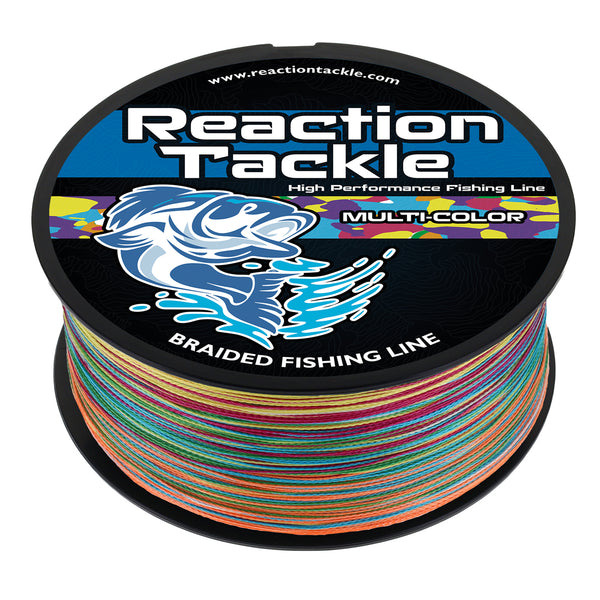
For fishing heavy cover after Largemouth Bass, I run 50-65lb braid. Zero stretch means you feel every bite and you can pull fish out of structure before they wrap you. Reaction Tackle is where I restock. Their low-vis green disappears in most water conditions.
Top Fish to Target in Lake Okeechobee
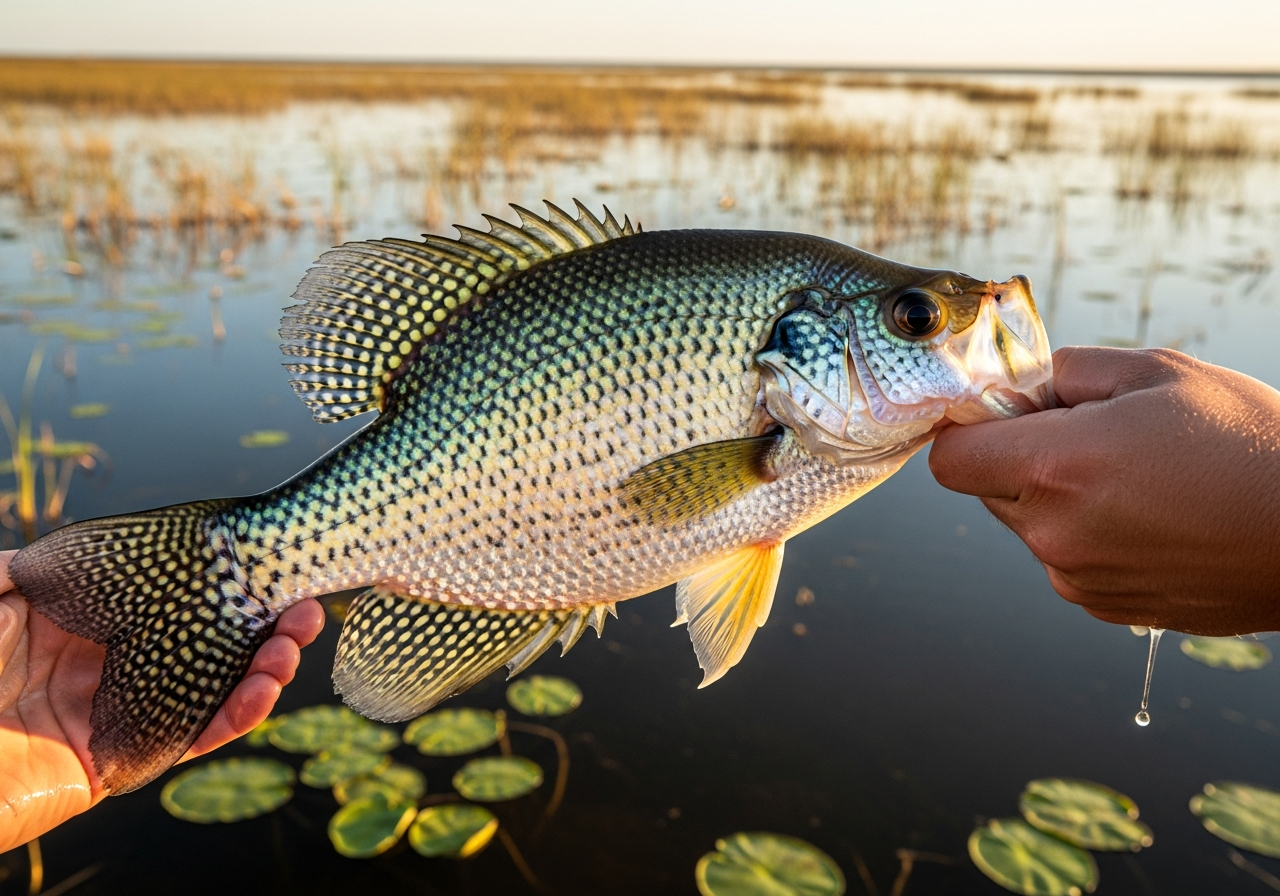
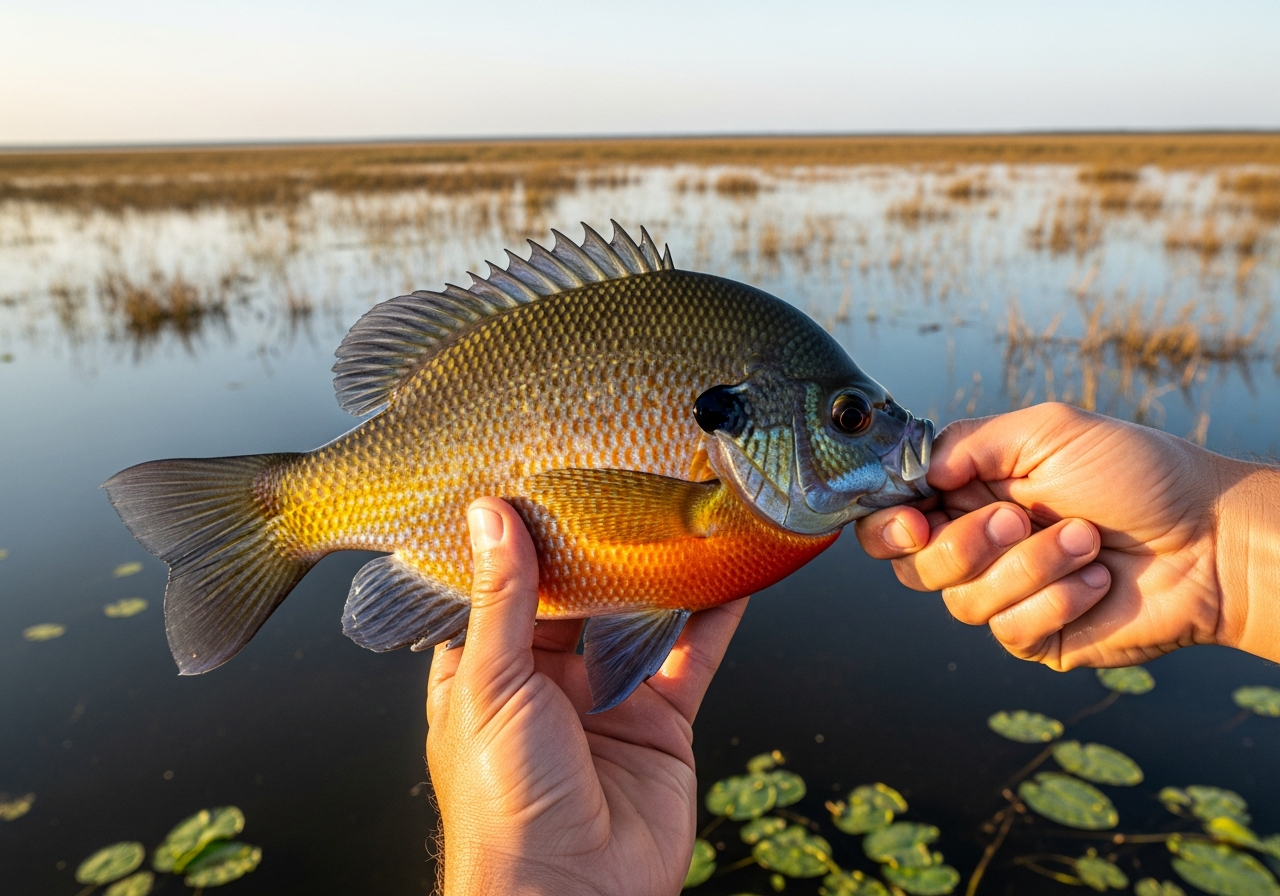
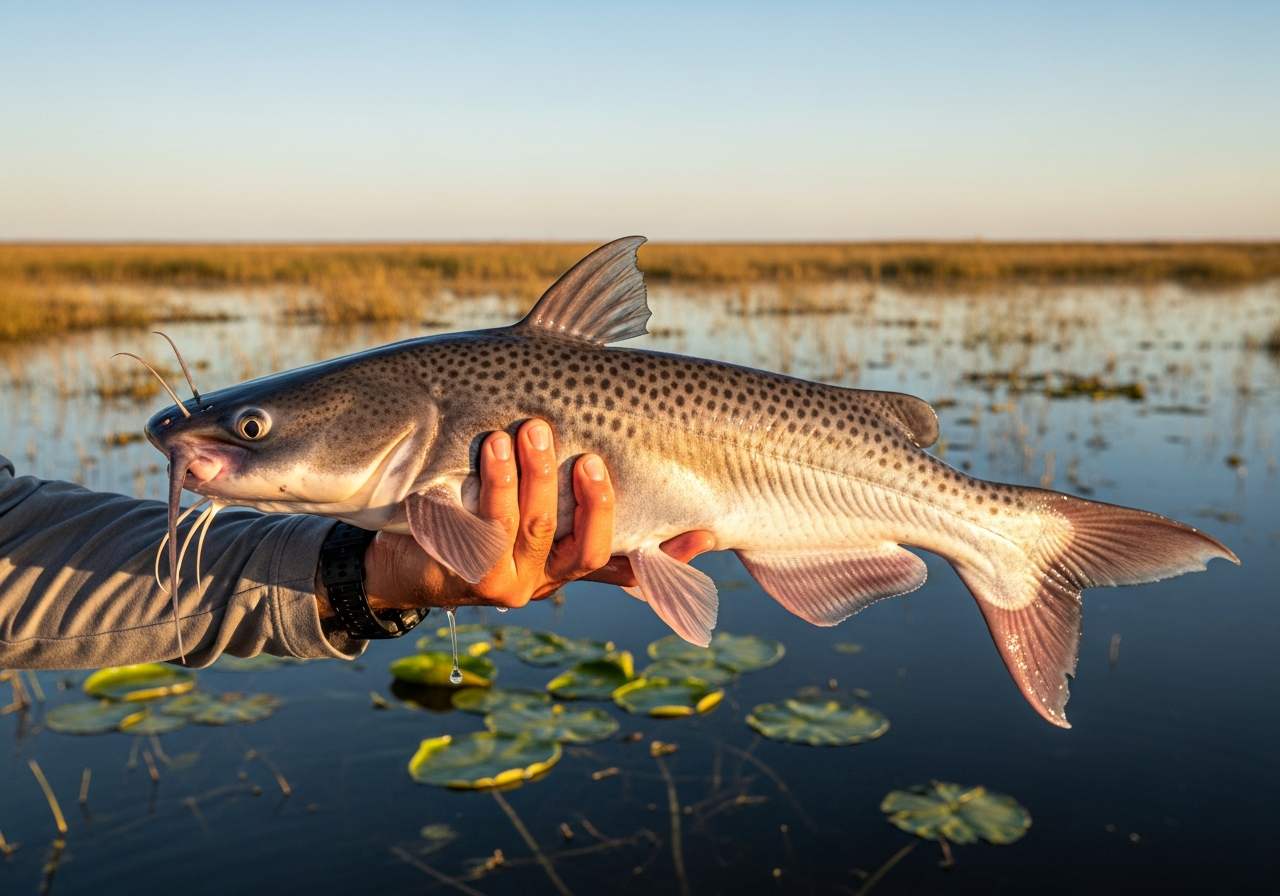
Lures for Lake Okeechobee
Tackle matched to this lake's species and structure.
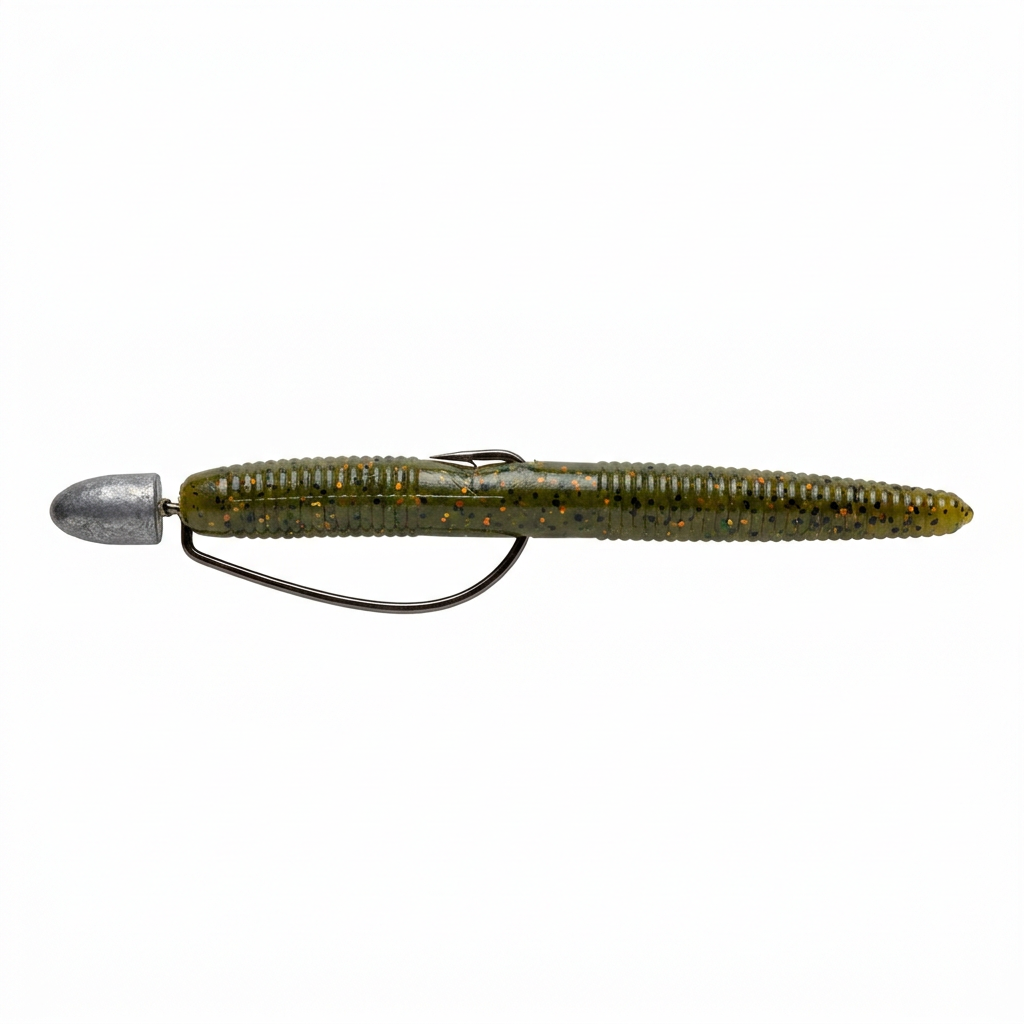
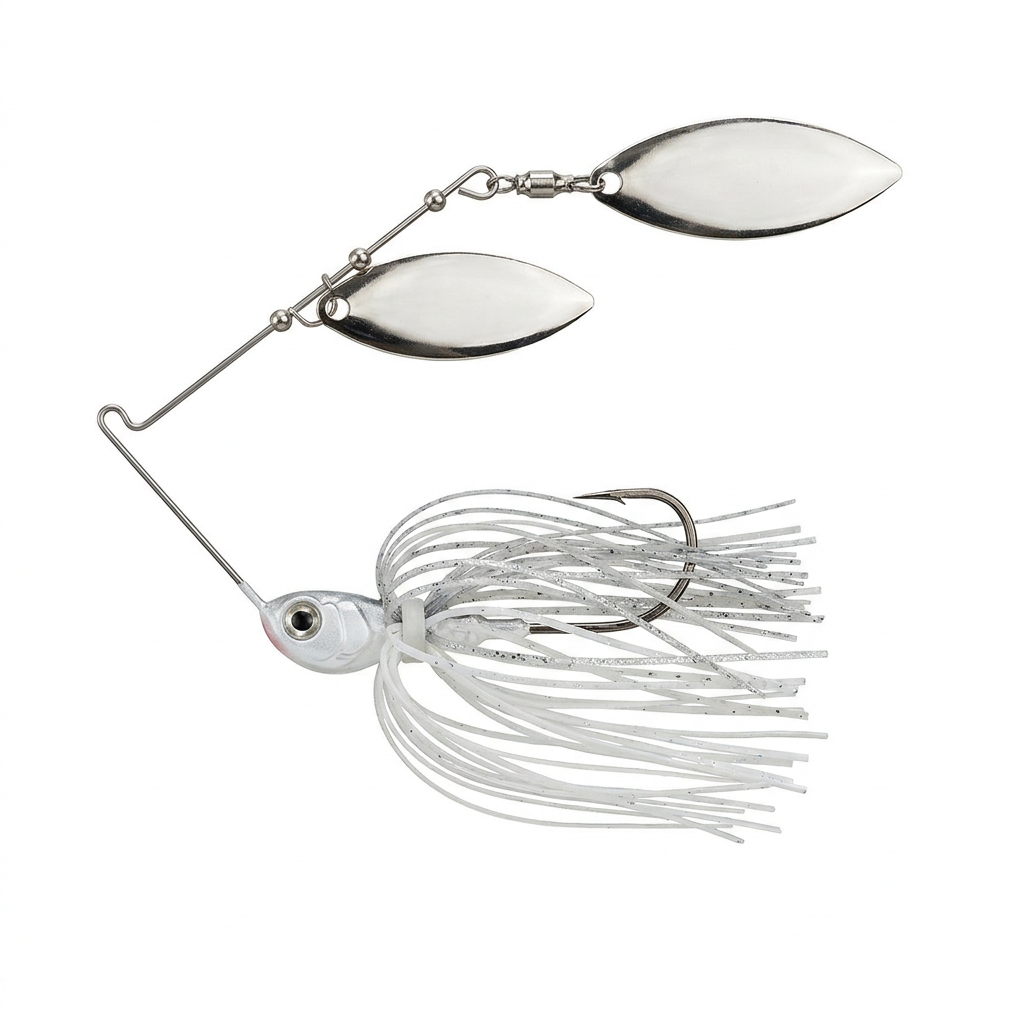
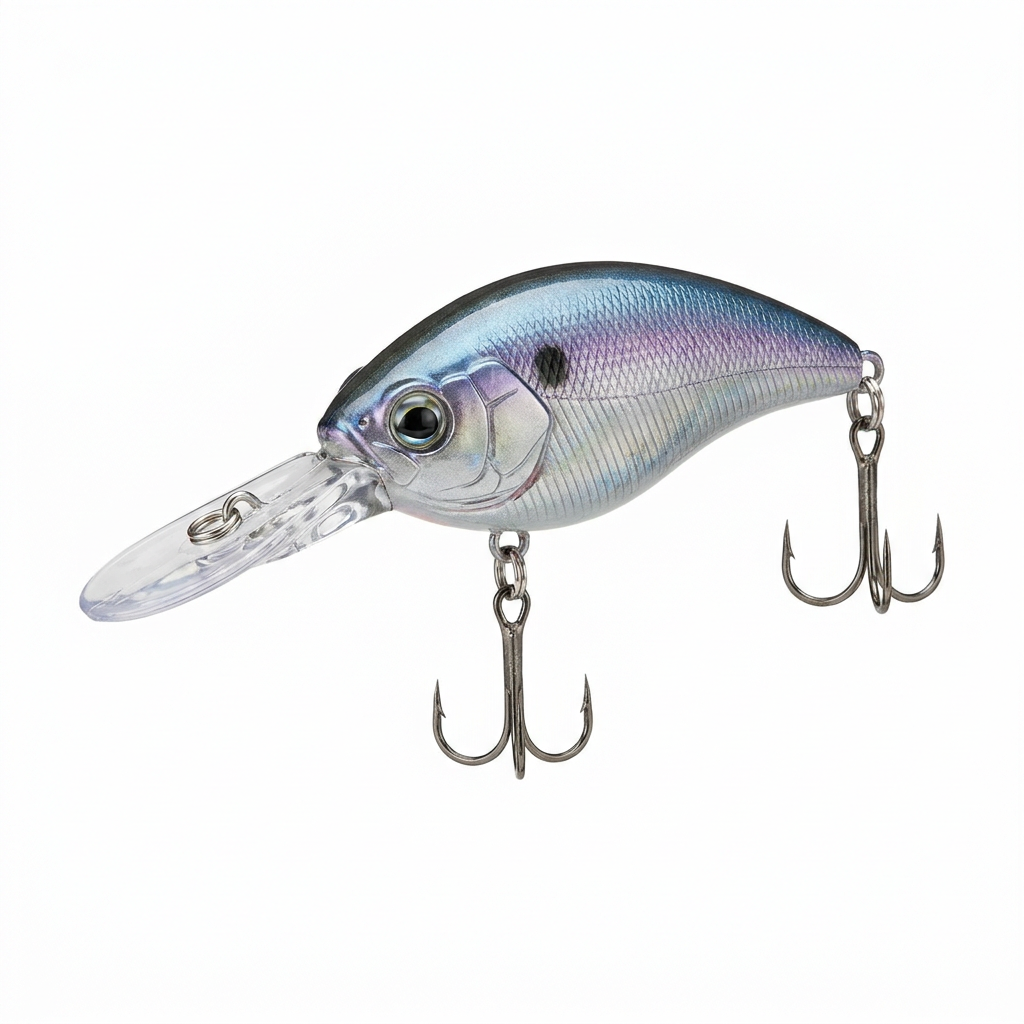
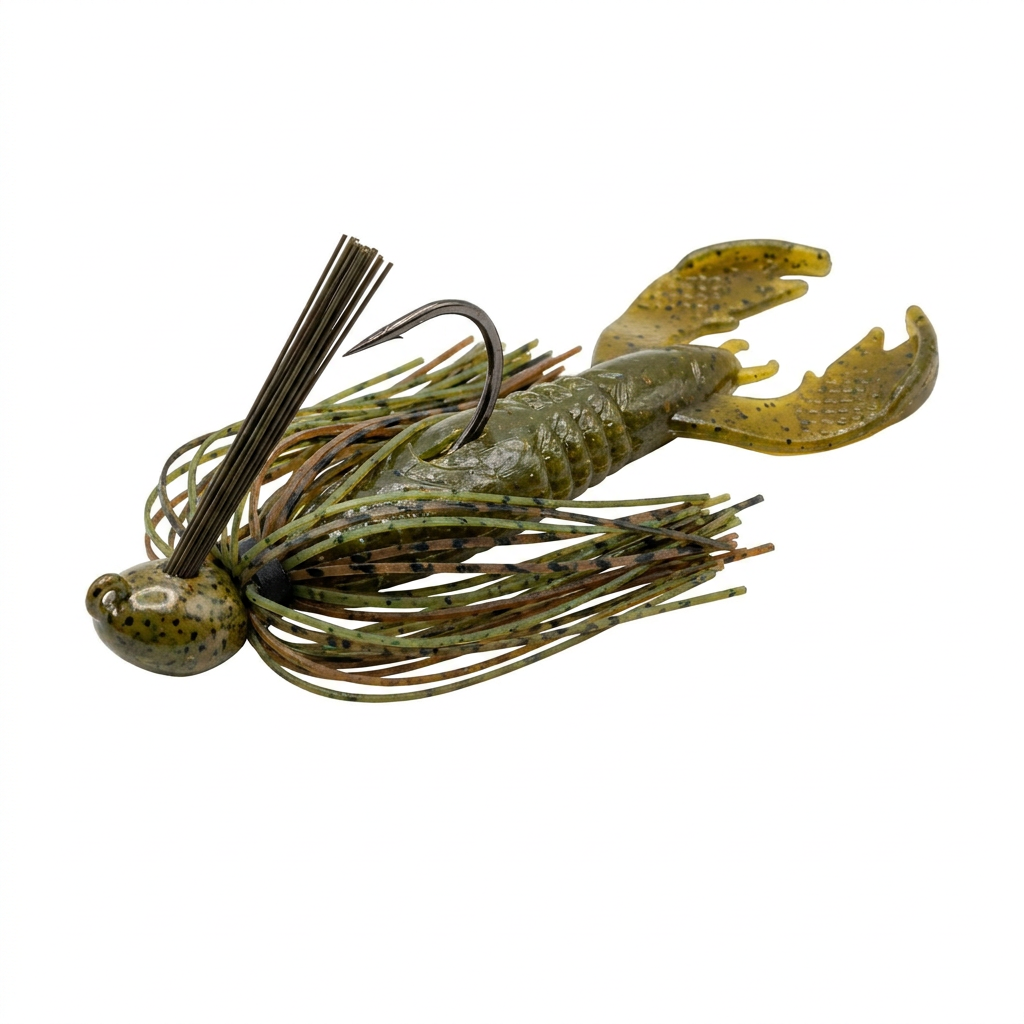
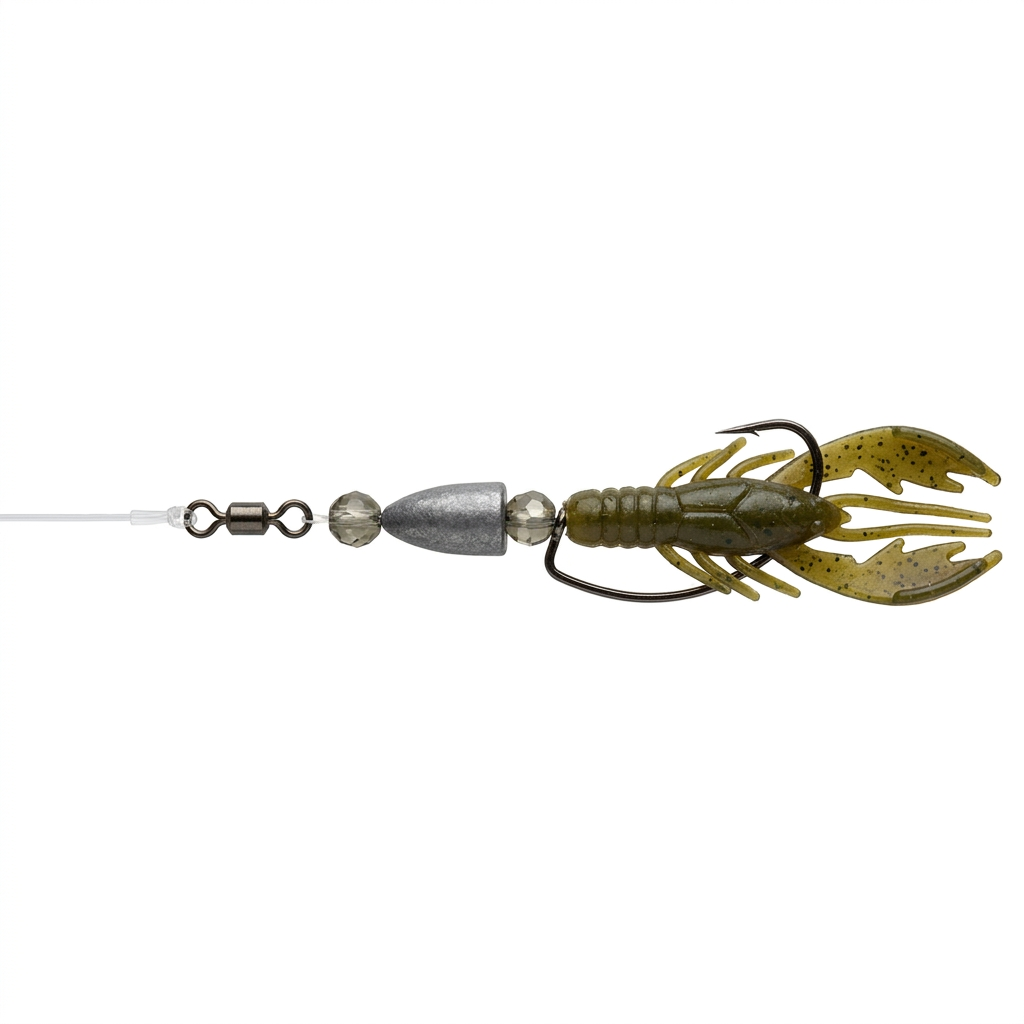
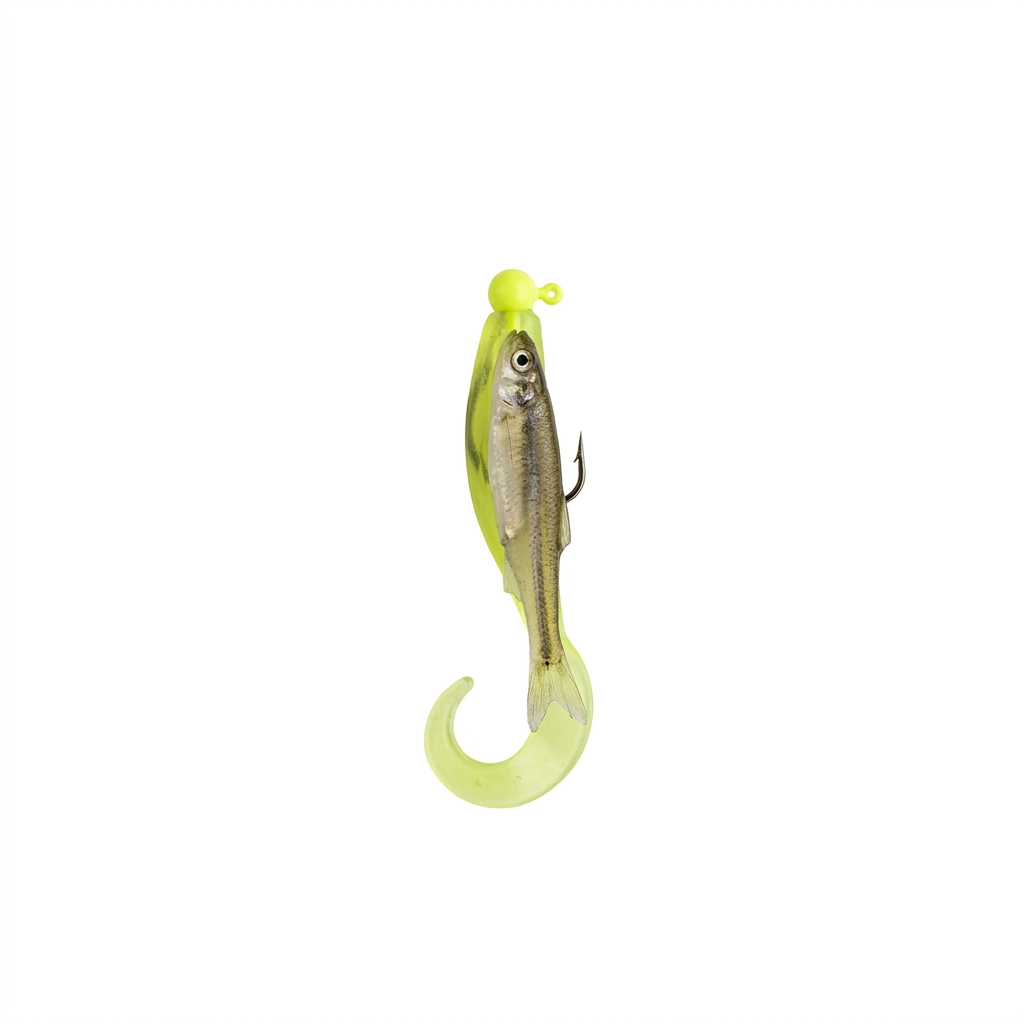
Worth checking before any trip: your line. Old braid gets brittle at the tag end and loses sensitivity over time. I rotate mine every season. Reaction Tackle is where I order from when it's time to restock.
About Lake Okeechobee
I've fished Okeechobee and I can tell you: you do not need a boat to have a great day here. I caught some of the biggest bluegills of my life right off the bank along the dike road. We're talking slab-sized fish that would be a trophy on any other lake. If you're a kayak angler or bank fisherman thinking Okeechobee is off-limits without a bass boat, think again: the dike road access is excellent and the fishing holds up. And yes, go after the bass too: the Florida-strain fish in this lake are a completely different animal from what most freshwater anglers are used to.
Lake size and location. Lake Okeechobee covers approximately 467,000 acres: the second-largest freshwater lake in the continental United States. The lake is a natural, very shallow basin averaging 9 feet deep with a maximum depth of only 12 feet; approximately 70% of the lake is under 5 feet. It sits in south-central Florida spanning Okeechobee, Glades, Hendry, Palm Beach, and Martin counties. The Kissimmee River enters from the north; the lake drains into the Everglades system to the south.
Herbert Hoover Dike. The US Army Corps of Engineers built the Herbert Hoover Dike surrounding the lake after the 1928 hurricane that killed over 2,500 people due to storm surge from the lake. The dike was completed in the 1960s and underwent an $1.5 billion 18-year rehabilitation project completed in January 2023. The dike road provides access to much of the lake's shoreline for bank anglers and boat launches.
Florida-strain largemouth bass. Lake Okeechobee is one of the defining environments for the Florida-strain largemouth bass: a distinct genetic subspecies that grows faster and larger than northern-strain fish in warm, vegetated environments. The lake has produced fish exceeding 15 pounds. Verify current FWC bass regulations before fishing: Lake Okeechobee may carry special trophy size regulations that differ from the Florida statewide standard.
Crappie regulations. FWC regulation: 10-inch minimum, 25-fish daily bag (combined). "Speckled perch" is the local name for crappie in south Florida. Catfish: no statewide minimum size or bag limit in Florida freshwater. Verify all current regulations at FWC before fishing.
Habitat. The lake's vegetation: extensive lily pad mats, emergent cattails and bullrush, submersed hydrilla and eel grass: is the primary structure for all fish species. The Monkey Box area on the western end, Harney Pond Canal, and the Taylor Creek and Kissimmee River arms are the primary named fishing areas.