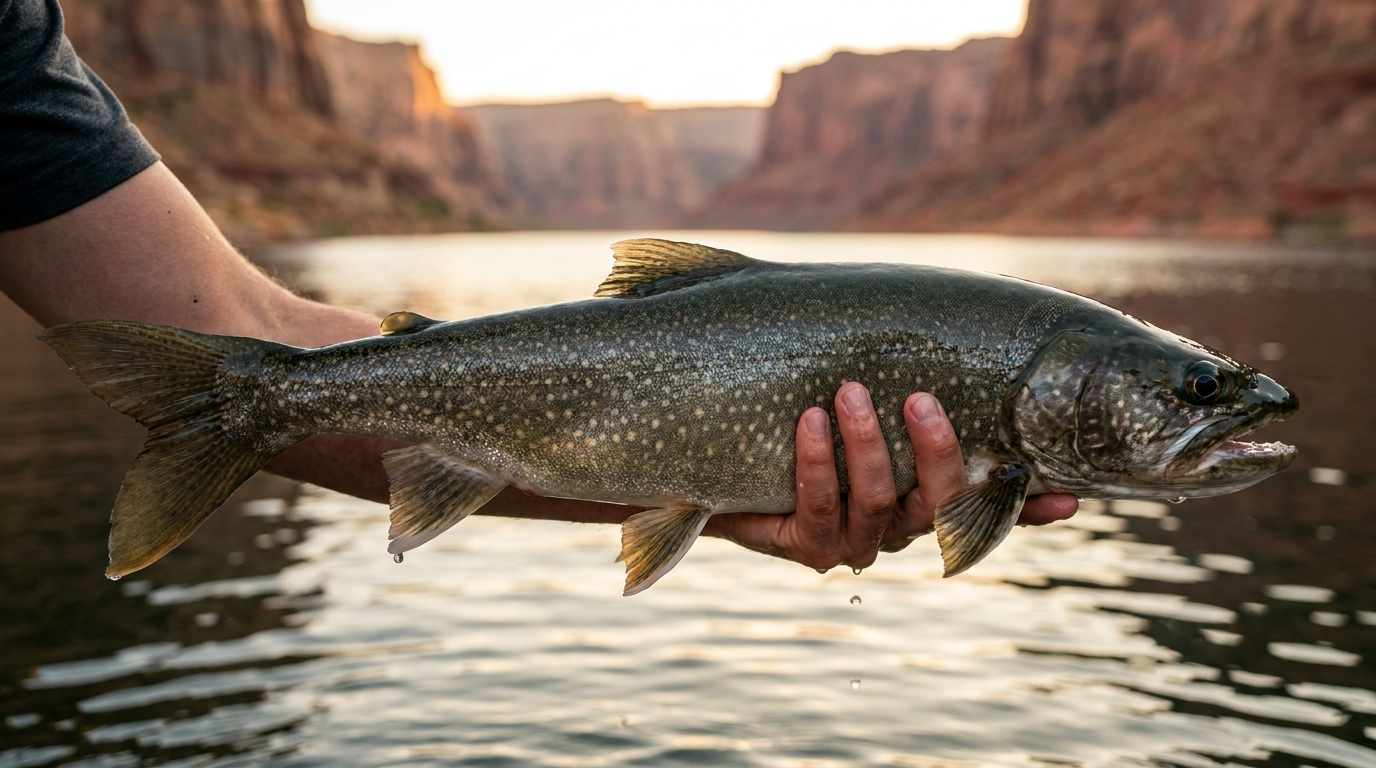
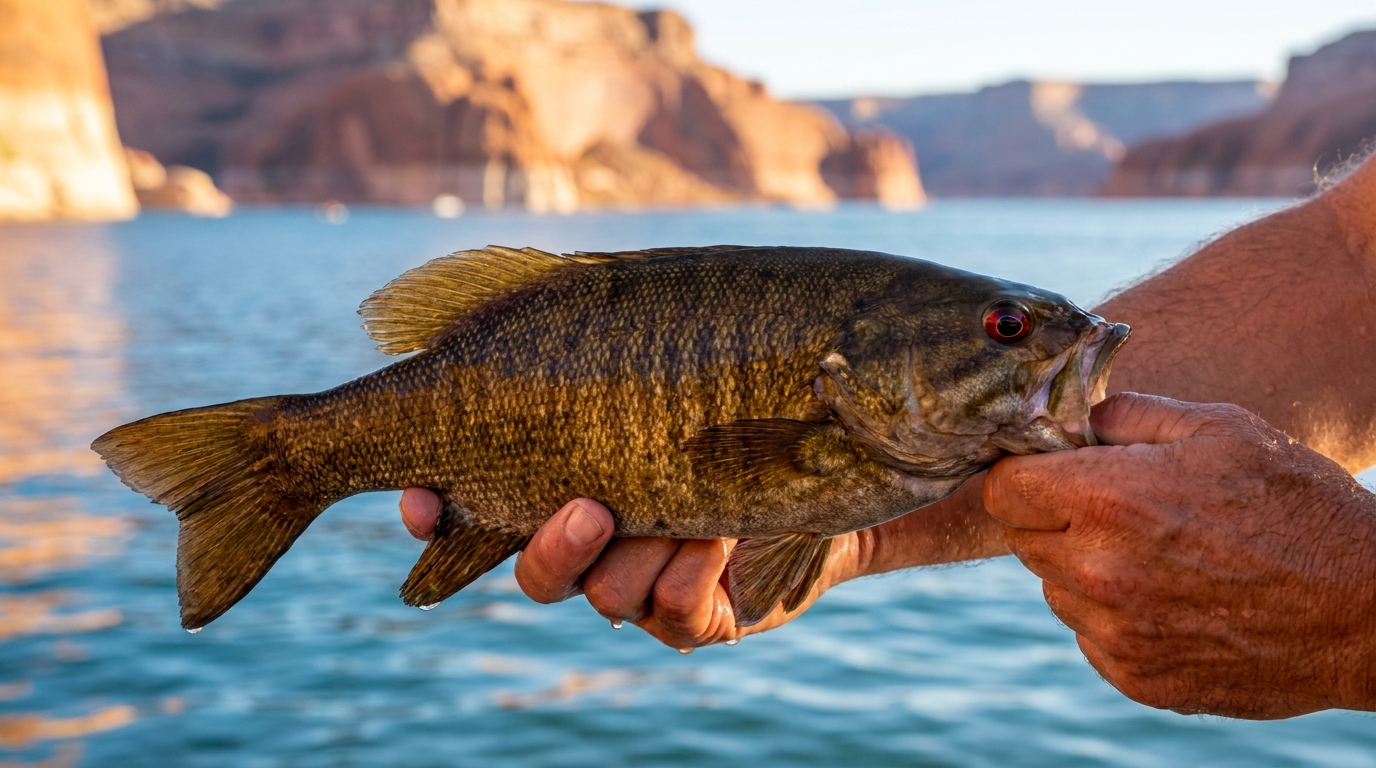
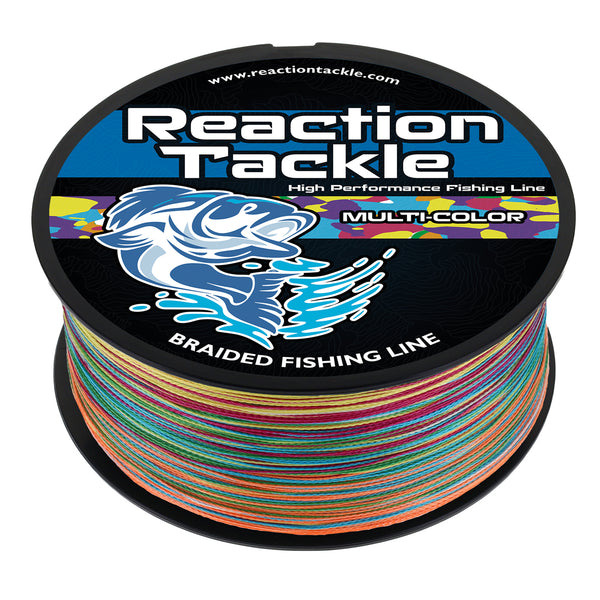
Lake Powell is one of those places where the scale is difficult to comprehend until you're running the canyon in a boat. 161,000 acres, nearly 2,000 miles of shoreline in the canyon country of the Colorado Plateau. Striped bass dominate the open water, smallmouth bass are everywhere in the rocky canyon arms, and the visual clarity of the water against the sandstone walls makes sight fishing a real possibility in the right conditions. This is bucket-list water by any standard.
Today's Bite Score · October 8, 2026
Very favorable conditions for catching fish
🌘Waning Crescent
Lake Powell Fishing Report
October FishingMonthly fishing report · October patterns and techniques
Lake Powell in October experiences a dramatic shift as water temperatures drop from summer highs into the mid-60s Fahrenheit, triggering aggressive feeding behavior across the reservoir. The cooling water pulls bass, walleye, and stripers away from shallow coves where they spent summer months, pushing them toward deeper structure and mid-depth ledges. Anglers find the lake's massive canyon system becoming more productive in this month, as fish concentrate along the submerged ridges and channel breaks that define Powell's geography. Wind patterns in October tend to be more moderate than summer, creating calmer conditions that favor sight-casting in clearer water columns.
In October, largemouth and smallmouth bass dominate catches in the rocky points and transition zones between 25 and 50 feet deep. Walleye move toward steeper breaklines where they hunt throughout the day without the light sensitivity that plagues them in warmer months. Stripers remain highly active this month, positioning themselves near baitfish schools in the main lake basin and along the Wahweap and San Juan arms. The cooler temperatures trigger stripers to chase shad more aggressively, and anglers find them ranging from 40 to 80 feet depending on forage location. Smallmouth particularly thrive around Powell's distinctive red rock formations where crevices and ledges provide ideal ambush points.
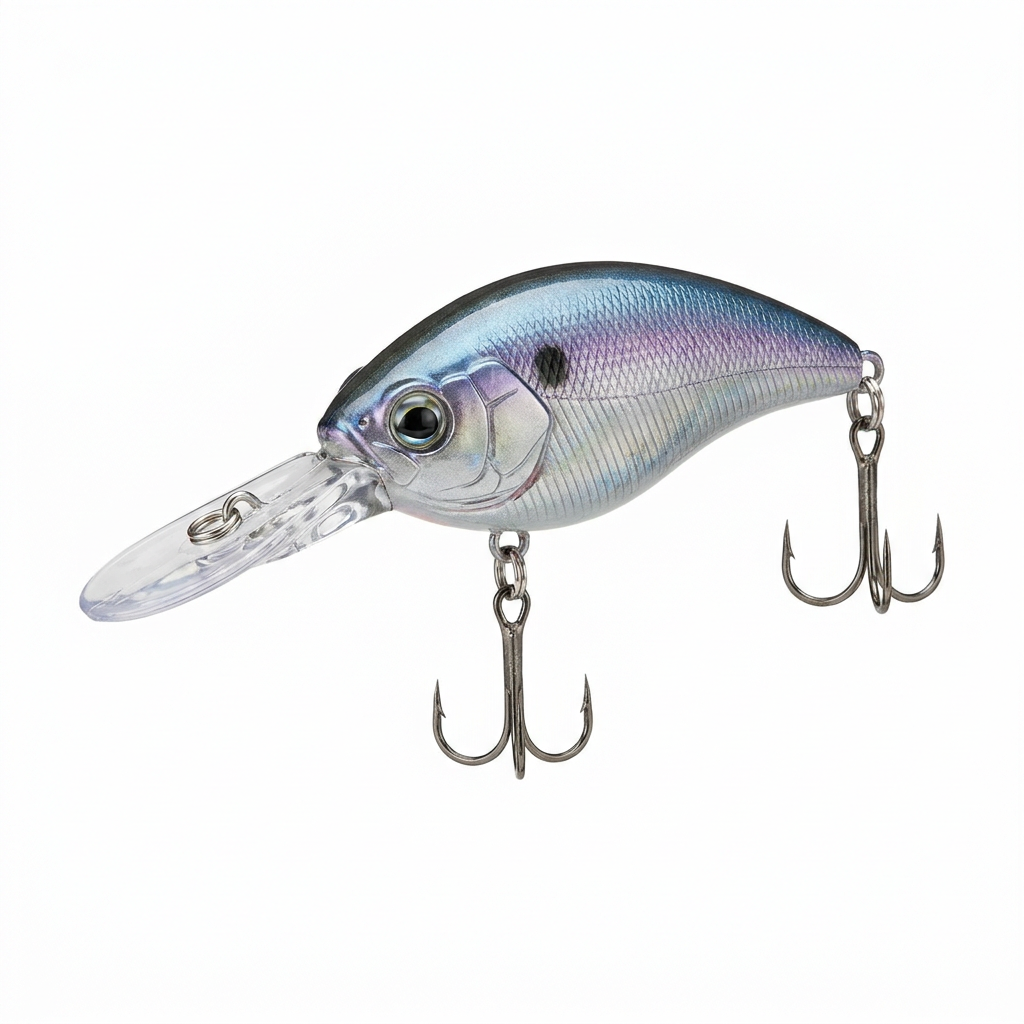
Most effective techniques in October include vertical jigging with live shad and finesse presentations like drop-shot rigs worked along deep structure. Anglers find success with 3 to 5-inch swimbaits cast toward rocky points, allowing baits to sink into productive zones where bass and walleye hunt. Live shad beneath bobbers near creek channels and underwater humps produce excellent results for stripers this month. Crankbaits that reach 20 to 40 feet, especially those imitating shad, generate consistent strikes on bass. Night fishing becomes viable in October as water temperatures cool, with anglers using live baitfish presentations near marinas and protected coves. Trolling crankbaits along the main channel also produces quality fish this month as species follow baitfish migrations. The key to October success at Lake Powell involves fishing deeper water columns, using smaller profile baits, and adjusting presentations to the measured pace of fish in cooling water.
Get More Fishing Report Specifics
Tap a topic button below for a report on current conditions.
Tap a topic above to get a current report for Lake Powell.
Answers are generated on demand and cached. No AI call fires until you tap a tab.
Lake Powell Fishing Guides
Looking for a Lake Powell fishing guide? Nearly 2,000 miles of canyon shoreline on 161,000 acres means you could fish for weeks and never find the right canyons without a guide who knows Lake Powell cold. Go here → to check out our recommended fishing guides for Lake Powell. Then scroll down on that page to see all of the Lake Powell fishing guides.
Lake Powell Fishing Strategies by Species
Seasonal patterns and techniques by target species · Verified against official sources
Striped bass, smallmouth bass, largemouth bass, walleye, and channel catfish are the primary sport fish at Lake Powell, a 161,390-acre Bureau of Reclamation reservoir behind Glen Canyon Dam on the Colorado River. The reservoir spans Garfield, Kane, and San Juan counties in Utah and Coconino County in Arizona, with the dam and primary gateway (Page, Arizona) on the Arizona side. Lake Powell is administered by the National Park Service as Glen Canyon National Recreation Area. Striped bass are the dominant sport fish with self-sustaining populations throughout the reservoir. Smallmouth bass fishing in the rocky canyon arms is exceptional. Quagga mussels are confirmed present lake-wide — mandatory boat inspection is required at all marinas before launch. A valid Arizona or Utah fishing license is required depending on which state's waters you are fishing; many anglers fishing the full lake carry both. Verify current regulations including all size limits, bag limits, and native species protections at azgfd.com (Arizona) and wildlife.utah.gov (Utah) before fishing.
Lake Powell Striped Bass Fishing Report
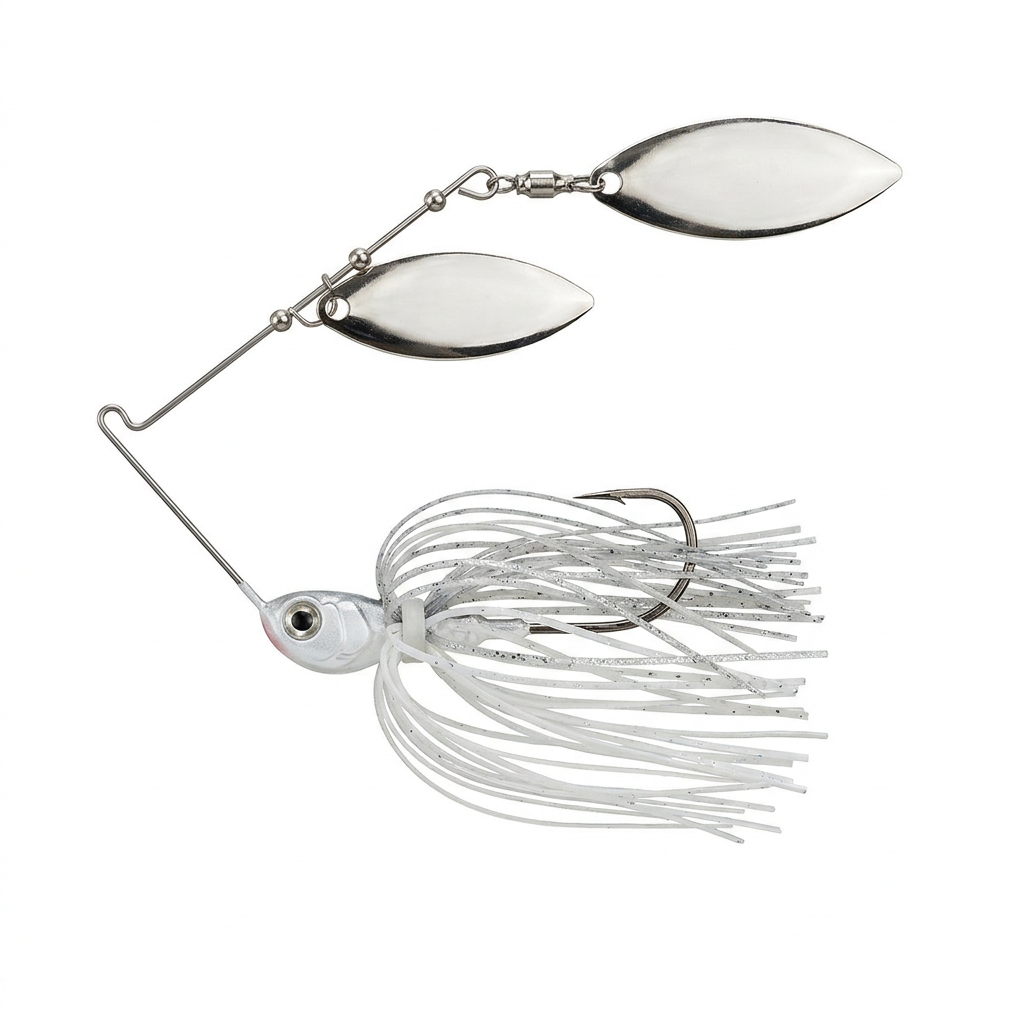
Striped bass are the most abundant game fish in Lake Powell and the primary open-water target. The self-sustaining striped bass population has thrived in the reservoir since introduction, with fish in the 10 to 30-pound range caught regularly. Verify current striped bass size and bag limits at azgfd.com (Arizona) and wildlife.utah.gov (Utah) before fishing. Striped bass at Lake Powell are best targeted by following baitfish activity on the main lake and in the larger canyon arms. The fish school aggressively on threadfin shad throughout the warm months, producing spectacular surface feeding activity during low-light hours in summer and fall. Trolling umbrella rigs, large swimbaits, and deep-diving crankbaits along the main channel and canyon wall transitions in 20 to 50 feet produces consistent stripers during summer when surface activity is sporadic. Wahweap Bay, Padre Bay near Lone Rock, Bullfrog Basin, and the open main channel sections are all consistent striper locations. Fall produces the most accessible surface feeding as fish push shad into the canyon arms and coves. Live shad fished under a float in the canyon arms is one of the most effective warm-weather approaches.
Lake Powell Smallmouth Bass Fishing Report
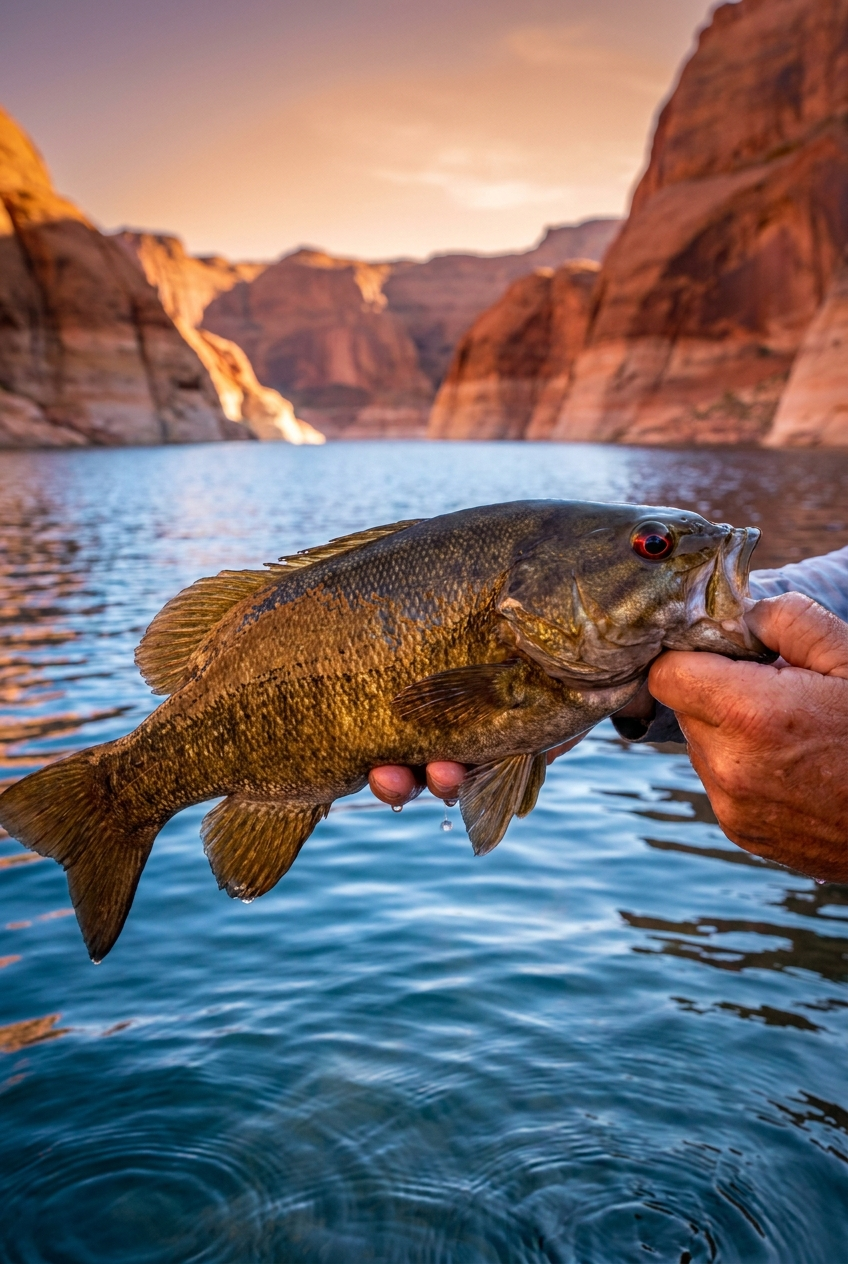
Smallmouth bass at Lake Powell are exceptional. The combination of clear water, rocky canyon structure, and the visual-fishing opportunities created by the sandstone canyon arms make this one of the premier smallmouth fisheries in the American West. Smallmouth are distributed throughout the rocky canyon arms, submerged points, and canyon wall transitions across the entire reservoir. Verify current smallmouth bass regulations at azgfd.com or wildlife.utah.gov before fishing. Tube jigs, drop shots, and small crankbaits worked along rocky canyon wall bases and submerged sandstone benches in 5 to 25 feet produce consistent smallmouth throughout the season. Spring smallmouth fishing is outstanding as fish move shallow into the canyon arms to spawn on gravel and sand substrate adjacent to rocky structure. Sight fishing for spawning smallmouth in the clear Lake Powell water is among the most exciting bass fishing experiences in the West. Summer fish hold deeper along the canyon walls and are most accessible with drop shot presentations. Fall smallmouth are aggressive feeders along the main lake points and canyon arm entrances through November. The San Juan Arm, Escalante Arm, and the rock-lined canyon sections near Bullfrog hold exceptional smallmouth concentrations.
Lake Powell Largemouth Bass Fishing Report
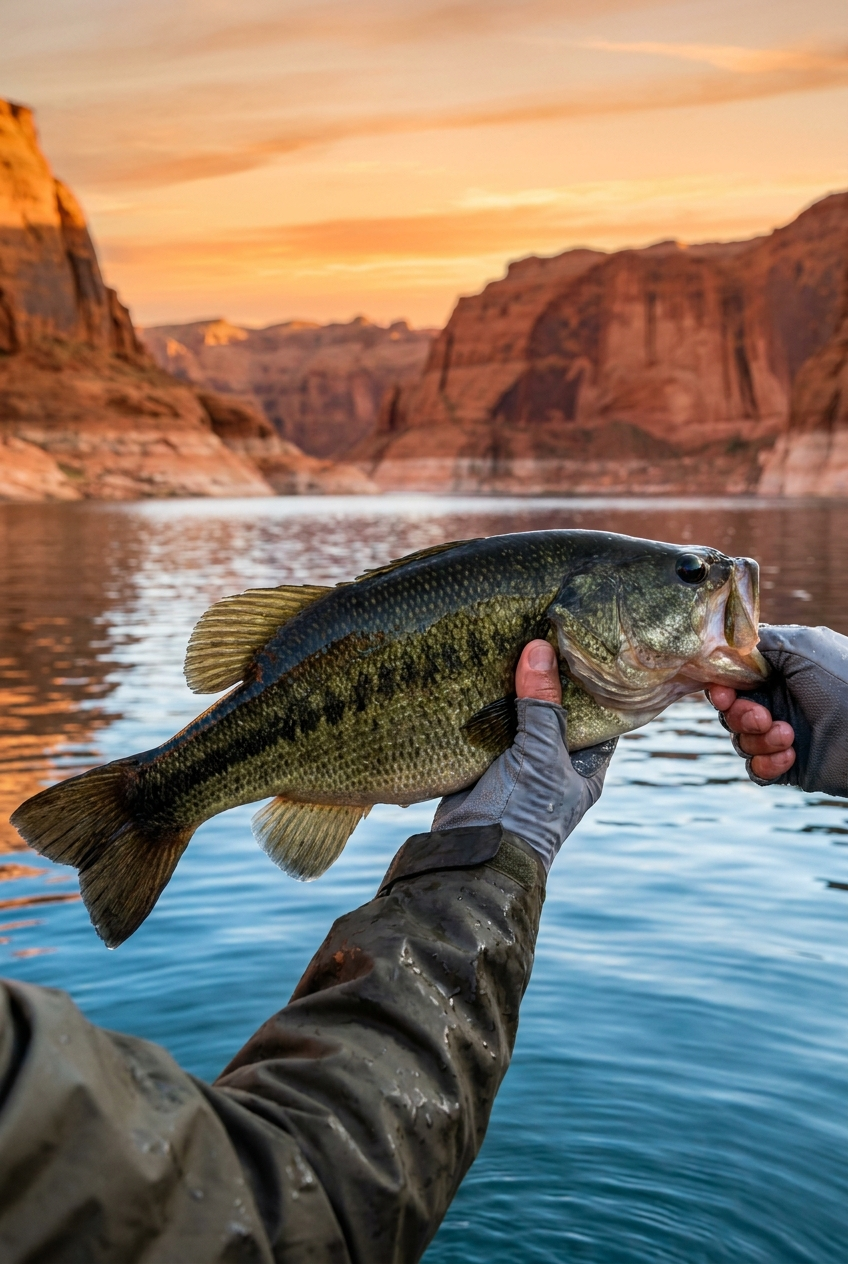
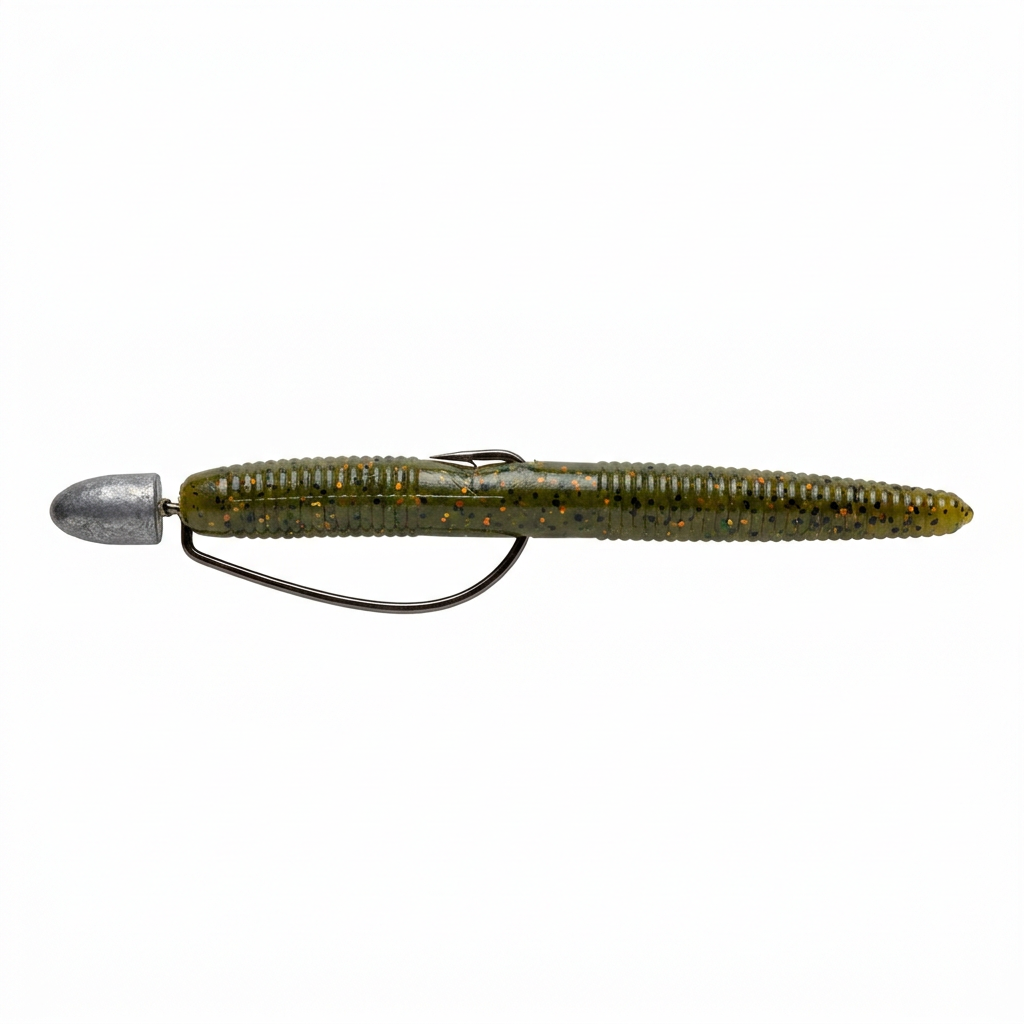
Largemouth bass are present throughout Lake Powell but are less common than smallmouth in the rocky main-lake structure. Largemouth relate to the more protected canyon arm pockets, any available brush or debris caught in coves, and the houseboat communities. Verify current largemouth bass regulations at azgfd.com or wildlife.utah.gov before fishing. Soft plastic swimbaits, jigs, and Texas-rigged worms worked in the backs of canyon arm coves and near any available woody cover or debris produce largemouth. The Wahweap Bay area and the larger protected coves near Page, Arizona hold largemouth in structure-friendly habitat. Spring is the most productive largemouth season as fish spawn in the backs of the protected canyon arm coves. Summer largemouth hold in the deeper shaded canyon pockets and are less accessible than smallmouth during the heat.
Lake Powell Walleye Fishing Report
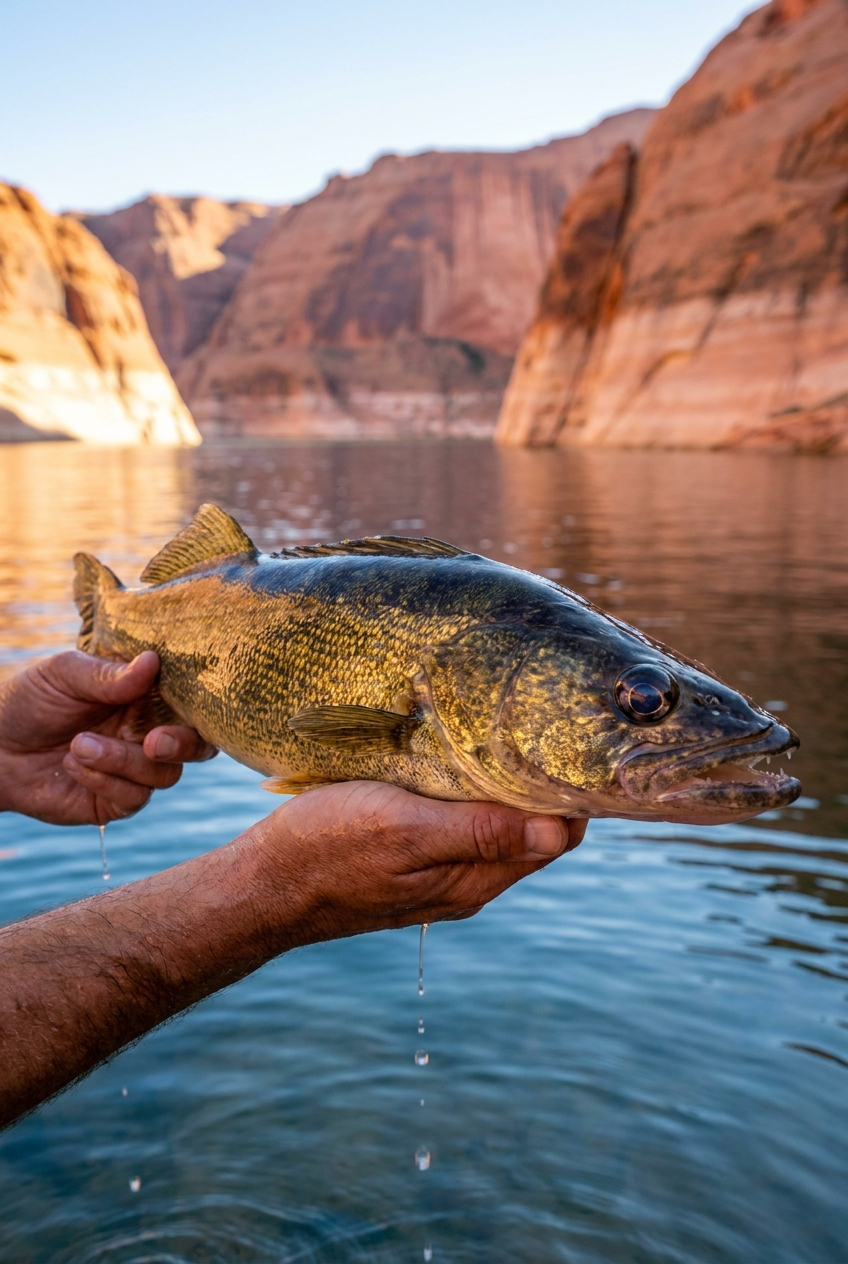
Walleye are present in Lake Powell, particularly in the upper Colorado River and San Juan River arms where cooler inflow water provides suitable habitat. The walleye population is less abundant than striped bass or smallmouth but provides a quality secondary fishery in the right locations. Verify current walleye regulations at azgfd.com or wildlife.utah.gov before fishing. Jigging with minnow-tipped rigs and spinner rigs along the main channel transitions in the San Juan Arm and the upper Colorado River inflow area produces walleye during spring and fall when water temperatures are cooler. Night fishing for walleye along the canyon wall transitions in 15 to 30 feet is the most consistent warm-weather approach. The deeper, cooler water of the San Juan Arm is the most reliable walleye location on Lake Powell.
Lake Powell Channel Catfish Fishing Report
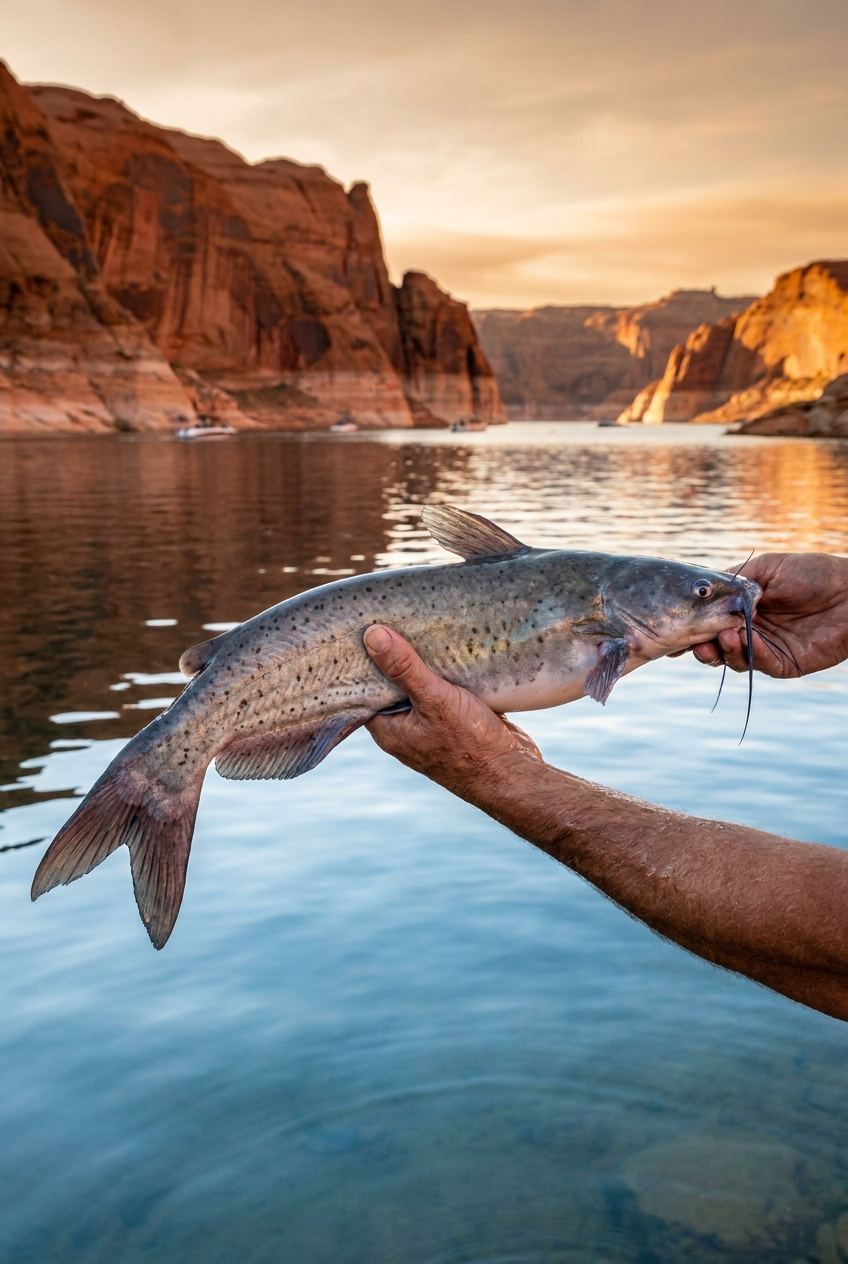
Channel catfish are abundant throughout Lake Powell in the canyon arm bottoms, tributary inflows, and any areas where the canyon floor transitions to softer substrate. The productive desert reservoir supports quality channel catfish in the warmer canyon arms and near the Colorado River and San Juan River inflows. Verify current catfish regulations at azgfd.com or wildlife.utah.gov before fishing. Cut shad and prepared catfish baits fished on the bottom in the backs of canyon arm coves and near the tributary inflows produce consistent channel catfish through the warm months. Summer nights are the most productive as catfish move from deeper daytime holding areas to feed in the shallower canyon arm margins. The Wahweap Bay area and the Warm Creek and Bullfrog Bay inflows concentrate catfish during seasonal inflow periods.
Before you head out, check your line. If it's been sitting on the reel all winter or has seen a lot of rocks and timber, it's worth replacing before a serious trip. I order most of my braid from Reaction Tackle and have been happy with it.
Top Fish to Target in Lake Powell
Lures for Lake Powell
Tackle matched to this lake's species and structure.
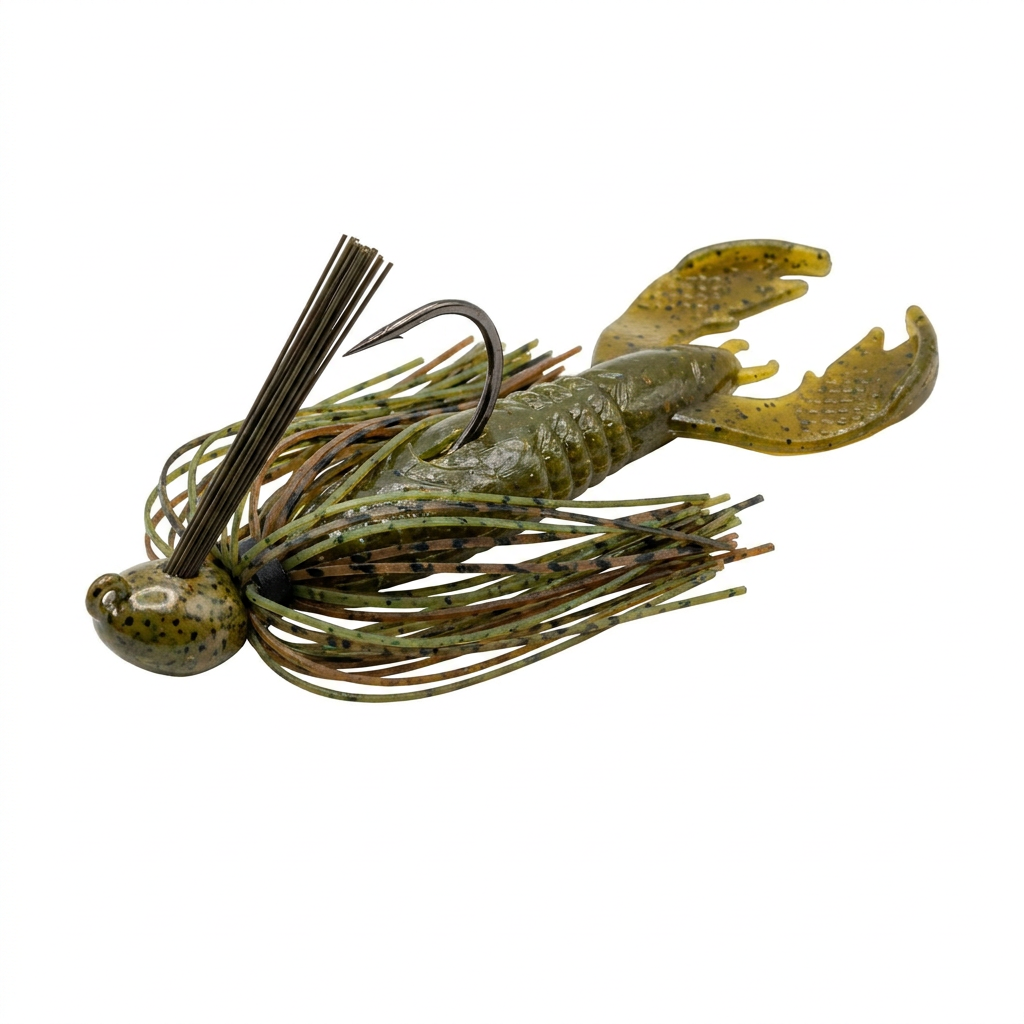
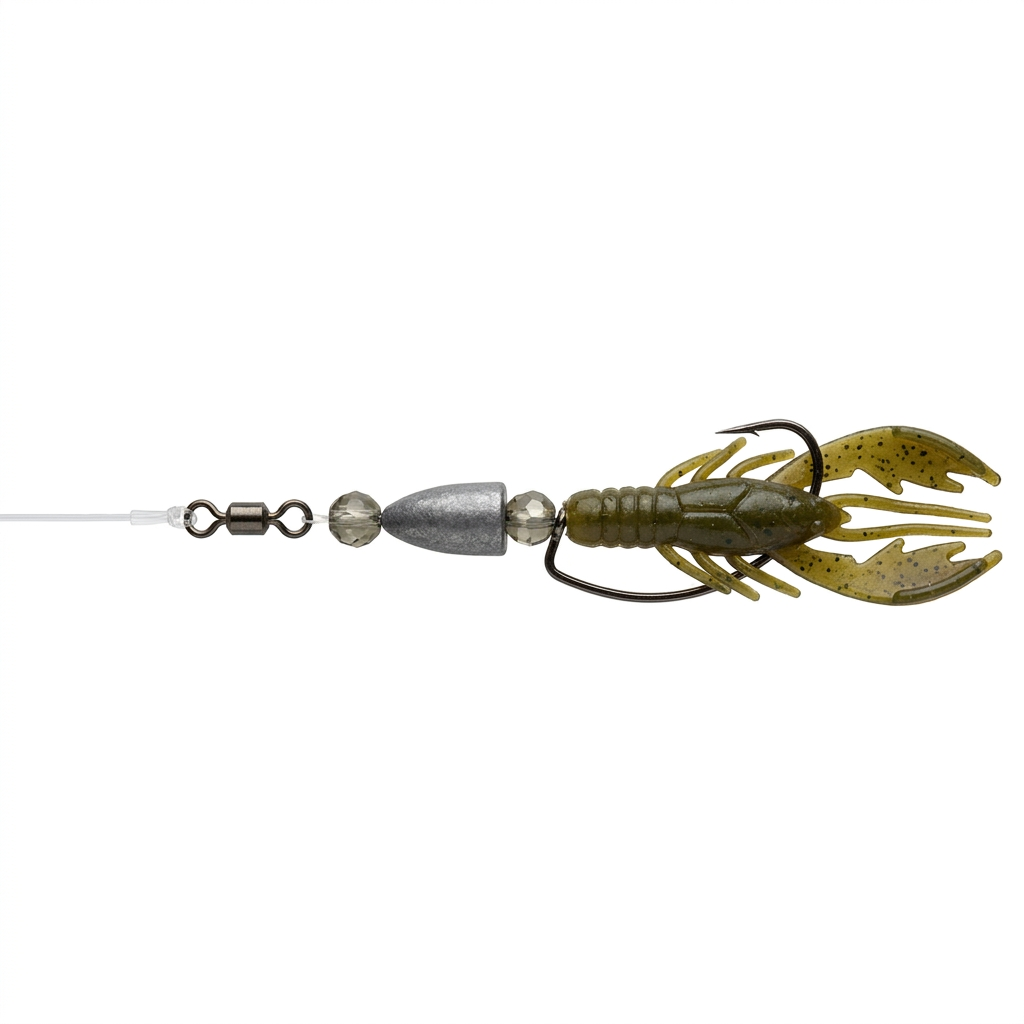
One thing I always check before a big trip is my main line. For most of the presentations that work here, you want braid. The sensitivity makes a real difference, especially when fish are finicky. I've been ordering from Reaction Tackle for a while now and haven't looked back.
About Lake Powell
Lake Powell is one of the defining man-made landscapes in the American West. Glen Canyon Dam on the Colorado River, completed in 1966, created a reservoir that reached full pool in 1980 and covers 161,390 acres with nearly 2,000 miles of canyon shoreline in the sandstone country of the Colorado Plateau. The striped bass population is self-sustaining and dominant. The smallmouth bass fishing in the clear rocky canyon arms is among the best in the West. The visual experience of fishing this place — red canyon walls, blue water, the silence of the side canyons — is unlike anything else in fishing.
Dual state licensing. Lake Powell spans Utah and Arizona. Most of the reservoir's surface area is in Utah; the dam, Wahweap Marina, and the primary gateway city of Page are in Arizona. Anglers fishing the Utah portion need a Utah fishing license; anglers fishing the Arizona portion (Wahweap Bay, Antelope Canyon area) need an Arizona license. Many anglers covering the full lake carry both. Verify current requirements at azgfd.com and wildlife.utah.gov.
Quagga mussels: mandatory inspection. Quagga mussels are confirmed present lake-wide at Lake Powell. All watercraft must be inspected and certified clean before launch at any marina. Mandatory boat inspection stations operate at Wahweap, Bullfrog, Halls Crossing, and Antelope Point. Inspections are not optional. Quagga mussels can damage boat mechanical systems and spread to other water bodies on contaminated equipment.
Native species protections. The Colorado River system at Lake Powell includes federally endangered native fish: razorback sucker, humpback chub, and bonytail chub. Any of these species caught must be released immediately and must not be removed. It is illegal to possess these fish under federal law regardless of where they are caught.
Lake size and location. Lake Powell covers 161,390 acres at full pool with a maximum depth of 583 feet at Glen Canyon Dam. Page, Arizona (Coconino County) is the primary gateway, adjacent to Wahweap Marina and the dam. Bullfrog, Utah is the mid-lake marina approximately 96 miles by water from the dam. The reservoir extends approximately 186 miles upstream on the Colorado River from the dam. NPS entrance fee or America the Beautiful pass required for vehicle access.