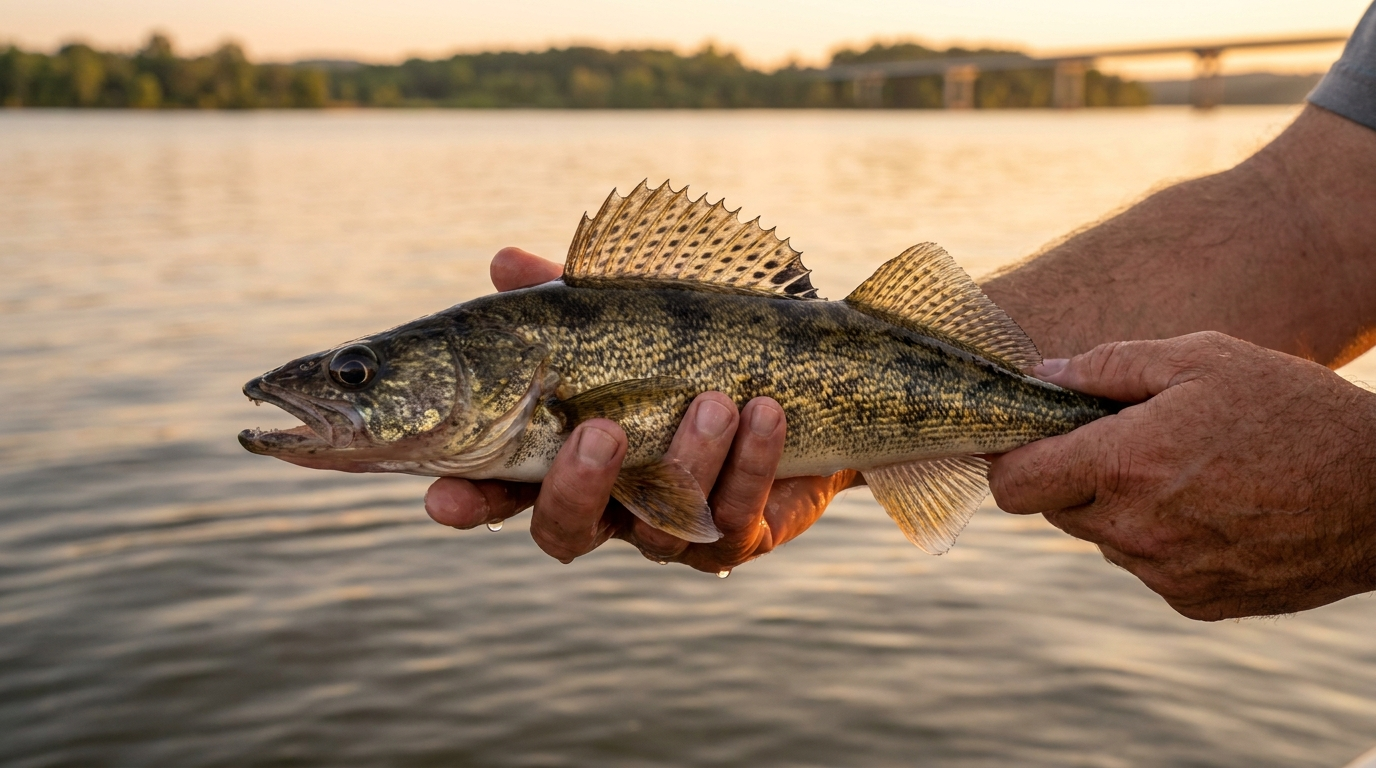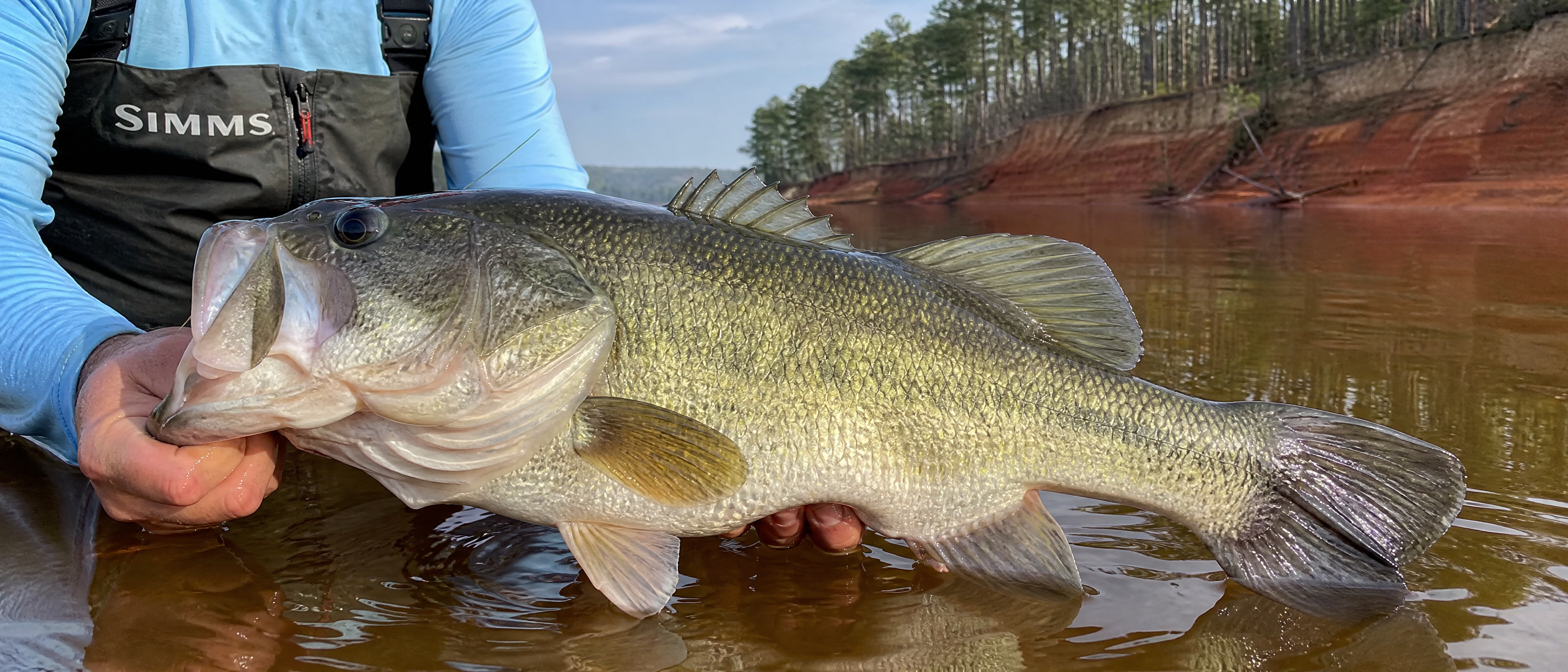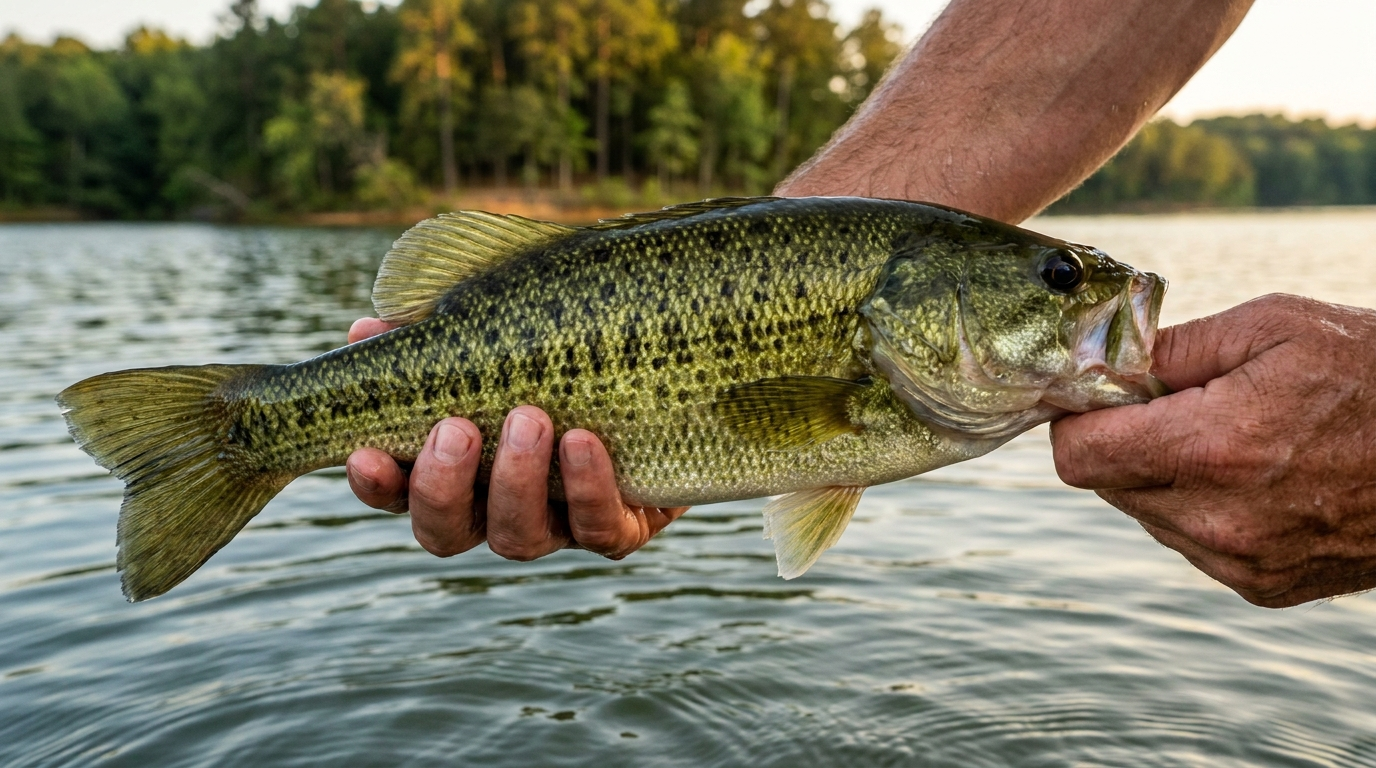
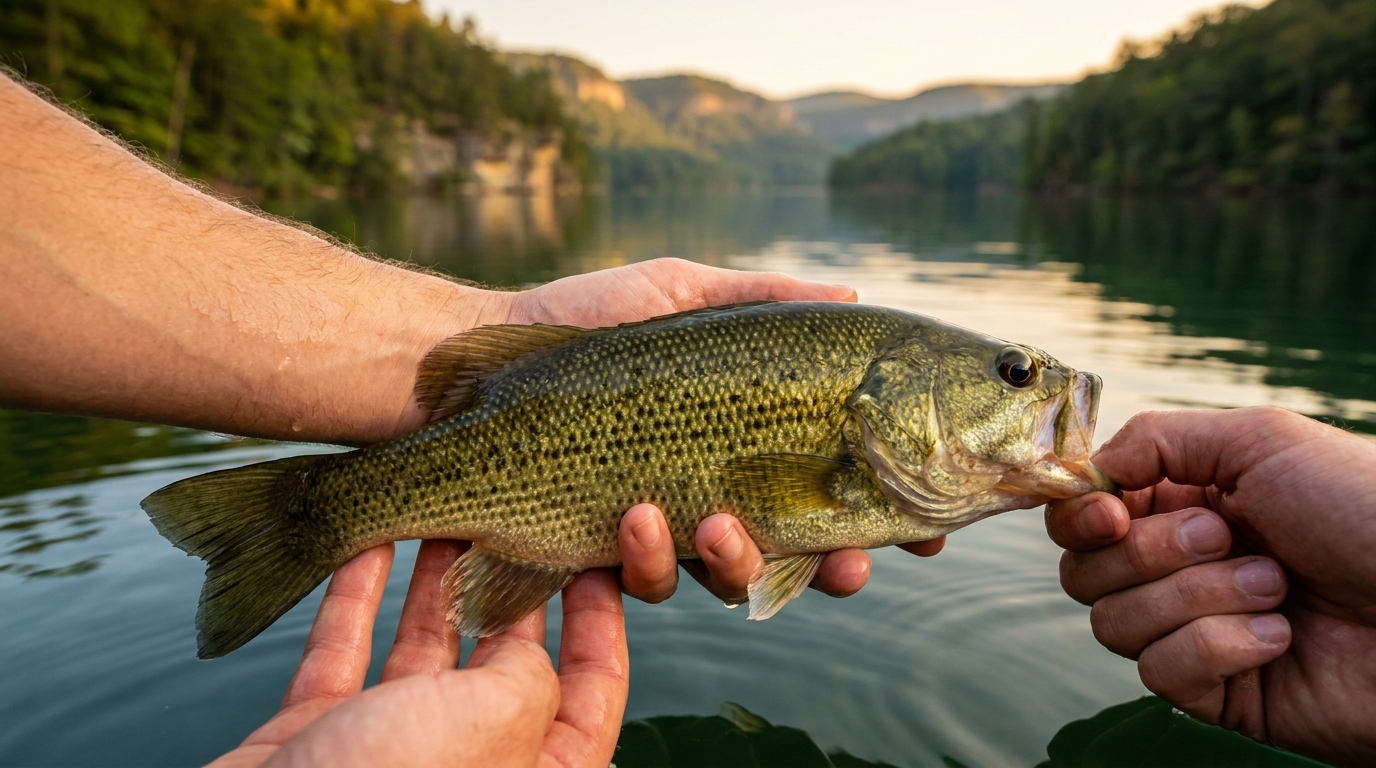
Smith Lake is the Alabama lake I keep reading about from serious bass anglers who know what they're talking about. The combination of 264-foot depth, canyon walls in the Bankhead National Forest, and ultra-clear water creates a spotted bass fishery that rivals anything in the Southeast. The lake looks more like an Ozark impoundment than what you'd expect from north Alabama, and that comparison is a compliment. I'd be fishing drop shots on the canyon bluffs and prospecting for stripers in the deep channel. Smith Lake is a serious destination.
Today's Bite Score · October 8, 2026
Above average conditions worth planning a trip
🌘Waning Crescent
Smith Lake Fishing Report
October FishingMonthly fishing report · October patterns and techniques
Smith Lake in October experiences cooling water temperatures that typically range from 65 to 72 degrees Fahrenheit, creating ideal conditions for increased fish activity. As the month progresses, the lake's deeper structures become more attractive to gamefish seeking stable temperatures. Anglers find that fish are transitioning from summer patterns, moving away from the shallowest areas and positioning themselves along drop-offs and channel ledges where food becomes concentrated. This month marks a shift in feeding intensity as fish prepare for cooler months ahead.
Largemouth bass dominate October fishing at Smith Lake and are particularly active along the rock outcroppings and submerged timber scattered throughout the 22,000-acre reservoir. Striped bass move into deeper main lake channels and around the dam structure, where they chase schools of shad. Crappie congregate near brushy cover and submerged trees at depths between 15 and 25 feet. Smallmouth bass become increasingly aggressive around the lake's rocky points and ledges, especially on the lake's upper end near the dam. In October, fish are feeding aggressively as they build reserves, making this month one of the most productive periods for anglers willing to target multiple species.
Crankbaits and topwater lures prove highly effective this month for bass, particularly around the lake's numerous shallow points and grass beds. Anglers find success with square-bill crankbaits that reach depths of 6 to 8 feet where bass stage before moving deeper. Live shad presentations work exceptionally well for striped bass near the dam and along main lake ledges. For crappie, small jigs tipped with minnows or live shad excel when worked vertically over structure. Spinnerbaits in natural colors effectively trigger strikes from all bass species as they hunt in the clearer October water. This month, anglers should focus on early morning and late afternoon periods when fish are most active, and concentrate efforts around the transition zones between shallow banks and deeper water where Smith Lake's structure naturally funnels baitfish and predators together.
Get More Fishing Report Specifics
Tap a topic button below for a report on current conditions.
Tap a topic above to get a current report for Smith Lake.
Answers are generated on demand and cached. No AI call fires until you tap a tab.
Smith Lake Fishing Guides
Looking for a Smith Lake fishing guide? The ultra-clear canyon water and world-class spotted bass at Smith Lake are a bucket-list fishery, but the depth game is highly technical and a guide who's spent years here is invaluable. Go here → to check out our recommended fishing guides for Smith Lake. Then scroll down on that page to see all of the Smith Lake fishing guides.
Smith Lake Fishing Strategies by Species
Seasonal patterns and techniques by target species · Verified against official sources
Largemouth bass, spotted bass, striped bass, crappie, bluegill, and catfish are the primary sport fish at Smith Lake, a 21,200-acre Alabama Power reservoir on the Sipsey Fork of the Black Warrior River in Walker, Winston, and Cullman counties, Alabama. Lewis Smith Dam was completed in 1961. Smith Lake is renowned for its exceptional water clarity (among the clearest lakes in Alabama), dramatic canyon walls in the William B. Bankhead National Forest, and one of the finest spotted bass fisheries in the southeastern United States. Alabama Division of Wildlife and Freshwater Fisheries regulations apply. Verify current regulations at outdooralabama.com before fishing.
Smith Lake Spotted Bass Fishing Report
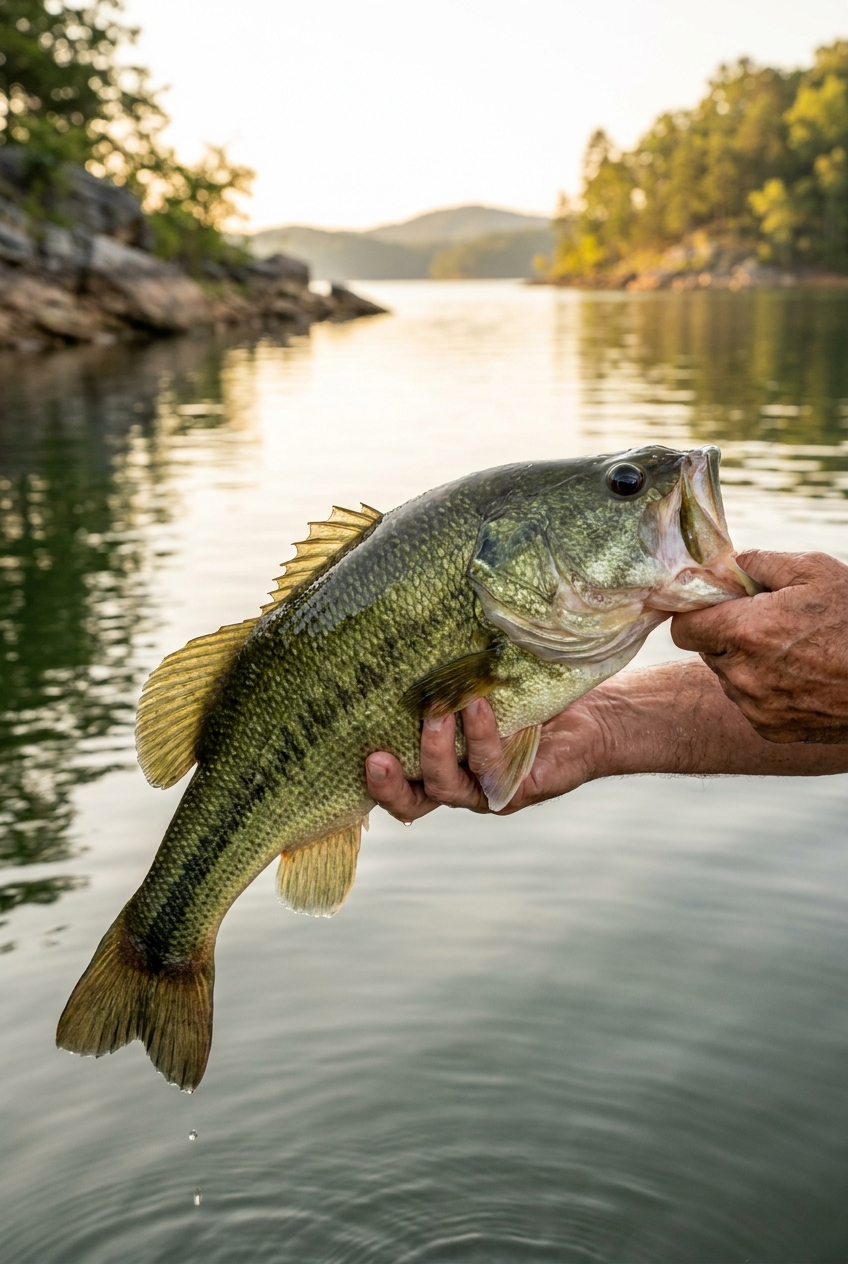
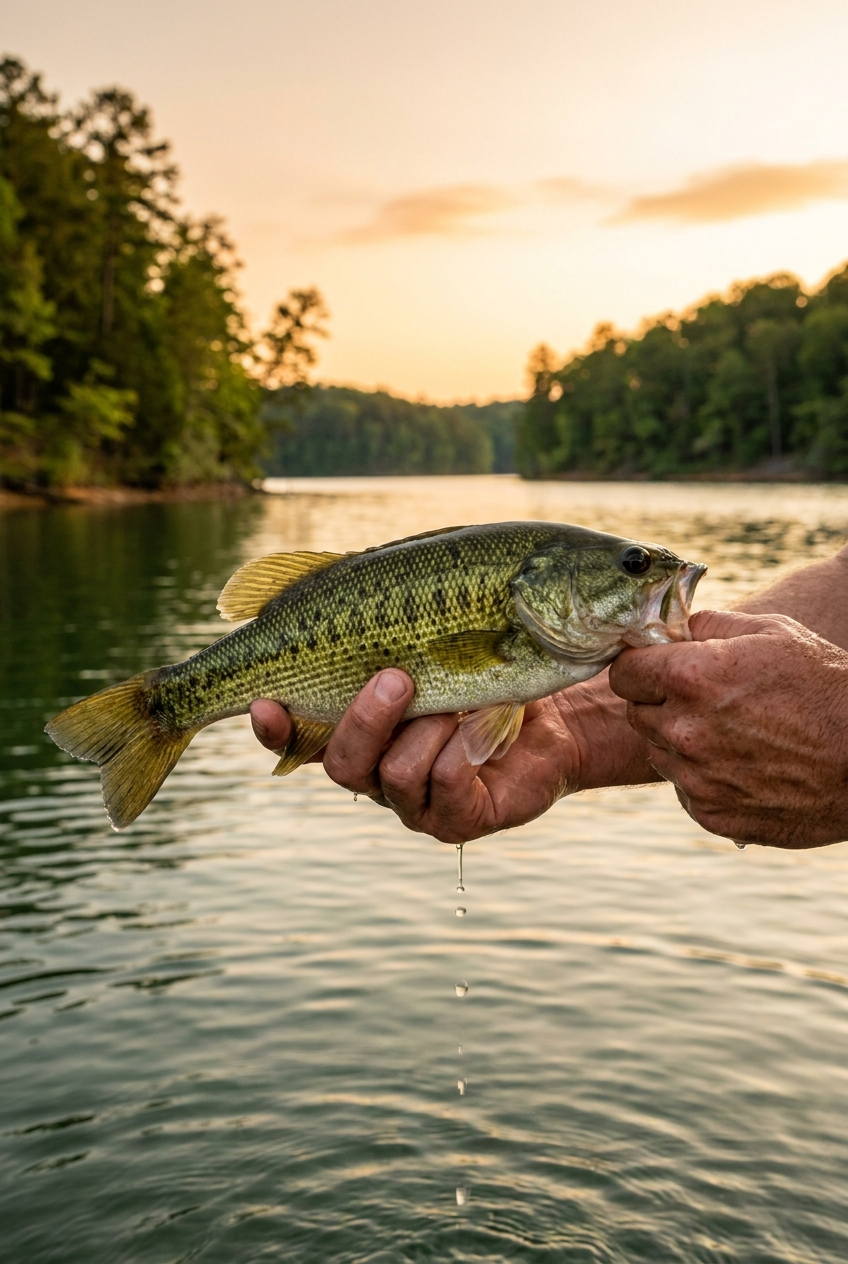
Spotted bass are the signature species at Smith Lake and the reason the lake draws serious bass anglers from across the Southeast. Smith Lake is widely regarded as one of the top spotted bass fisheries in Alabama - and by extension, one of the best in the entire southeastern United States. The lake's combination of ultra-clear water, extreme depth (264 feet near the dam), dramatic sandstone and limestone canyon walls in the William B. Bankhead National Forest, and the Sipsey Fork's cold, rock-dominated geology creates nearly perfect spotted bass habitat. Spotted bass at Smith Lake are found on the canyon bluff walls, deep rocky points, and main channel transitions throughout the reservoir, holding at depths of 12 to 35 feet for much of the year. Drop-shot rigs with finesse worms and tube jigs on 8 to 10-pound fluorocarbon worked slowly along the vertical canyon walls and rocky point transitions are the most consistent spotted bass presentations at Smith Lake. The technique requires patience and precise depth control - spotted bass on the canyon bluffs often hold within a narrow 3 to 5-foot depth band along the bluff face, and working through that exact zone produces the most bites. The canyon arm of the Sipsey Fork extending into Winston County is the heart of the spotted bass fishery, with dramatic bluff walls on both sides of the channel holding fish year-round. Spring spotted bass spawn on the rocky transitions and gravel-covered points at 6 to 14 feet in April and early May - this is the most accessible season for spotted bass fishing. Fall provides excellent spotted bass action on crankbaits and jigs along the main lake points through November. Alabama ADWFF regulations apply: verify current size and bag limits at outdooralabama.com.
Smith Lake Largemouth Bass Fishing Report
Largemouth bass at Smith Lake are concentrated in the warmer, slightly shallower sections of the reservoir - the dock structure and cove timber of the Walker County arm, the tributary coves in the upper Cullman County sections, and any softer-bottom habitat that provides contrast to the rocky main lake. The clear water makes largemouth more cover-dependent than in typical Alabama reservoirs, and fish position tight to dock structure, standing timber, and the few weed edges that develop in the shallower cove areas. Jigs and Texas-rigged worms worked through dock pilings and along the timber transitions produce the most consistent largemouth throughout the year. Spring largemouth fishing is the most productive season at Smith Lake for anglers targeting specifically largemouth rather than spotted bass. Fish stage on the dock lines and secondary points at 8 to 14 feet in late March and April, then spawn in the protected cove backs at 2 to 6 feet during April and May. The coves in the Walker County arm and the shallow tributary pockets throughout the Cullman arm hold the best largemouth spawning habitat. Summer largemouth retreat to the deeper dock structure at 12 to 18 feet during the hottest months. Fall produces the most mixed largemouth and spotted bass fishing as fish from both species become active on the main lake points. Alabama ADWFF regulations apply: verify current size and bag limits at outdooralabama.com.
Smith Lake Striped Bass Fishing Report
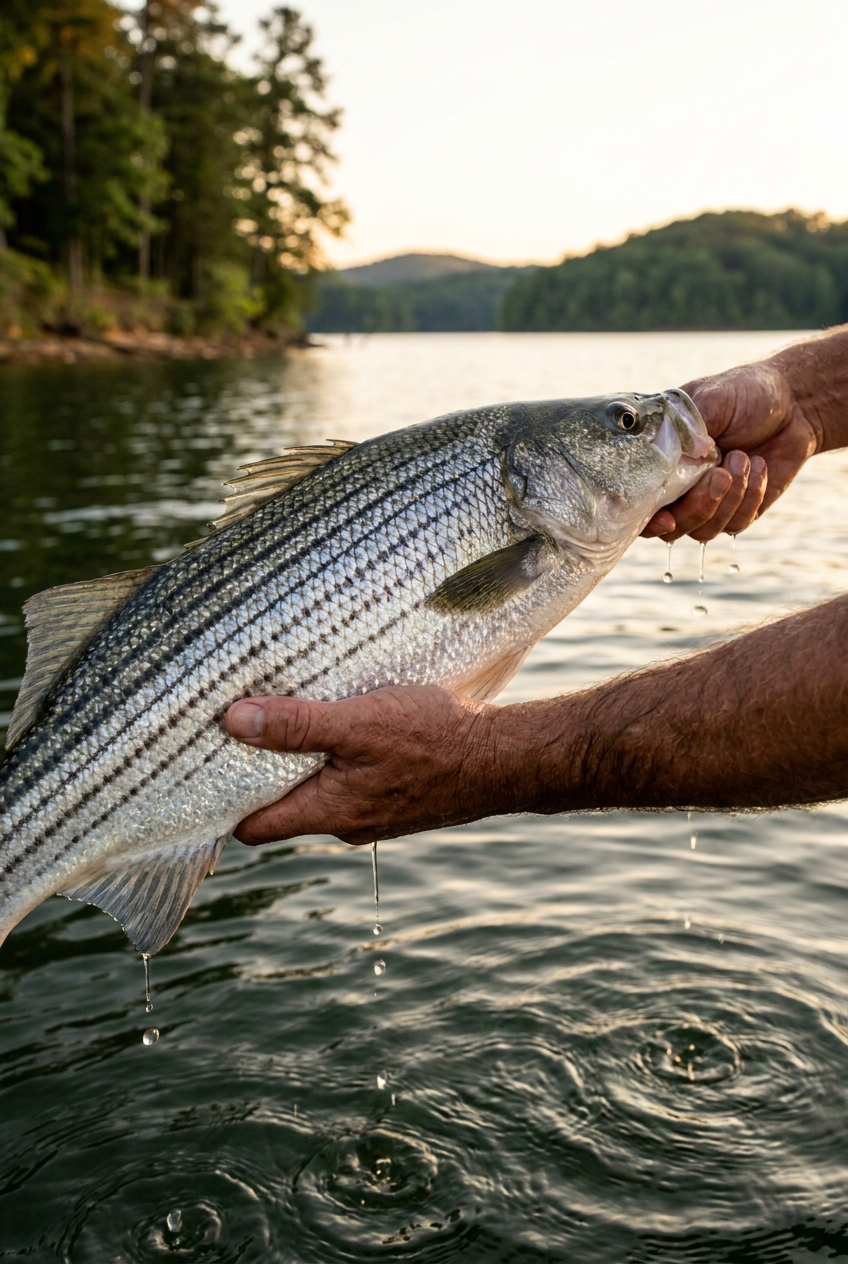
Striped bass are stocked in Smith Lake by the Alabama Division of Wildlife and Freshwater Fisheries and provide an exciting open-water fishery throughout the main lake basin and the deeper Sipsey Fork channel. The lake's exceptional depth (264 feet near the dam) provides the cold-water refuge that landlocked striped bass need to survive summer, making Smith Lake one of the better Alabama reservoirs for striper persistence through the hottest months. Smith Lake stripers grow to impressive sizes in the fertile, deep reservoir, and the species attracts dedicated striper anglers throughout the year. Live shad and cut bait fished below the thermocline produce consistent stripers through summer. Trolling is the most consistent striper method at Smith Lake through the warm season. Deep-running umbrella rigs, large swimbaits, and live shad worked at 15 to 40 feet along the main Sipsey Fork channel and near Lewis Smith Dam produce fish during summer. Surface schooling activity is a common sight on the main lake basin from April through October, particularly in the early morning when stripers push shad schools to the surface. The main deep basin between Jasper and the dam concentrates fish during the hottest summer months. Fall is an excellent secondary season as stripers become more aggressive and roam shallower water throughout the lake. Alabama ADWFF regulations apply: verify current size and bag limits at outdooralabama.com.
Smith Lake Crappie Fishing Report
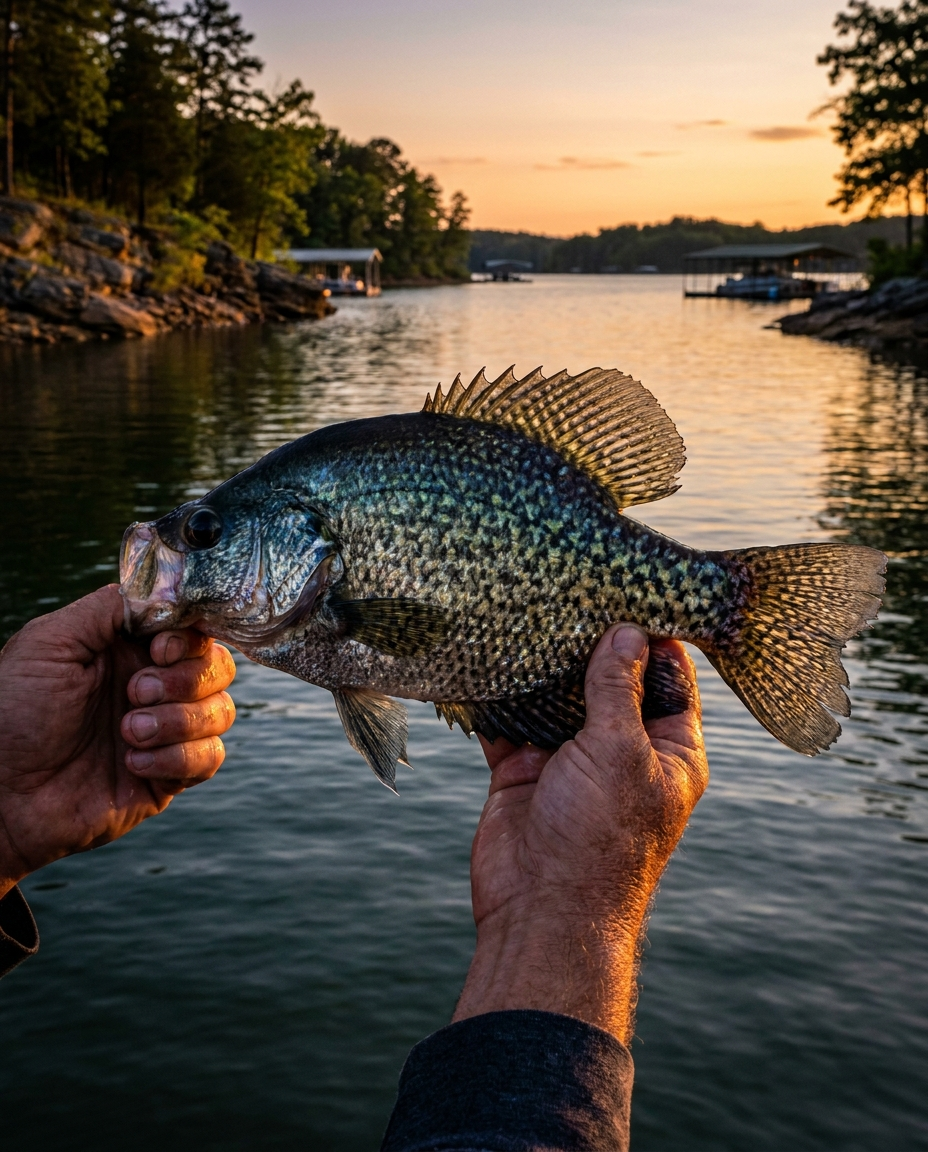
Crappie fishing at Smith Lake is centered on the dock structure, bridge pilings, and submerged timber of the tributary arms in Walker and Cullman counties. Both black and white crappie are present, and the lake produces quality fish year-round due to the excellent forage base. The dock communities in the Walker County arm near Jasper and the standing timber in the upper coves throughout the reservoir hold reliable crappie populations. Small tube jigs, crappie jig-minnow combinations in white and chartreuse, and live minnows on a cork worked vertically at 5 to 14 feet around dock pilings and submerged brush produce the most consistent catches. Spring crappie fishing peaks at Smith Lake from late February through April as fish move from 18 to 25-foot winter depths into the shallow dock and brush structure at 4 to 10 feet. The dock lines throughout the Walker County arm and the submerged timber in the protected Cullman County coves hold the heaviest spring concentrations. Night fishing with lights and small jigs around dock structure during the spring spawn is a popular and effective local approach. Summer crappie suspend under dock structure in 12 to 20 feet where the clear water allows the fish to be seen and targeted with vertical jigging presentations. Fall crappie return to moderate depths around brush and dock pilings through November. Alabama ADWFF regulations apply: verify current size and bag limits at outdooralabama.com.
Smith Lake Bluegill Fishing Report
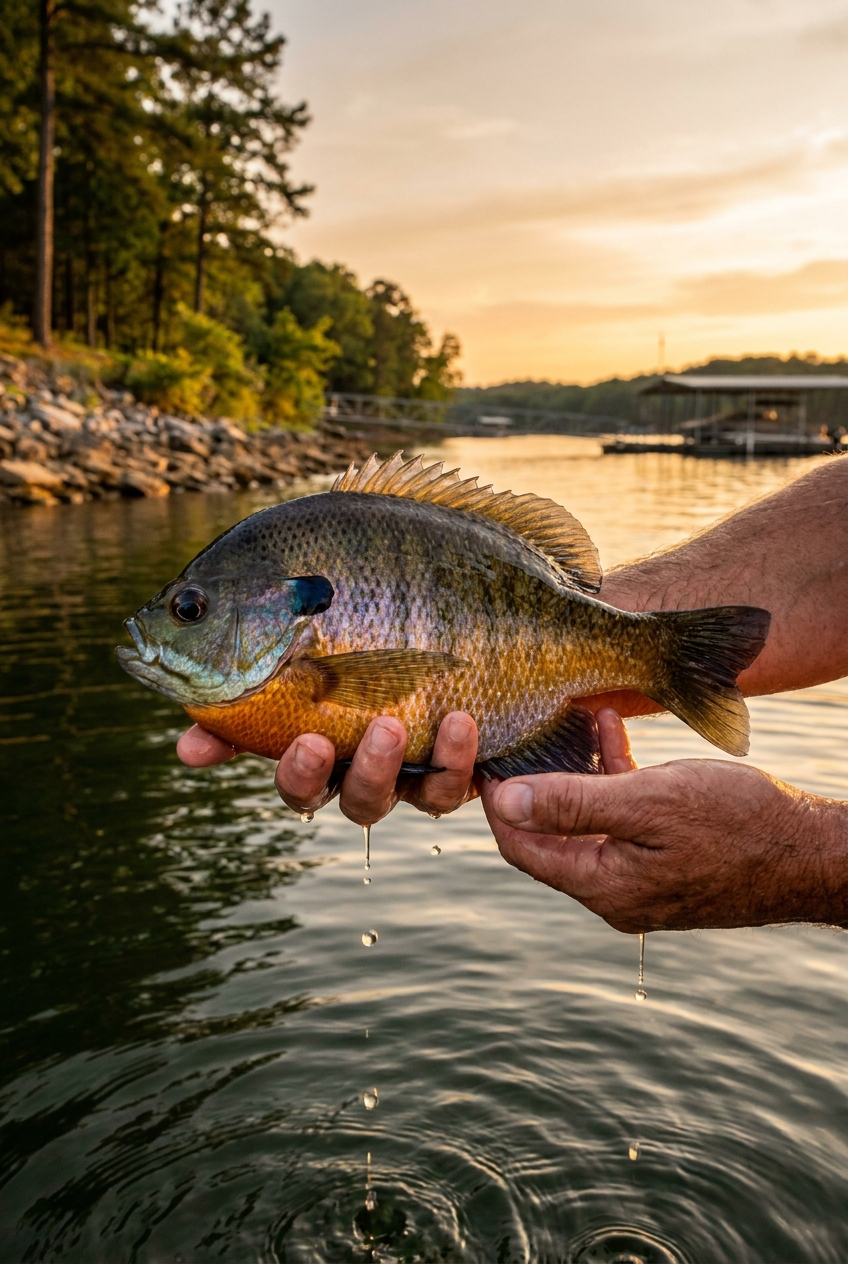
Bluegill are abundant throughout Smith Lake and provide consistent light-tackle fishing from shore, docks, and boats throughout the warmer months. The lake's productive shallow coves, dock structure, and rocky shoreline transitions all hold bluegill. Crickets and worms under a small float are the most effective presentations from public bank access areas. The Alabama Power recreation areas around Smith Lake provide bank fishing access points where families and beginning anglers can target bluegill through the summer season. The peak bluegill season at Smith Lake runs from May through August, when fish spawn repeatedly on the gravel and hard-bottom flats at 2 to 5 feet adjacent to dock structure and rocky shoreline. Summer afternoons produce slower action, but early morning and evening bluegill fishing from the shallow rocky coves and dock areas is consistently productive. The many coves and tributary arms throughout Walker, Winston, and Cullman counties provide extensive bluegill habitat accessible from both boats and shore. Alabama ADWFF regulations apply: verify current regulations at outdooralabama.com.
Smith Lake Catfish Fishing Report
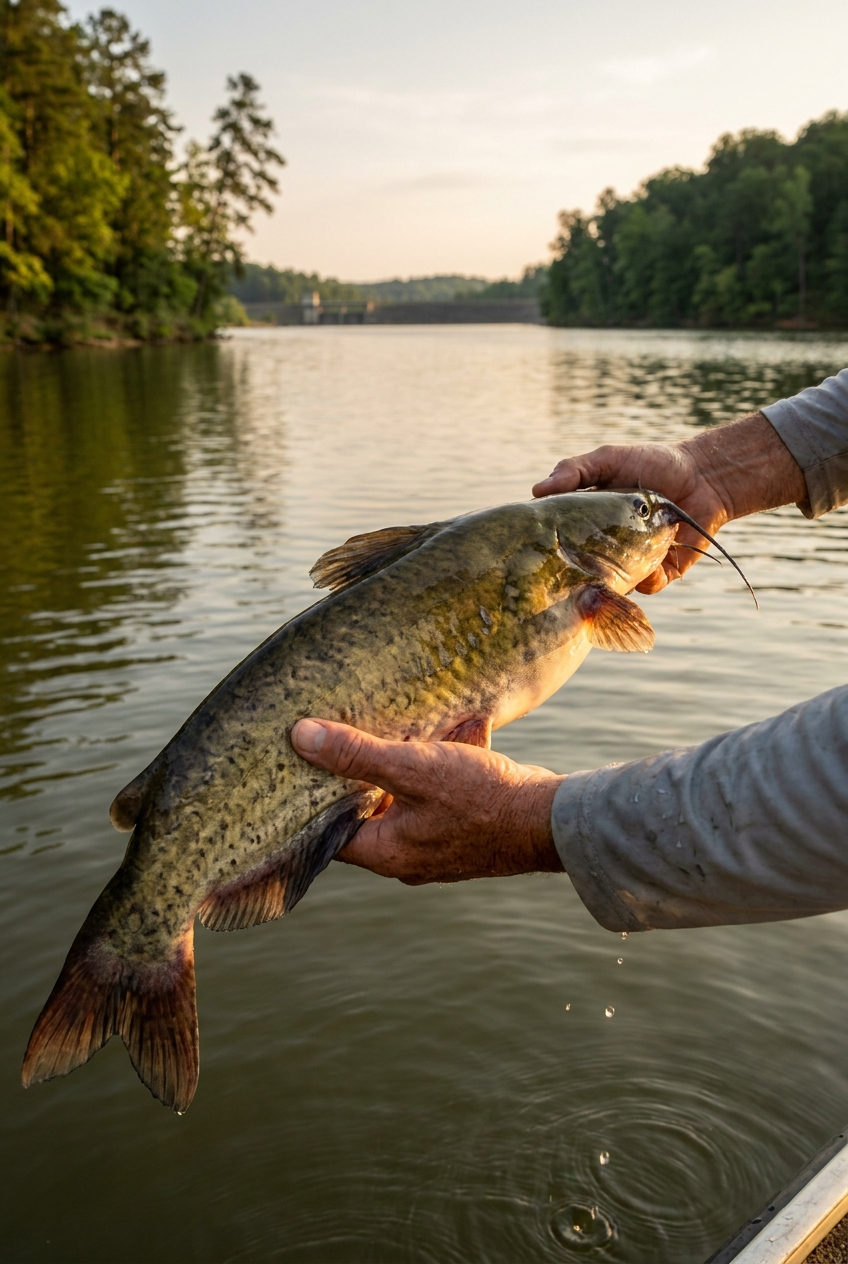
Catfish - primarily channel catfish and flathead catfish - are well-distributed throughout Smith Lake in the tributary mouths, deeper cove areas, and the main Sipsey Fork channel. The Sipsey Fork drainage supports quality catfish populations, and both channel catfish and the larger flathead catfish provide substantial fishing opportunities for anglers willing to target them specifically. Cut shad, chicken liver, and prepared catfish baits fished on the bottom near tributary mouths and channel transitions produce consistent channel catfish results. Flathead catfish in the deeper rocky structure and submerged wood of the canyon arms can reach impressive sizes. Night fishing for catfish from the Alabama Power recreation areas and public access points is the most productive approach from June through September. Setting multiple rods with cut shad near the channel transitions and tributary mouths of the Walker and Cullman county arms produces the best overnight results. Spring catfish activity builds significantly from April through June as fish spawn in the rocky crevices and submerged timber of the canyon walls. The unique canyon arm structure of Smith Lake provides exceptional flathead catfish habitat in the deep rocky cover. Alabama ADWFF regulations apply: verify current size and bag limits at outdooralabama.com.
Before you head out, check your line. If it's been sitting on the reel all winter or has seen a lot of rocks and timber, it's worth replacing before a serious trip. I order most of my braid from Reaction Tackle and have been happy with it.
Top Fish to Target in Smith Lake
Lures for Smith Lake
Tackle matched to this lake's species and structure.
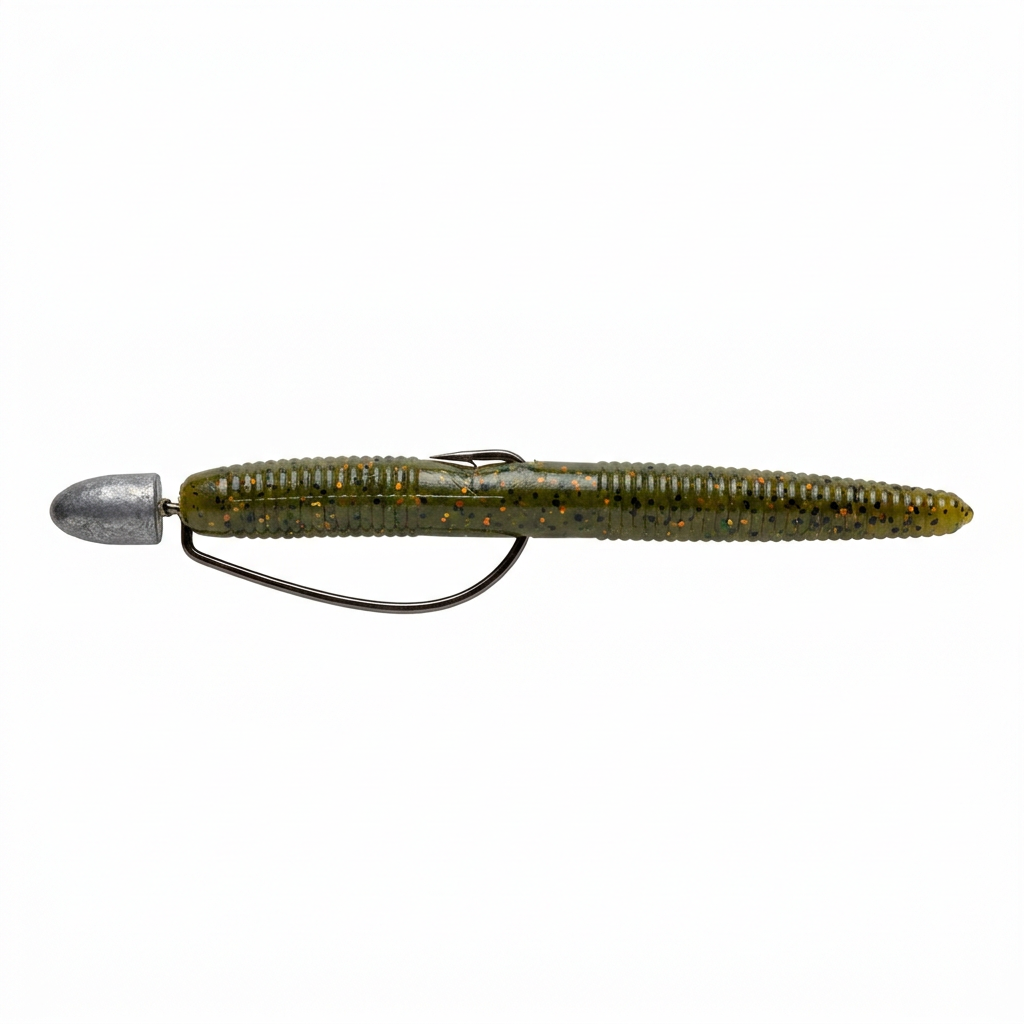
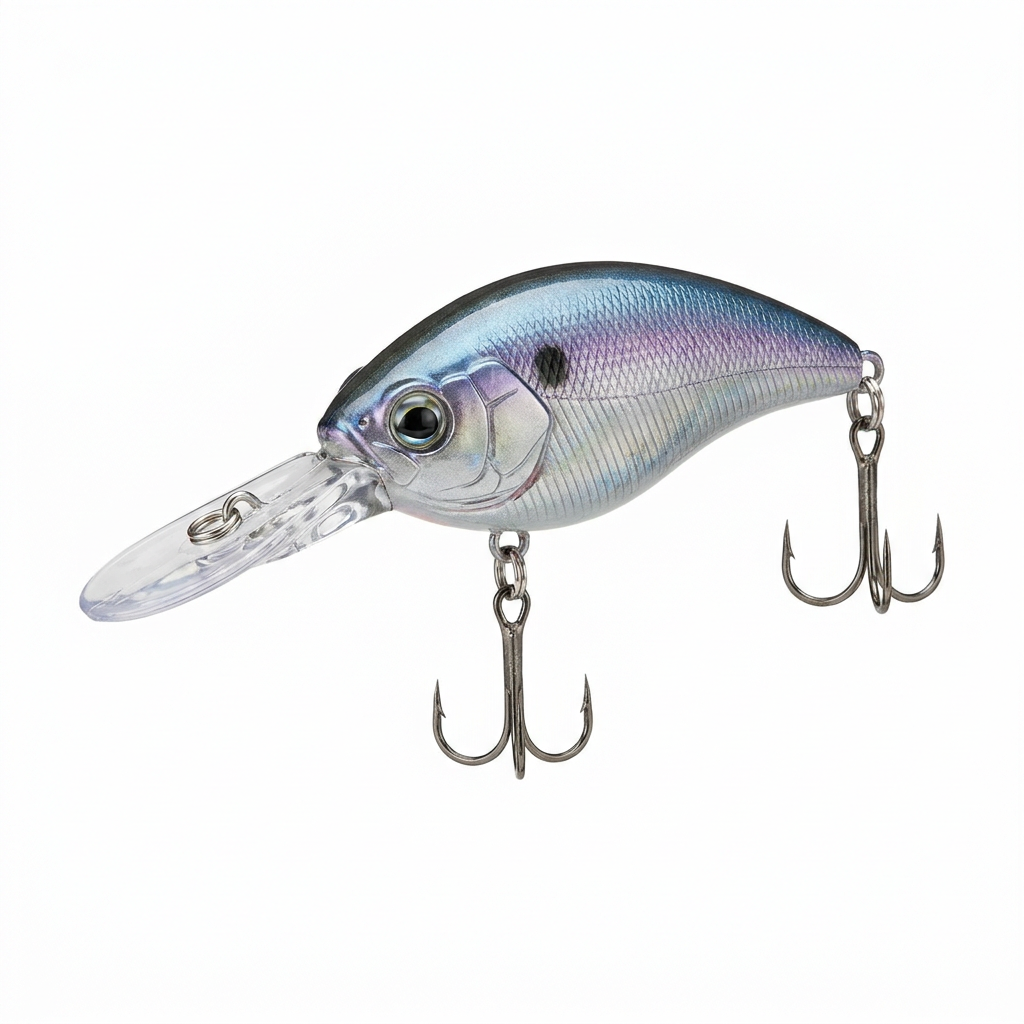
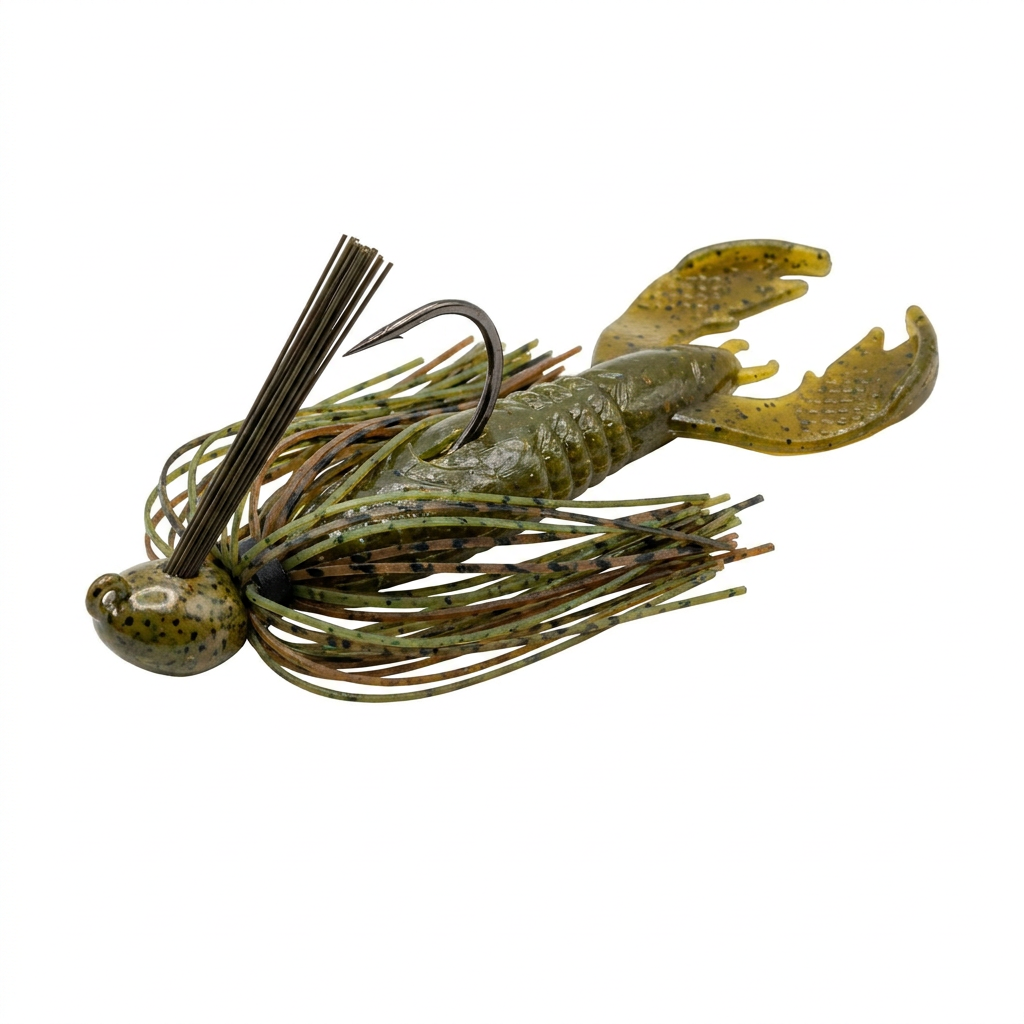
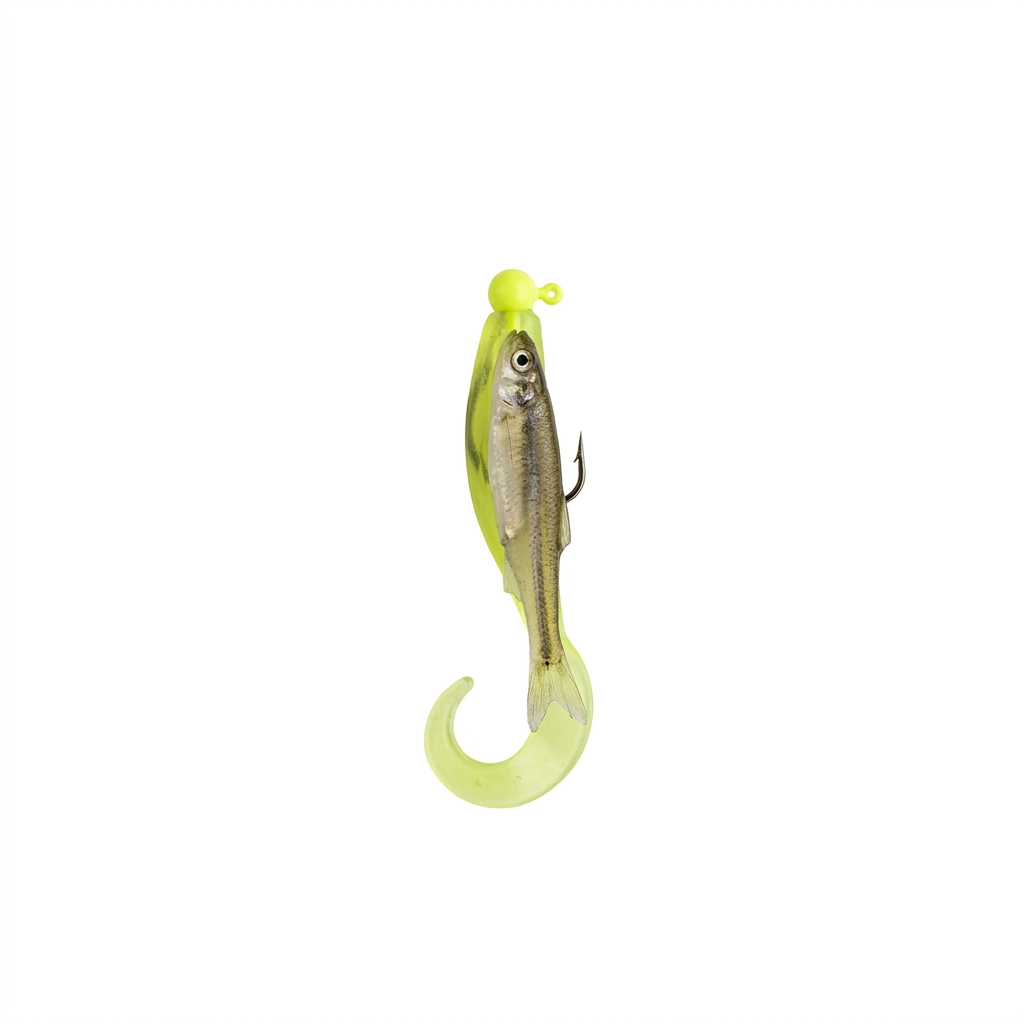
One thing I always check before a big trip is my main line. For most of the presentations that work here, you want braid. The sensitivity makes a real difference, especially when fish are finicky. I've been ordering from Reaction Tackle for a while now and haven't looked back.
About Smith Lake
Lake size and location. Smith Lake covers approximately 21,200 acres in Walker, Winston, and Cullman counties in northwest Alabama, formed by Lewis Smith Dam on the Sipsey Fork of the Black Warrior River. Alabama Power Company completed Lewis Smith Dam in 1961. The lake reaches a maximum depth of approximately 264 feet near the dam, making it one of the deepest lakes in Alabama. The nearest town is Jasper, the Walker County seat, located approximately 45 miles northwest of Birmingham. A significant portion of the lake's upper arms extends into the William B. Bankhead National Forest, creating one of the most scenic lake environments in the southeastern United States.
Ultra-clear water and canyon walls. Smith Lake is characterized by extraordinary water clarity - among the clearest in Alabama - resulting from the Sipsey Fork's sandstone and limestone Appalachian headwaters and the limited agricultural and urban runoff in the largely forested watershed. The combination of clear water and the dramatic sandstone canyon walls within the Bankhead National Forest creates a lake environment that strikes first-time visitors as more similar to an Ozark or Appalachian reservoir than a typical Alabama impoundment. The canyon walls plunge directly into the lake in several sections of the Sipsey Fork arm, creating vertical structure that spotted bass exploit year-round.
World-class spotted bass fishery. Smith Lake is recognized by serious bass anglers across the Southeast as one of the premier spotted bass destinations in Alabama. The deep, clear water, rocky canyon structure, and cold Sipsey Fork drainage create the conditions spotted bass thrive in. The spotted bass fishery on the canyon bluffs of the Sipsey arm - with fish holding at precise depth bands along the vertical rock face - demands technical fishing with finesse gear and precise depth control. Anglers who master the drop-shot and tube jig presentations on the canyon walls consistently catch quality spotted bass throughout the season.
Regulations and access. Alabama Division of Wildlife and Freshwater Fisheries regulations apply to all species at Smith Lake. Alabama Power manages shoreline access and operates recreation areas with public boat ramps. The William B. Bankhead National Forest provides additional access through forest service roads and the Sipsey Wilderness area adjacent to the lake's upper arms. Always verify current regulations at outdooralabama.com before fishing.