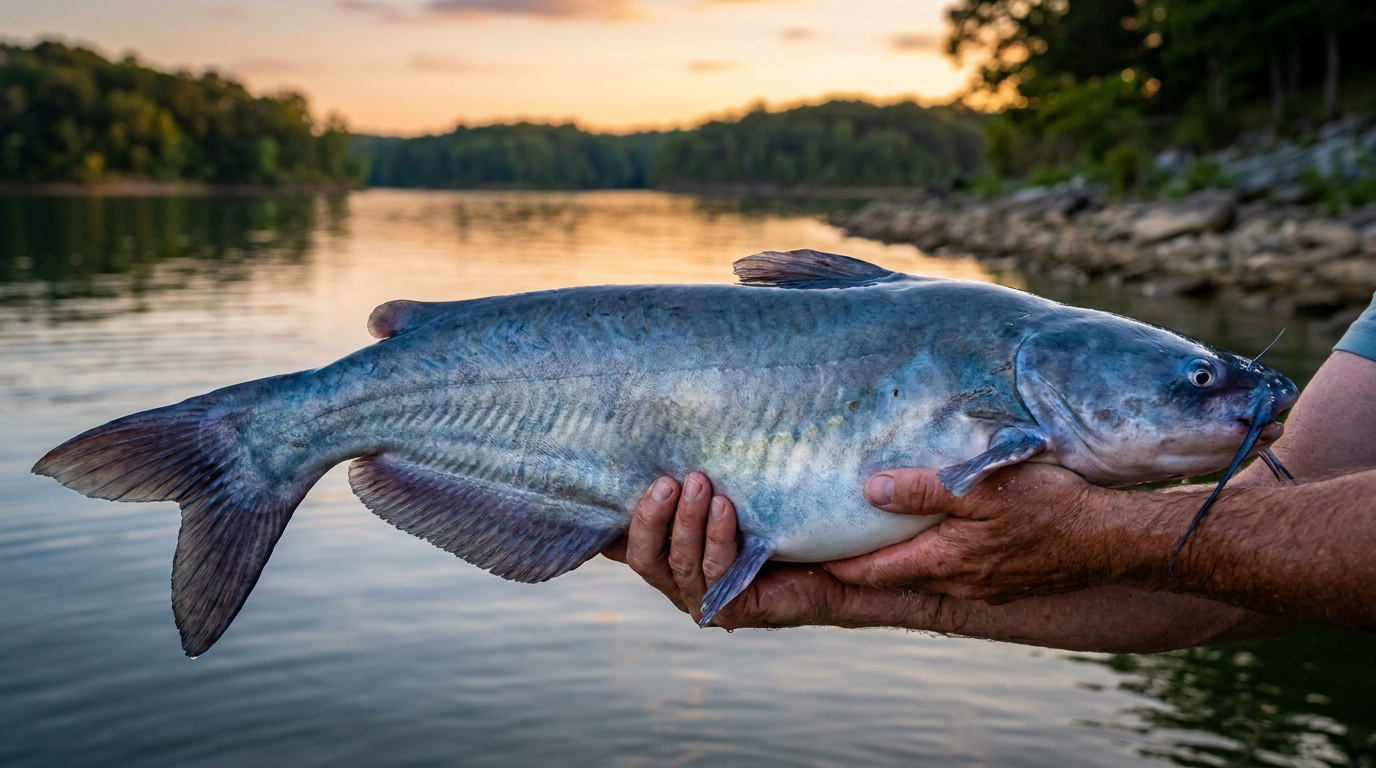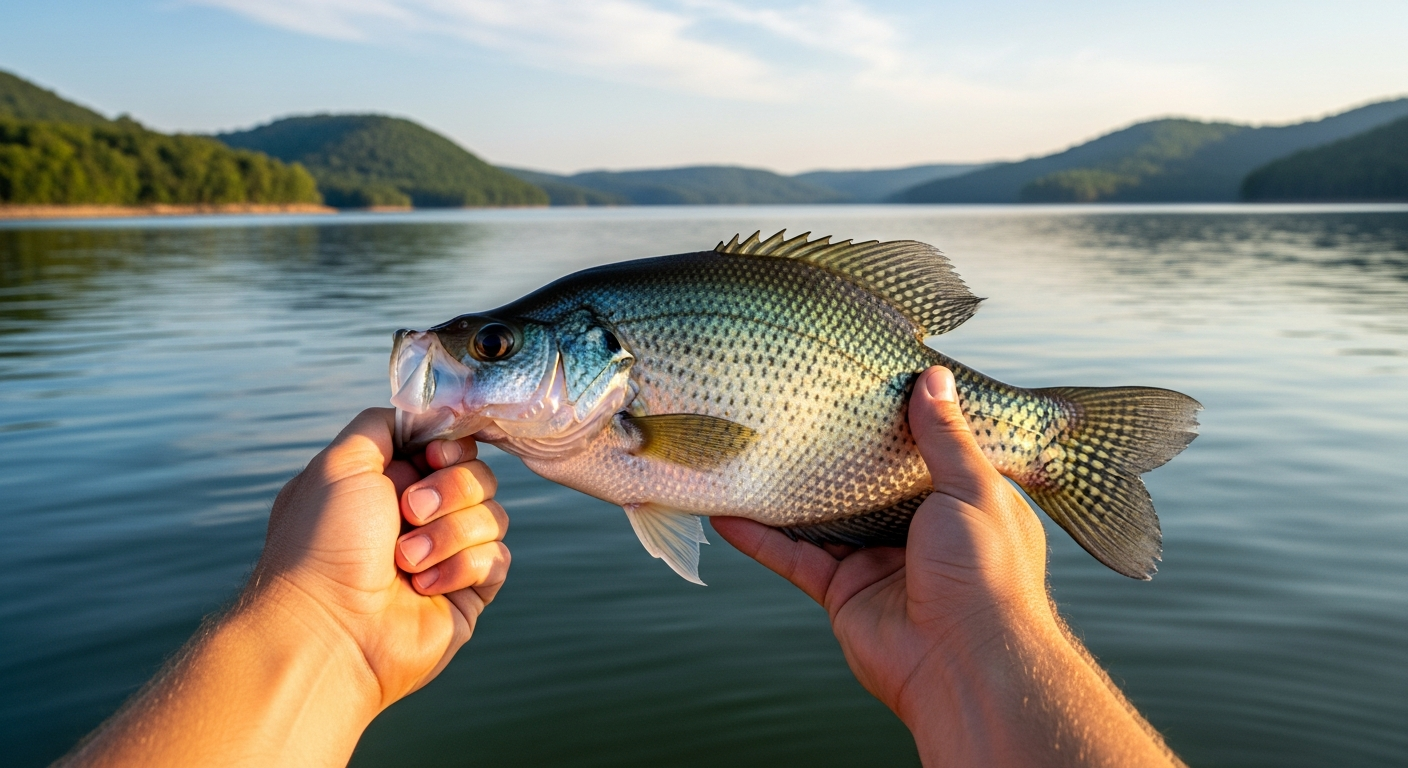
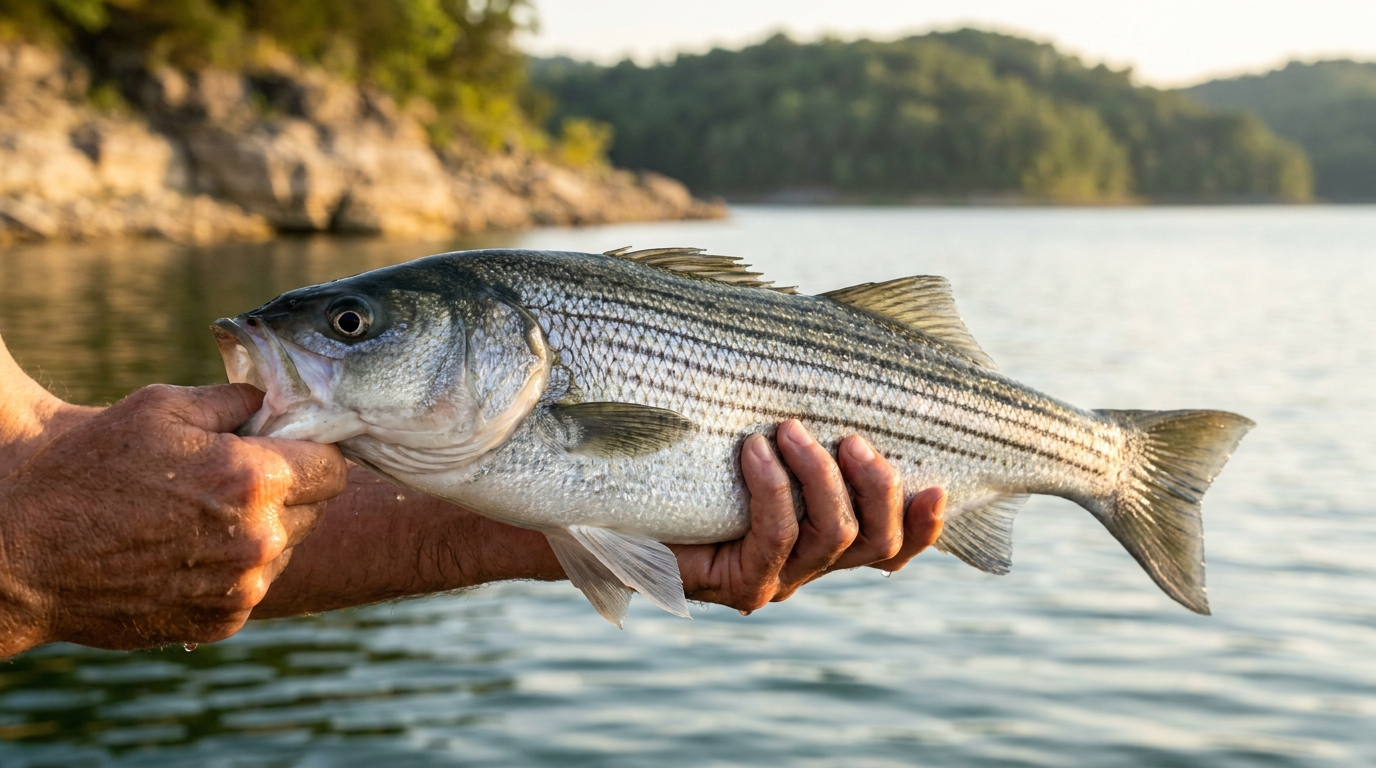
Lake Cumberland is one of those places that has been on my radar for a while, mostly because of the striped bass fishery. A 58-pound state record striper in December tells you this lake runs cold and deep in the right spots. I also did not realize until I researched it that Wolf Creek Dam has its own on-site trout hatchery, which explains the legendary tailwater fishery below the dam. I need to plan a trip down to Somerset.
Today's Bite Score · October 8, 2026
Above average conditions worth planning a trip
🌘Waning Crescent
Lake Cumberland Fishing Report
October FishingMonthly fishing report · October patterns and techniques
Lake Cumberland enters October with water temperatures cooling into the mid-60s as the month progresses. Anglers are finding that fish are becoming more active as the summer heat subsides, with increased feeding activity throughout the water column. The transition creates ideal conditions for a variety of species, and the bite is consistent across multiple depths as fish respond to the changing environmental conditions.
In October, largemouth and smallmouth bass are among the most active species at Lake Cumberland. Anglers are finding bass holding around structure such as rocky points, ledges, and submerged timber as they prepare for the approaching colder months. Crappie are also responsive this month, particularly around brush piles and deeper channel areas where they congregate. White bass and catfish continue to provide steady action for anglers targeting deeper water and channel ledges.
Effective techniques in October include casting crankbaits and soft plastics around shallow structure, as well as drop-shotting in deeper water. Live bait presentations work well for catfish and crappie, with shiners and crawfish proving productive. Jigging remains effective throughout the month as anglers work deeper channel areas and drop-offs. The cooling water temperatures make this an excellent month for both sight-fishing shallow structure and targeting deeper suspending fish, giving anglers flexibility in their approach to consistently catching fish at Lake Cumberland.
Get More Fishing Report Specifics
Tap a topic button below for a report on current conditions.
Tap a topic above to get a current report for Lake Cumberland.
Answers are generated on demand and cached. No AI call fires until you tap a tab.
Lake Cumberland Fishing Guides
Looking for a Lake Cumberland fishing guide? 65,000 acres of deep Cumberland Plateau water with stripers, walleye, and both bass species all requiring different approaches — guides here know which bite is on and where to find it. Go here → to check out our recommended fishing guides for Lake Cumberland. Then scroll down on that page to see all of the Lake Cumberland fishing guides.
Lake Cumberland Fishing Strategies by Species
Seasonal patterns and techniques by target species · Verified against official sources
Lake Cumberland is a 65,530-acre Cumberland River impoundment in south-central Kentucky, widely regarded as one of the best all-around fisheries in the state. The lake holds Kentucky state records in two elite categories: a 58.25-pound striped bass (Roger Foster, December 11, 1985) and a 21.50-pound walleye (Abe Black, October 1, 1958). Its maximum depth of approximately 200 feet near Wolf Creek Dam creates stratified cold-water habitat that sustains striped bass, walleye, and trout year-round. Largemouth bass, smallmouth bass, crappie, and channel catfish round out a deep and diverse fishery. The Wolf Creek National Fish Hatchery operates on site, and the tailwater of the Cumberland River below the dam is a designated trout stream with special regulations. Verify all current regulations at fw.ky.gov before fishing.
Lake Cumberland Largemouth Bass Fishing Report
Largemouth bass fishing at Lake Cumberland centers on the extensive cove structure, dock communities, and creek arm timber throughout the upper lake sections. The lake's Pulaski and Russell County arms hold the highest largemouth concentrations, with the creek pockets and cove timber in the backs of the major arms producing consistent prespawn and postspawn fish. The Kentucky KDFWR regulation for largemouth and smallmouth bass combined is a 12-inch minimum length with a 6-fish daily bag limit. Verify current regulations at fw.ky.gov before fishing. Spring is the primary largemouth season at Lake Cumberland. Prespawn bass stage on the main lake secondary points and cove mouths in 8 to 15 feet as water temperatures approach 55 to 60 degrees in late March and April. Spinnerbaits and squarebill crankbaits worked along the transition from deep water to the cove structure are the most effective prespawn presentations. Spawning fish move into the backs of the protected coves and the flat rock shelves in 2 to 5 feet through April into early May. Summer largemouth relate heavily to the deep dock structure and shaded bluff walls throughout the main lake, where depths drop quickly and fish suspend in 12 to 20 feet during the hottest months.
Lake Cumberland Smallmouth Bass Fishing Report
Smallmouth bass thrive in Lake Cumberland's deep, clear water and rocky main lake structure. The primary smallmouth habitat is the rocky bluff walls, main lake points, and gravel transitions throughout the deep lower lake sections near Wolf Creek Dam. The combined largemouth and smallmouth bass regulation under Kentucky KDFWR is a 12-inch minimum with a 6-fish daily bag limit. Verify current regulations at fw.ky.gov before fishing. Smallmouth at Lake Cumberland follow a seasonal pattern driven by water temperature and the lake's dramatic depth changes. Spring fish move from their 20 to 35-foot winter holding areas on the main lake rocky structure toward the gravel points and secondary rock transitions in 8 to 15 feet during the prespawn in April. Tube jigs and drop shot rigs worked slowly along rocky transitions are reliable prespawn presentations. Summer smallmouth retreat to deeper bluff walls and main channel structure in 18 to 35 feet, where they are best targeted with deep-diving crankbaits, Carolina rigs, and drop shots on fluorocarbon. Fall is an active feeding period as smallmouth move back toward shallower rocky structure through September and October.
Lake Cumberland Striped Bass Fishing Report
Lake Cumberland holds the Kentucky state record striped bass: 58.25 pounds, caught by Roger Foster on December 11, 1985. The lake's extreme depth near Wolf Creek Dam provides the cold, well-oxygenated habitat that striped bass require through Kentucky summers, and the Wolf Creek National Fish Hatchery on site supports the striped bass stocking program. The KDFWR regulation for striped bass is a 15-inch minimum length with a 5-fish daily bag limit. Verify current regulations at fw.ky.gov before fishing. Striped bass at Lake Cumberland are a thermocline-dependent species through summer. The lake's 200-foot maximum depth near the dam allows the hypolimnion to remain cold enough for stripers to survive when shallower impoundments experience summer kills. Locating the thermocline on a depth finder and working just above it with live shad, jigging spoons, or deep-running crankbaits is the primary summer approach. Fall and winter are the most active surface feeding periods, when stripers chase shad schools into the upper water column and are visible busting bait on the surface. Jigging spoons, blade baits, and live shad worked near the surface schools produce the best fall and winter results.
Lake Cumberland Walleye Fishing Report
Lake Cumberland holds the Kentucky state record walleye: 21.50 pounds, caught by Abe Black on October 1, 1958. Walleye are present throughout the main lake and provide a serious cold-water fishery in the deeper sections near Wolf Creek Dam. The KDFWR regulation for walleye, sauger, and their hybrids combined is a 14-inch minimum with a 6-fish daily bag limit. Verify current regulations at fw.ky.gov before fishing. Walleye at Lake Cumberland relate to the same deep rocky structure that holds smallmouth bass and striped bass through summer. The rocky bluff walls and main channel transitions in the lower lake sections near the dam hold walleye year-round, with the most accessible fishing occurring in fall and early winter when fish move shallower to feed. Jig-and-minnow combinations worked slowly along rocky bottom transitions and crankbaits trolled along the main channel edges in 15 to 25 feet are the primary walleye presentations. The tailwater of the Cumberland River below Wolf Creek Dam is a designated trout stream with separate regulations and also holds walleye during high-generation periods.
Lake Cumberland Crappie Fishing Report
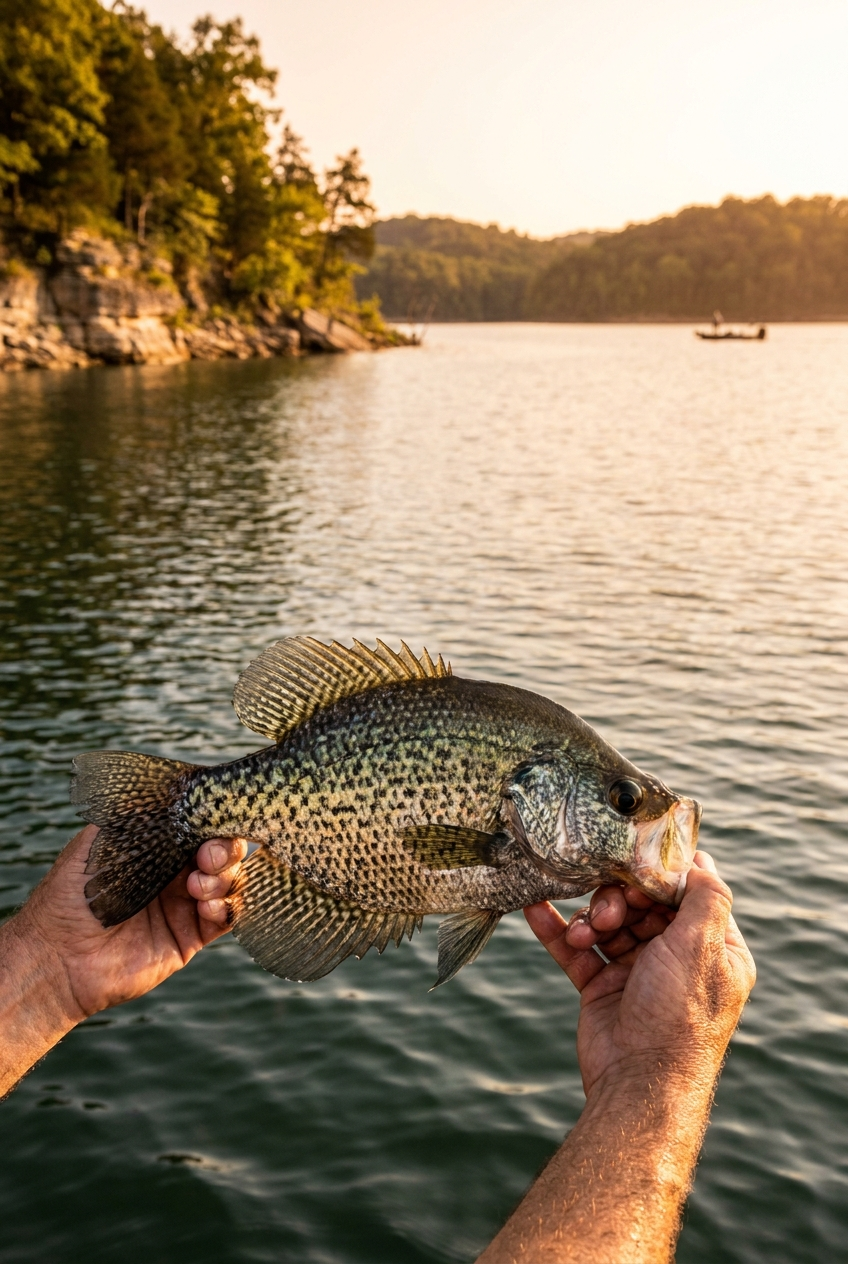
Crappie are abundant throughout Lake Cumberland in the dock communities, bridge pilings, and submerged timber of the upper creek arms. Both black and white crappie are present, with the upper lake cove systems in Pulaski and Russell counties holding the highest concentrations of accessible fish. The KDFWR regulation for crappie is no minimum size with a 20-fish daily bag limit. Verify current regulations at fw.ky.gov before fishing. Spring is the peak crappie season at Lake Cumberland. Fish move from their winter depth of 15 to 25 feet toward the dock structure and submerged brush in 6 to 12 feet as water temperatures climb through the low 50s in March and April. The protected cove arms and dock communities throughout the upper lake warm ahead of the main lake and draw the first prespawn crappie each season. Small jigs in chartreuse and white worked vertically around dock pilings and crappie jig-minnow rigs suspended under a float are the most consistent spring presentations. Summer crappie suspend deeper under the main lake dock structure in 15 to 20 feet, remaining catchable with vertical jigging techniques through the hottest months.
Lake Cumberland Channel Catfish Fishing Report
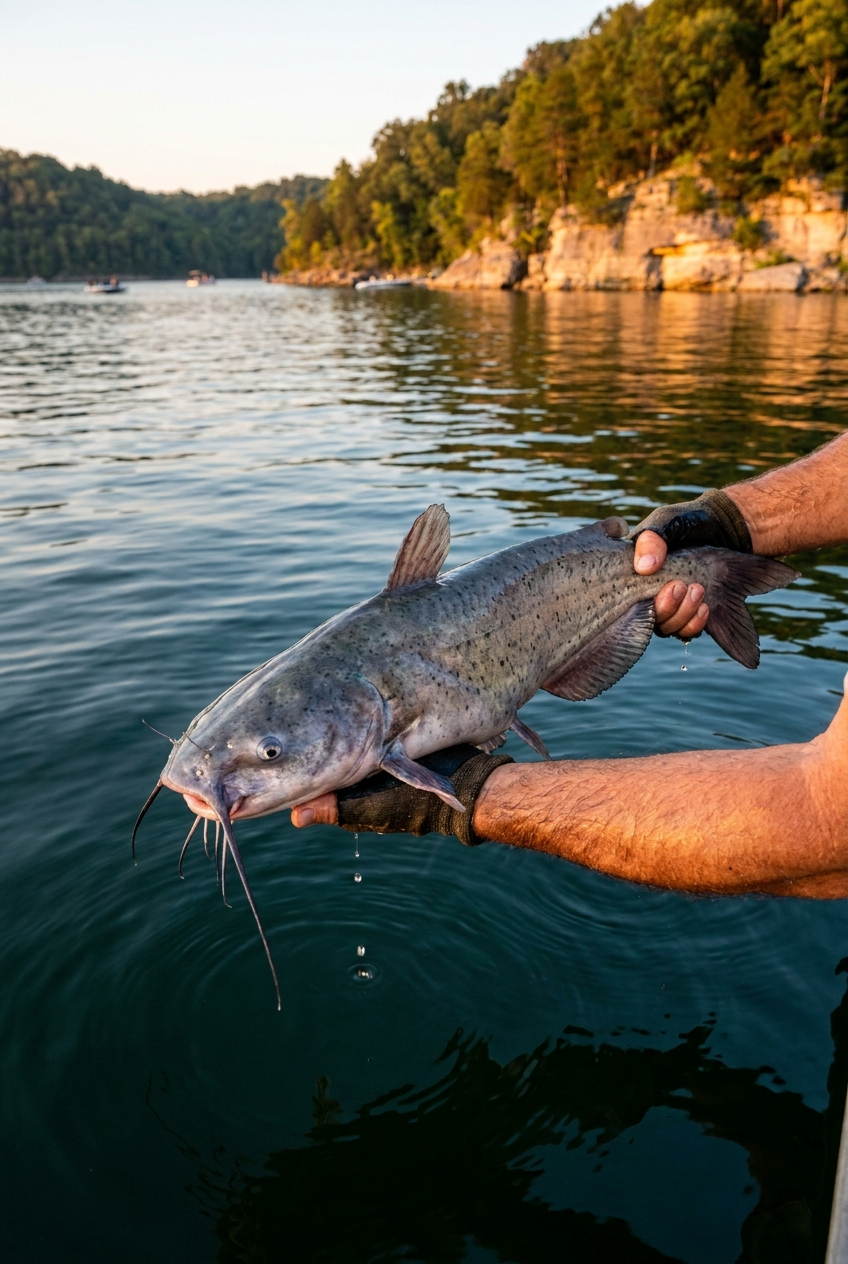
Channel catfish are present throughout Lake Cumberland and provide accessible year-round action from the bank and boat. The creek channel bends, flat bottoms of the major cove arms, and the transitions along the primary lake channels hold catfish consistently. The KDFWR regulation for channel catfish is 10 fish per day with no minimum size. Verify current regulations at fw.ky.gov before fishing. Cut shad, chicken liver, and prepared baits fished on the bottom in the creek arms and along the main lake channel transitions produce channel cats throughout the season. Summer night fishing is particularly productive as catfish move into shallower water after dark to feed along the rocky shorelines and creek mouths. The USACE operates multiple recreation areas and boat ramps around Lake Cumberland, providing bank access at campgrounds and day-use areas throughout the Pulaski County portion of the lake. The tailwater below Wolf Creek Dam holds catfish year-round alongside the trout fishery.
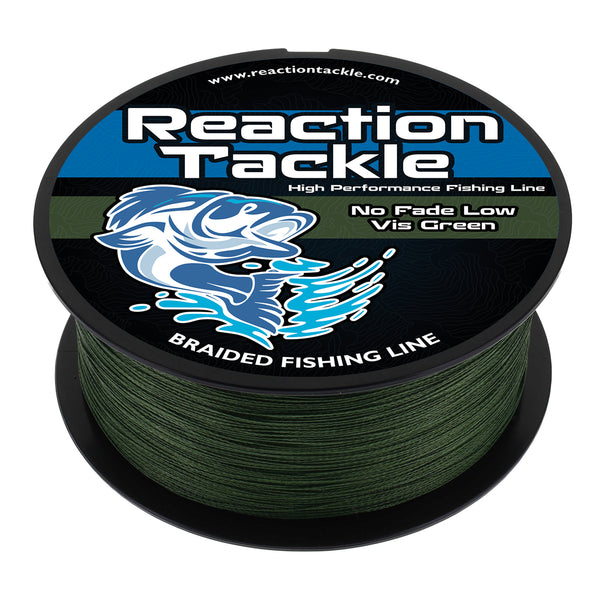
If you haven't replaced your braided line in a season or two, now's the time. Braid holds up better than mono, but abrasion from wood and rock adds up. Reaction Tackle is one of my favorite places to order from.
Top Fish to Target in Lake Cumberland
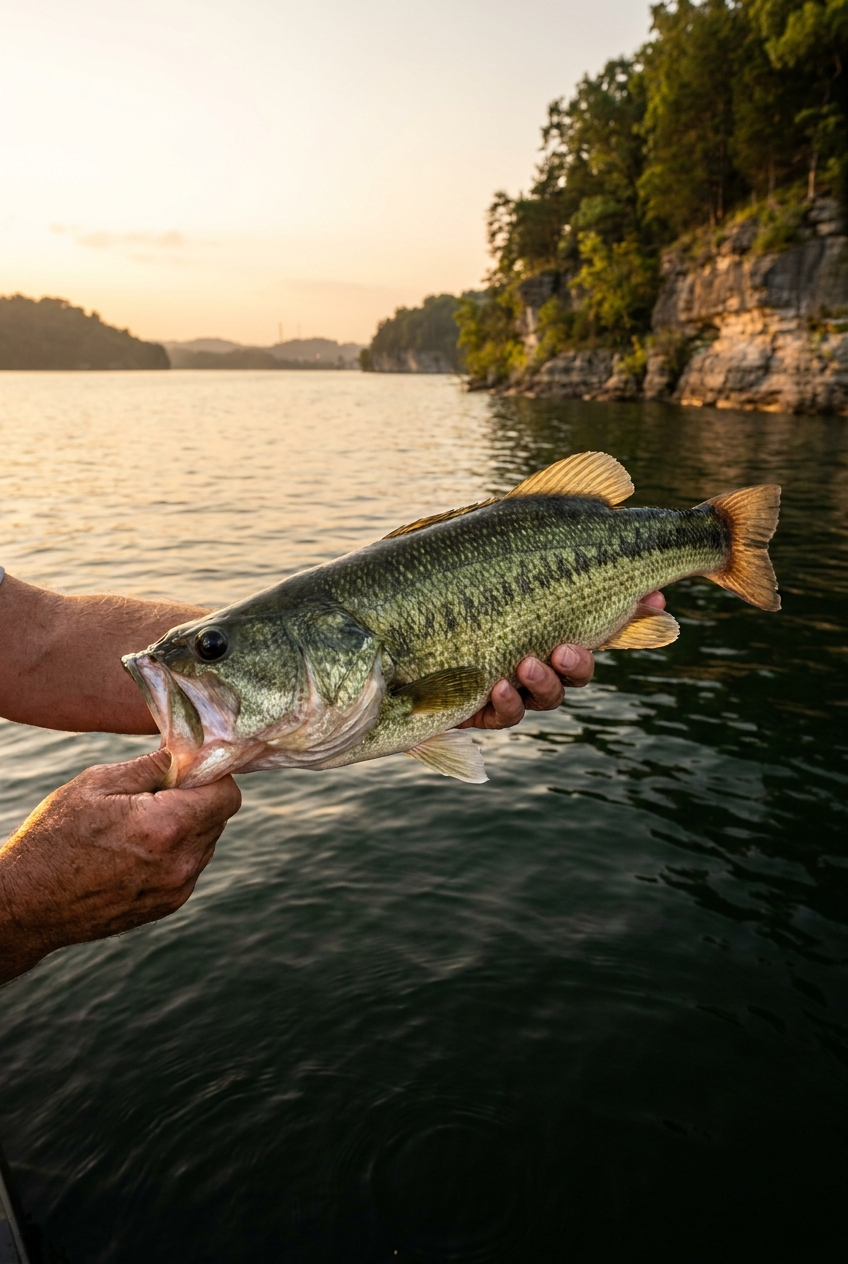
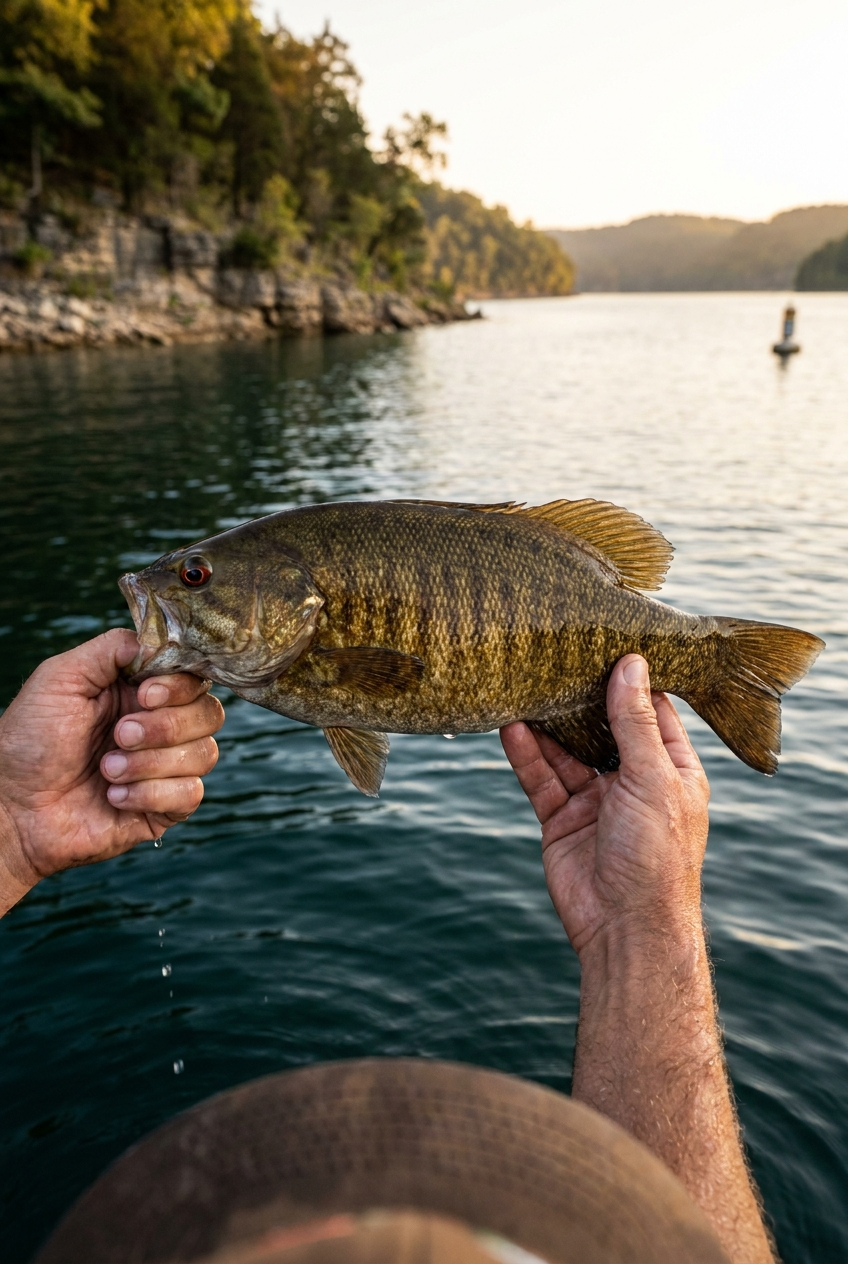
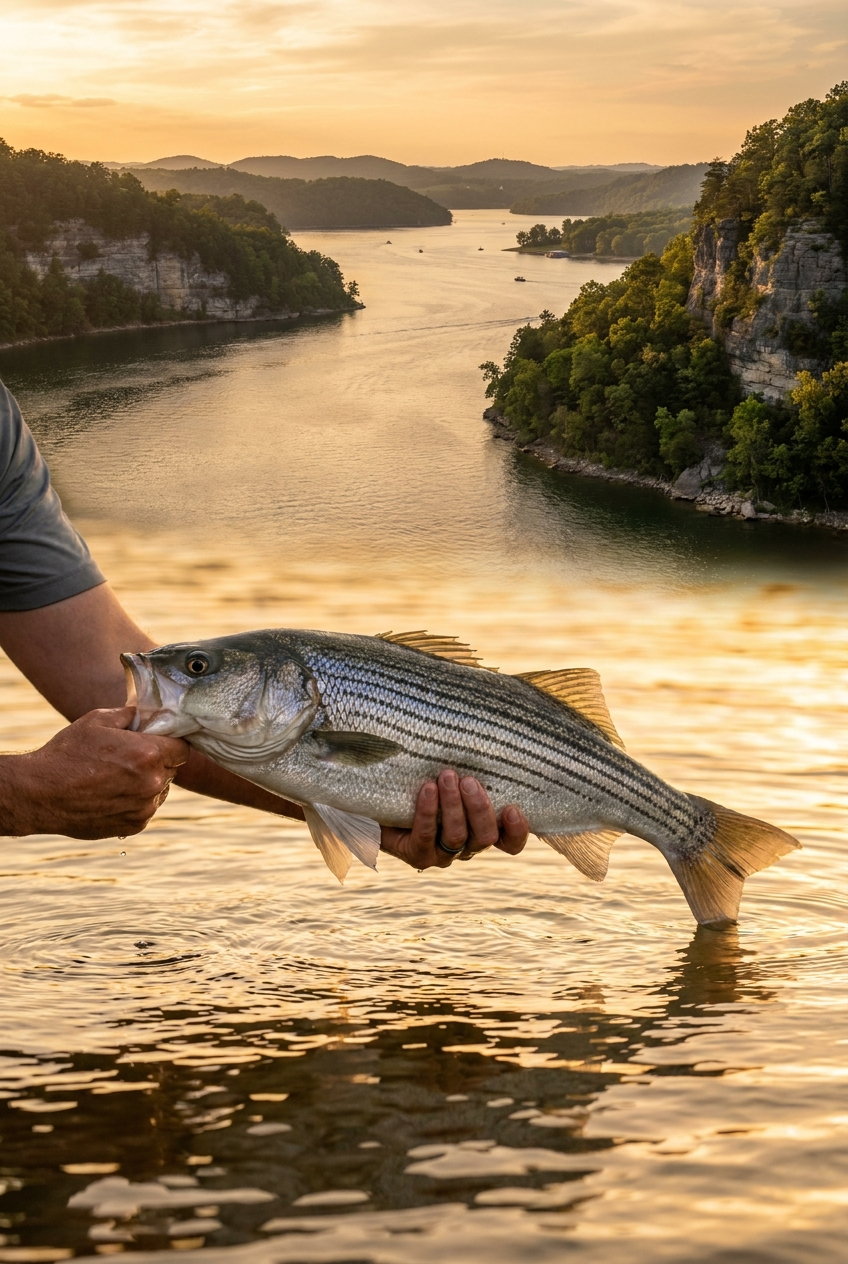
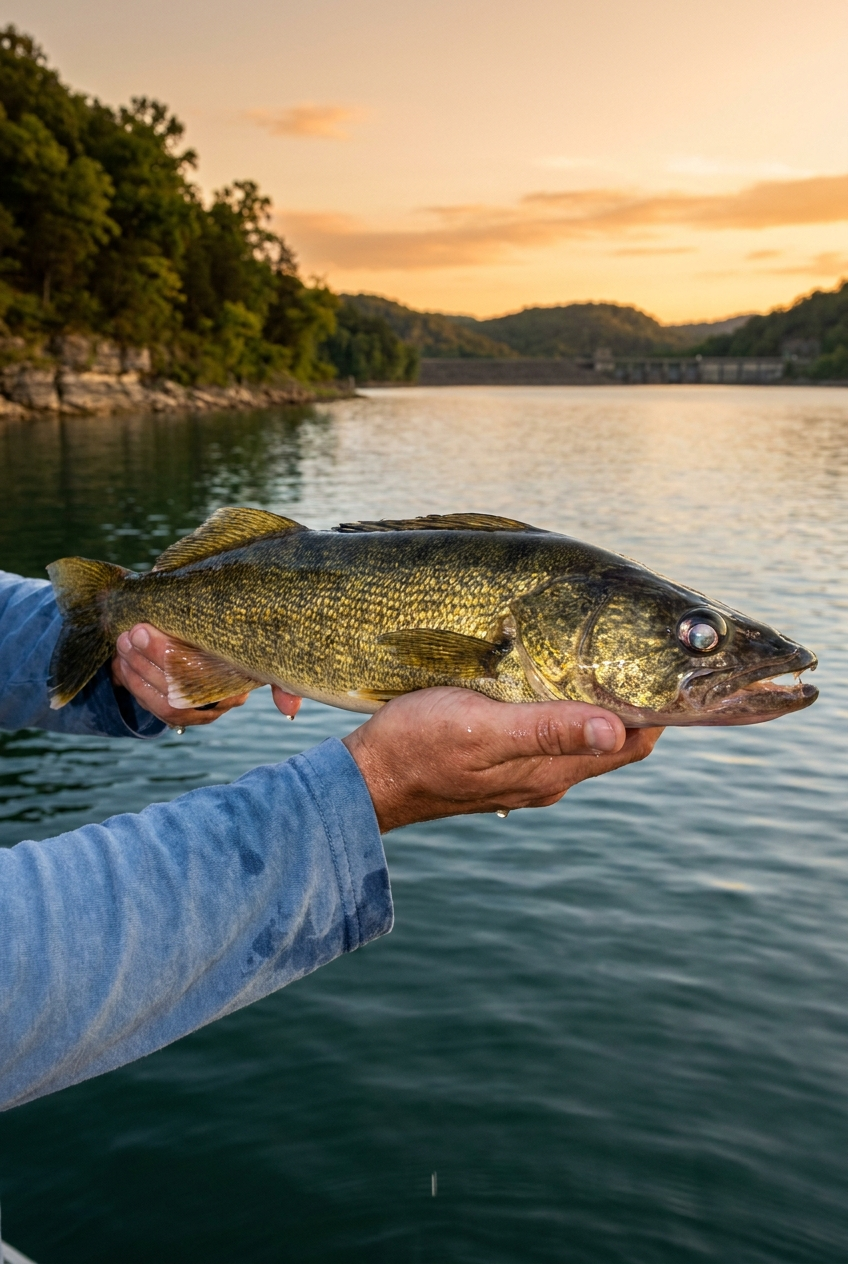
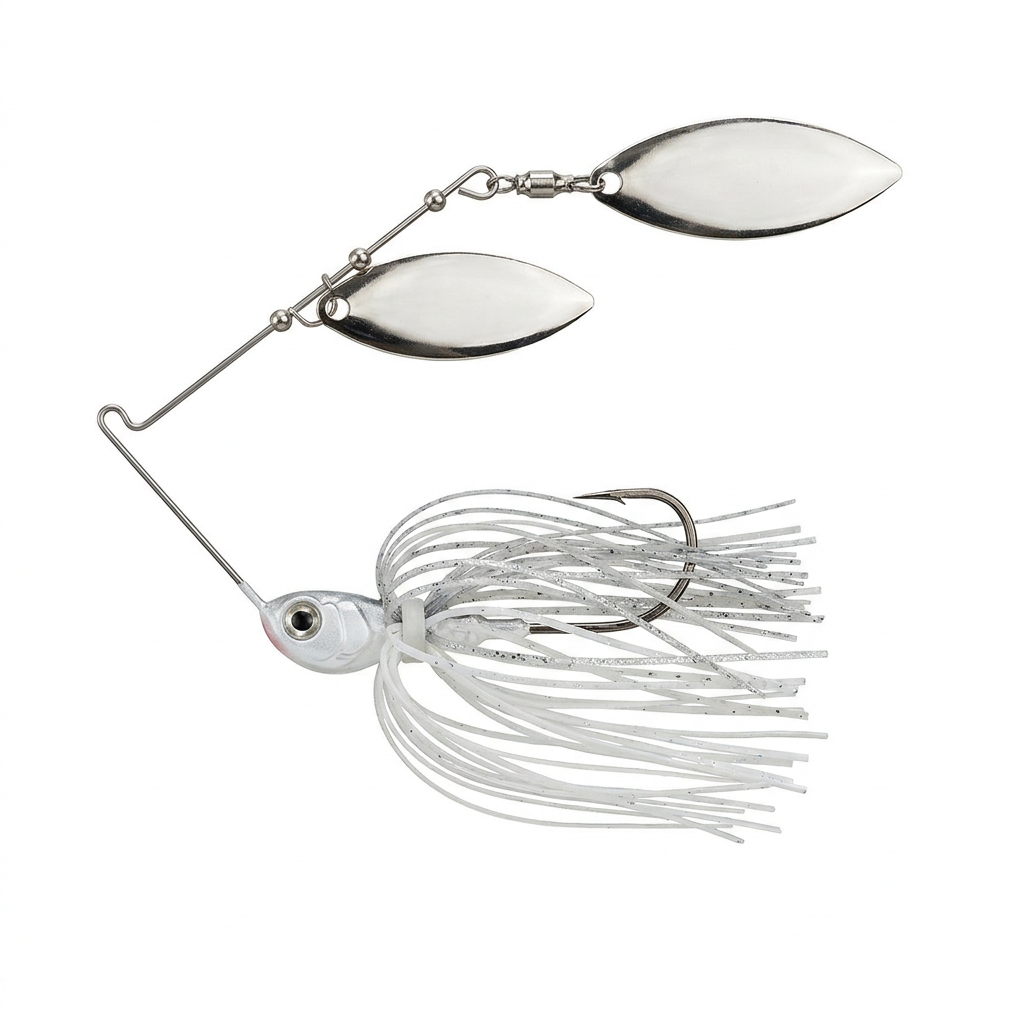
Lures for Lake Cumberland
Tackle matched to this lake's species and structure.
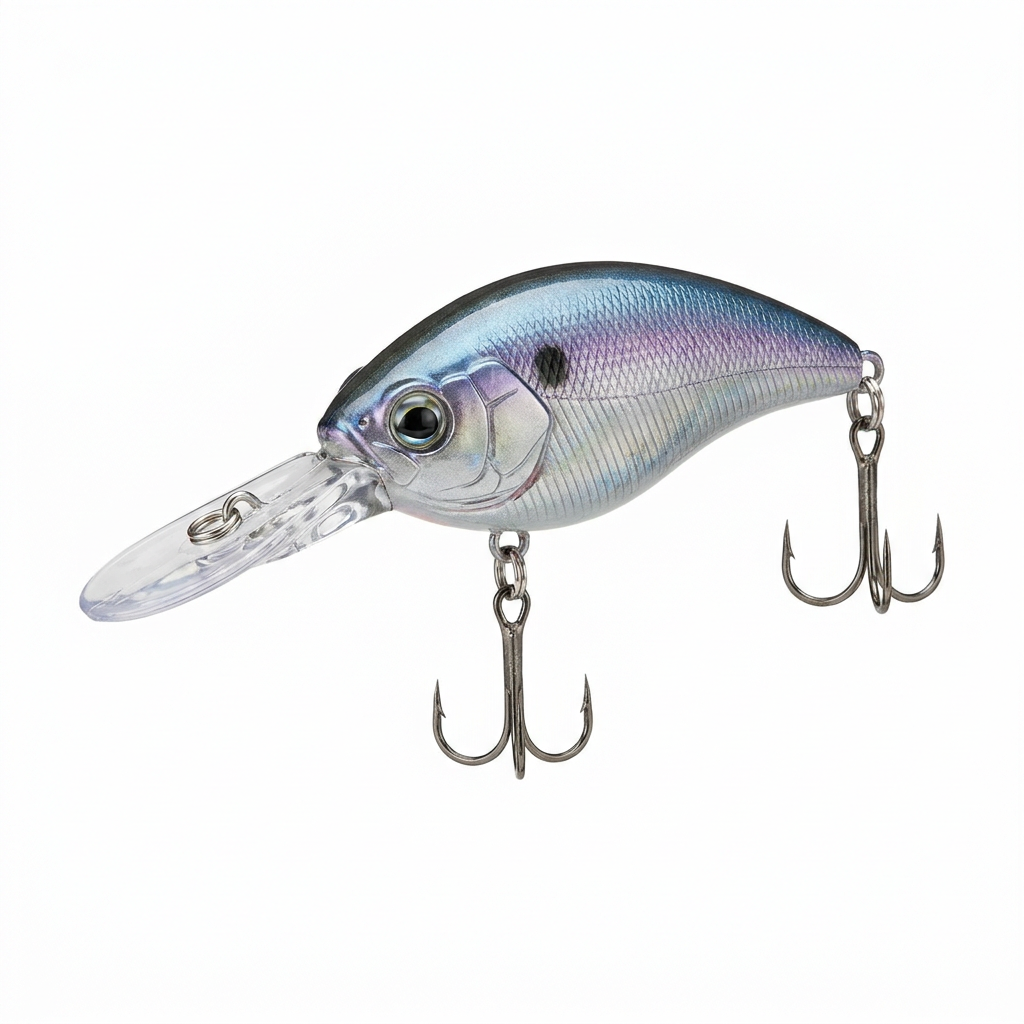
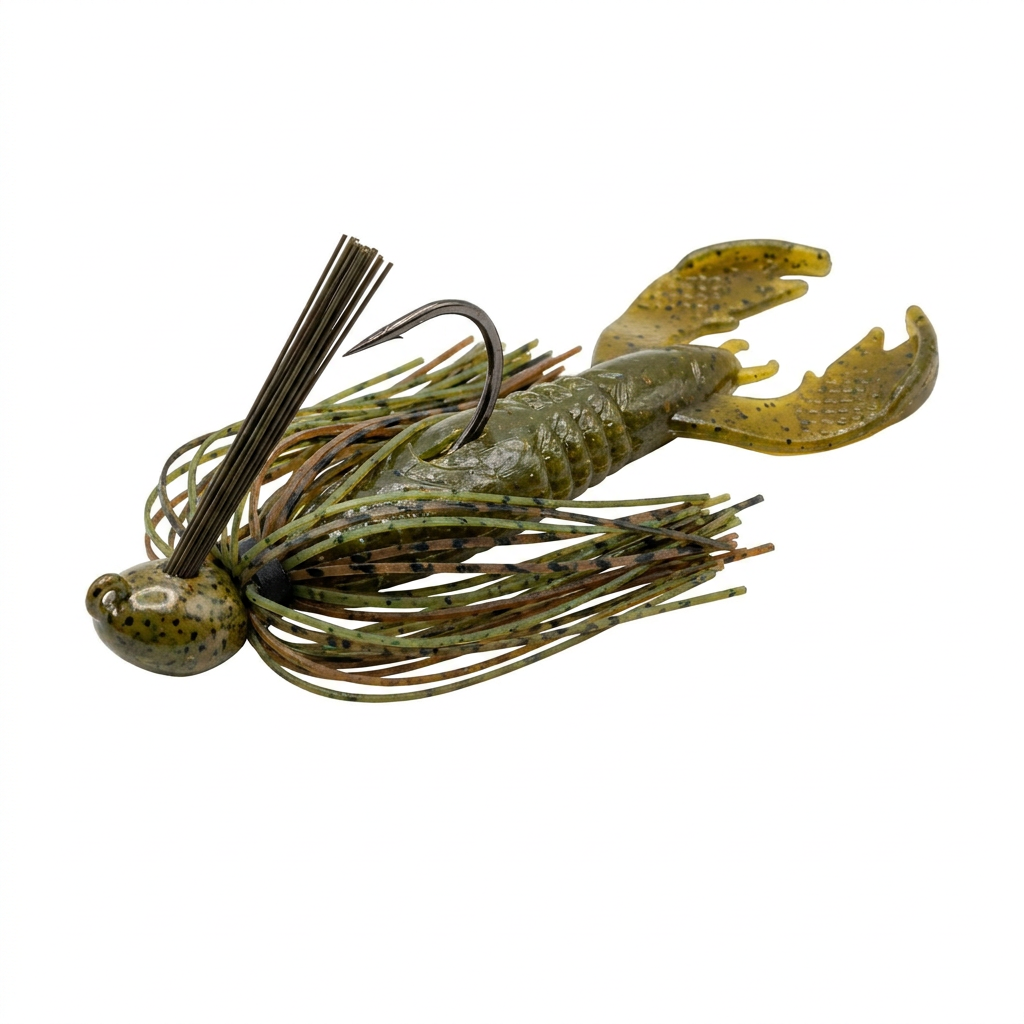
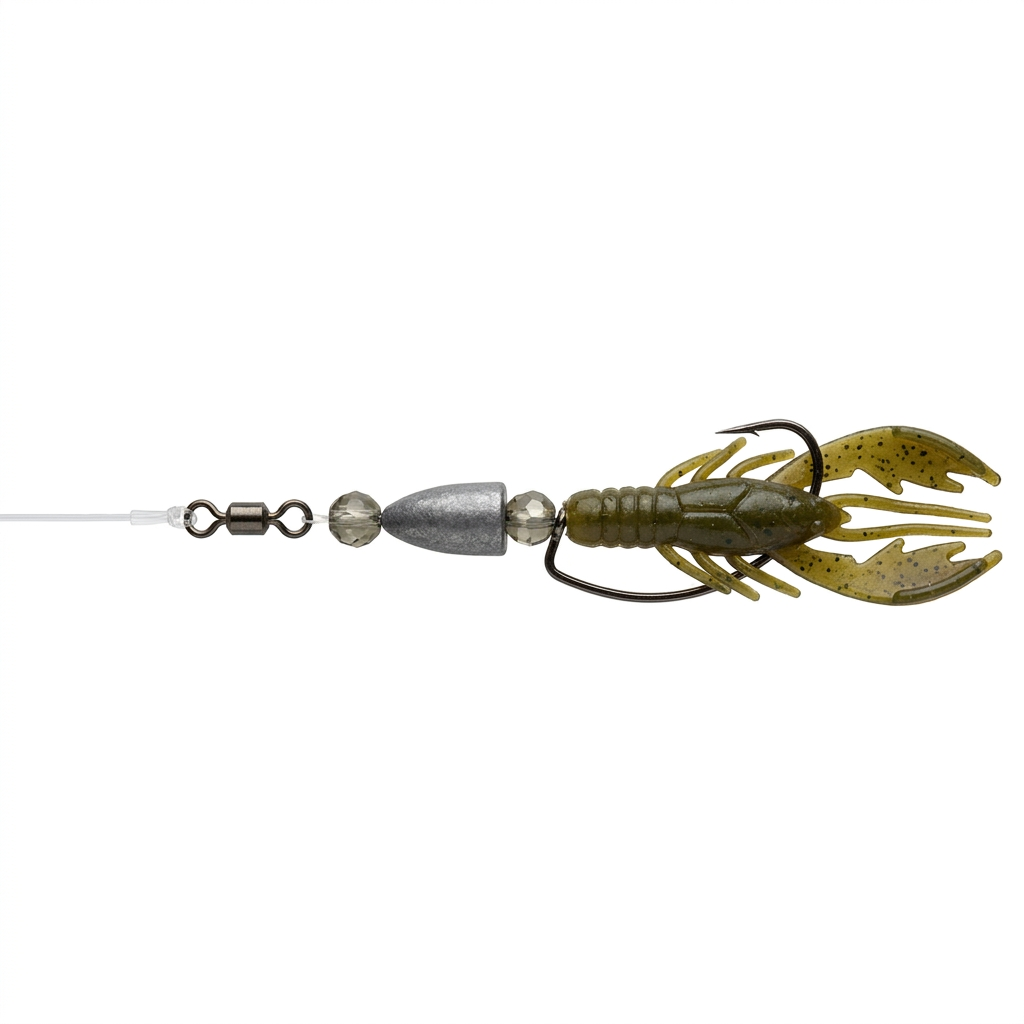
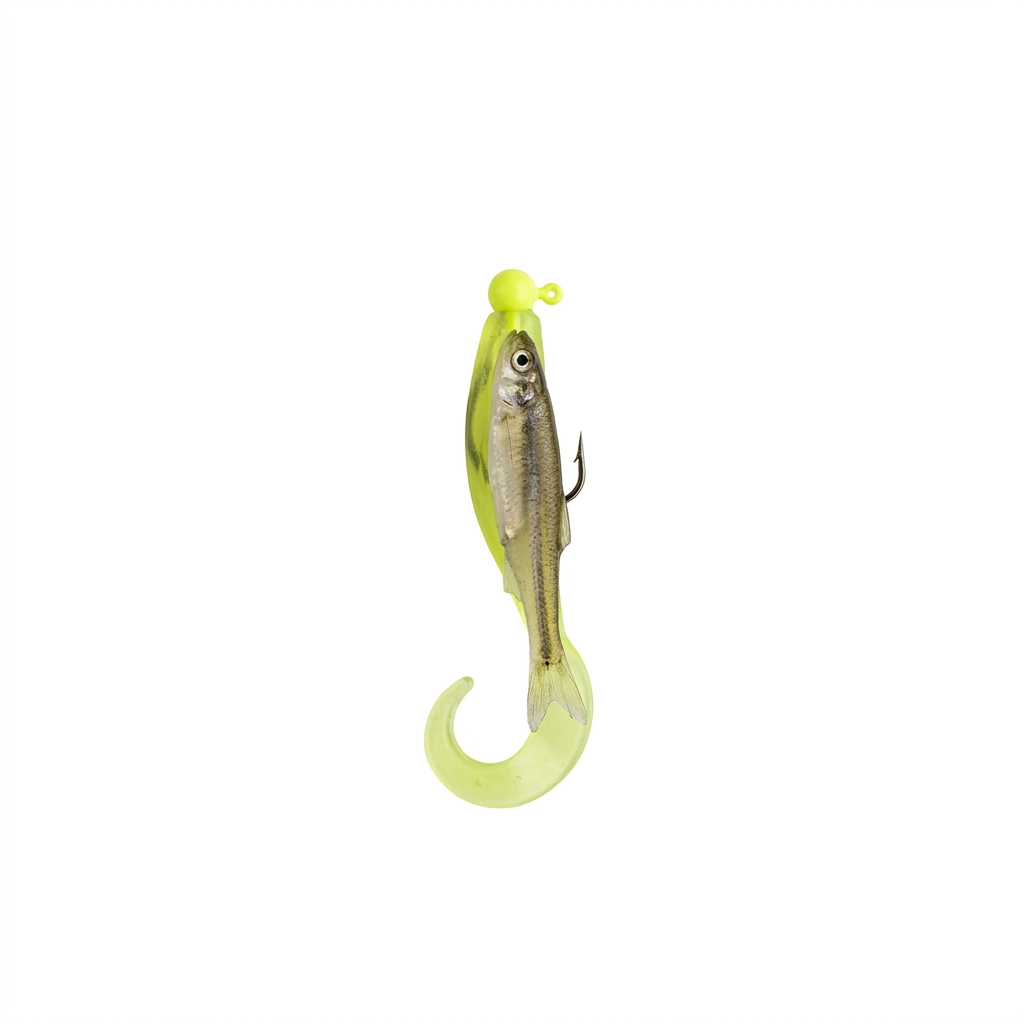
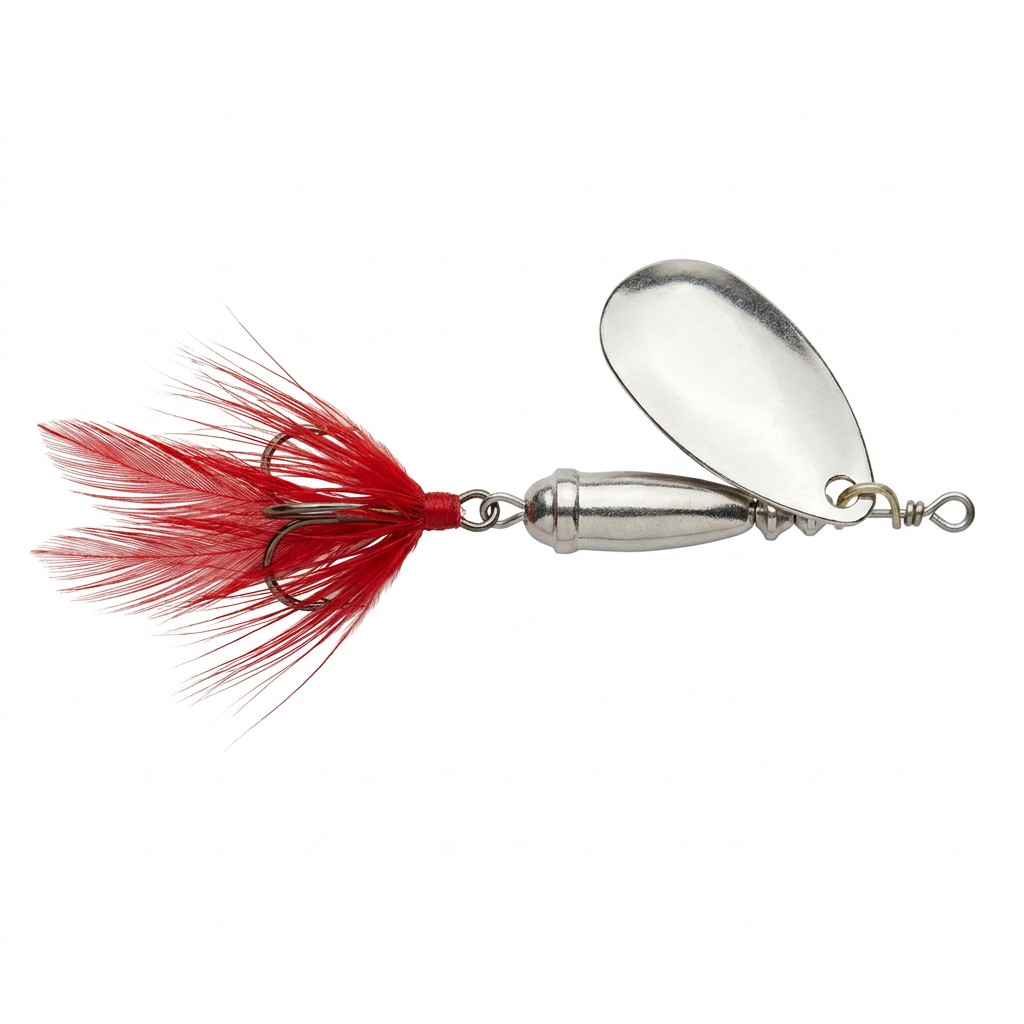
The right line matters as much as the lure. For the presentations that work on this lake, whether flipping timber, fishing main lake structure, or working deep brush, braid is the move. No stretch, more feel, and it lasts. Reaction Tackle is where I get mine.
About Lake Cumberland
Lake Cumberland is a 65,530-acre reservoir on the Cumberland River in south-central Kentucky, impounded by Wolf Creek Dam, completed in 1952 by the US Army Corps of Engineers Nashville District. The USACE describes it as the eighth largest reservoir in the United States and the Houseboat Capital of the World. The lake reaches a maximum depth of approximately 200 feet near the dam and spans seven counties: Pulaski, Russell, Clinton, Cumberland, Wayne, McCreary, and Laurel. The nearest town is Somerset, with the USACE office located 4 miles south of Somerset on US-27.
Wolf Creek National Fish Hatchery. The Wolf Creek National Fish Hatchery operates on site adjacent to Wolf Creek Dam, managed by the US Fish and Wildlife Service. The hatchery supports the striped bass stocking program for Lake Cumberland and contributes to trout stocking in the tailwater of the Cumberland River below the dam. The hatchery and visitor center are open to the public and offer a close look at fish production operations.
State records and species diversity. Lake Cumberland holds two Kentucky state fishing records: a 58.25-pound striped bass (Roger Foster, December 11, 1985) and a 21.50-pound walleye (Abe Black, October 1, 1958). This depth and diversity of record-class fish reflects the lake's cold, clear, deep-water characteristics near Wolf Creek Dam, which sustain species that cannot survive summer conditions in shallower southern reservoirs. Largemouth bass, smallmouth bass, crappie, and channel catfish round out a complete recreational fishery across all seven counties.
Regulations and tailwater. Kentucky KDFWR regulates all fishing on Lake Cumberland. Bass (largemouth and smallmouth combined): 12-inch minimum, 6/day. Striped bass: 15-inch minimum, 5/day. Walleye, sauger, and hybrids combined: 14-inch minimum, 6/day. Crappie: no minimum, 20/day. Channel catfish: 10/day. The Cumberland River below Wolf Creek Dam is a designated trout stream with special regulations separate from the lake. Always verify current regulations at fw.ky.gov before fishing.