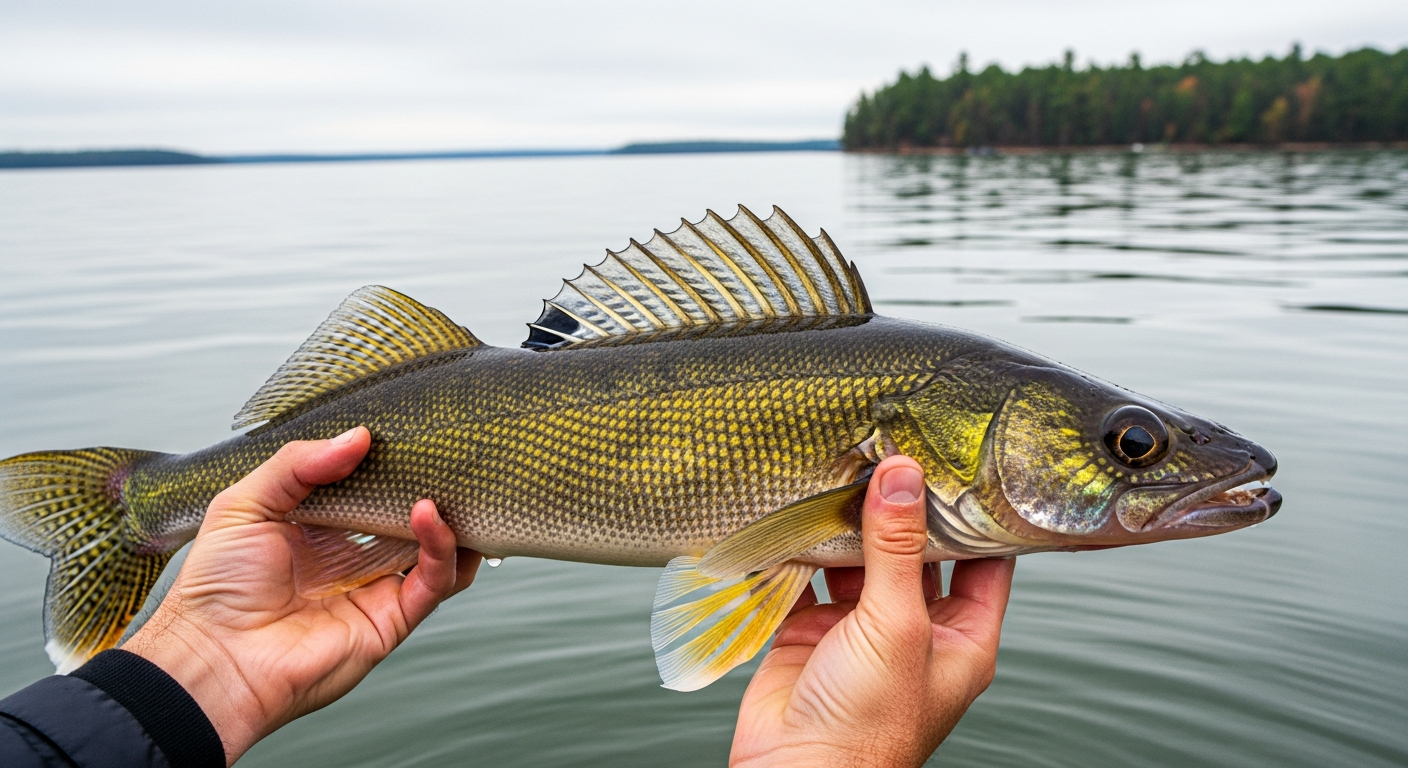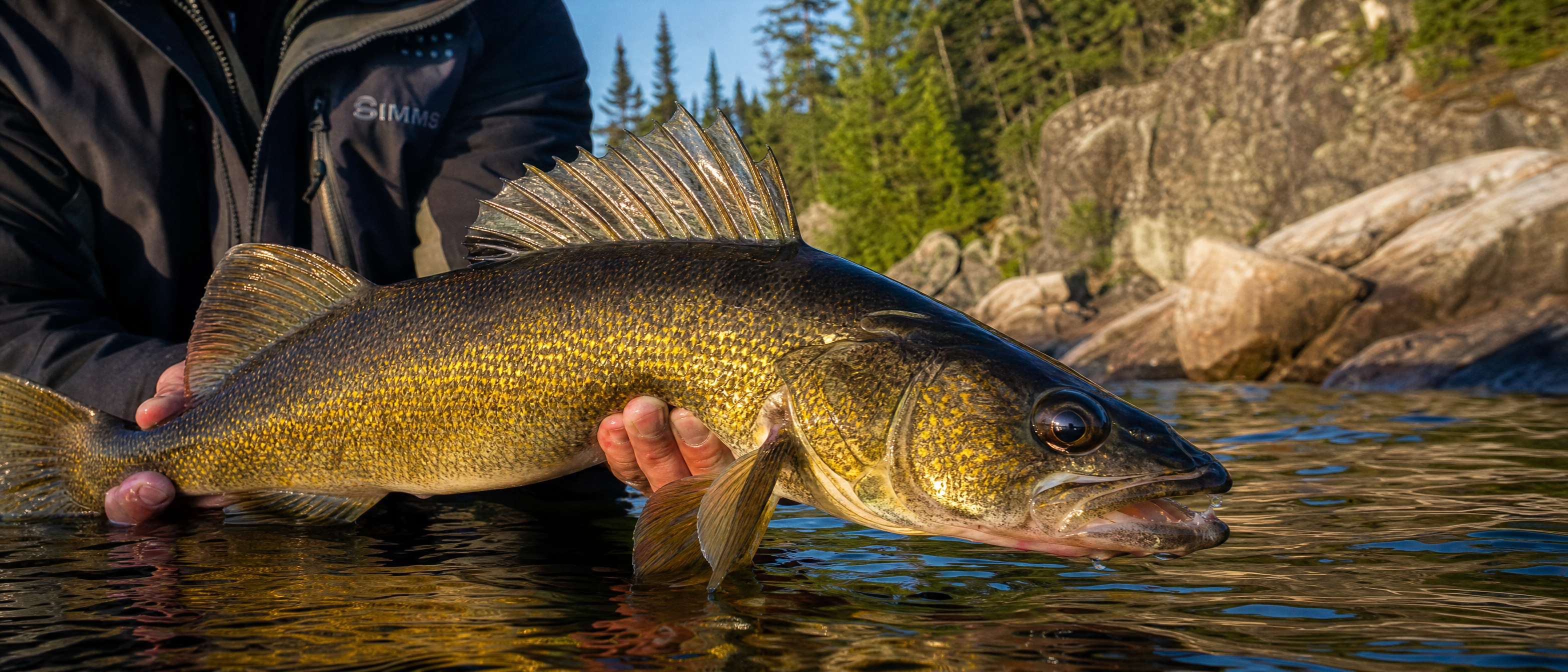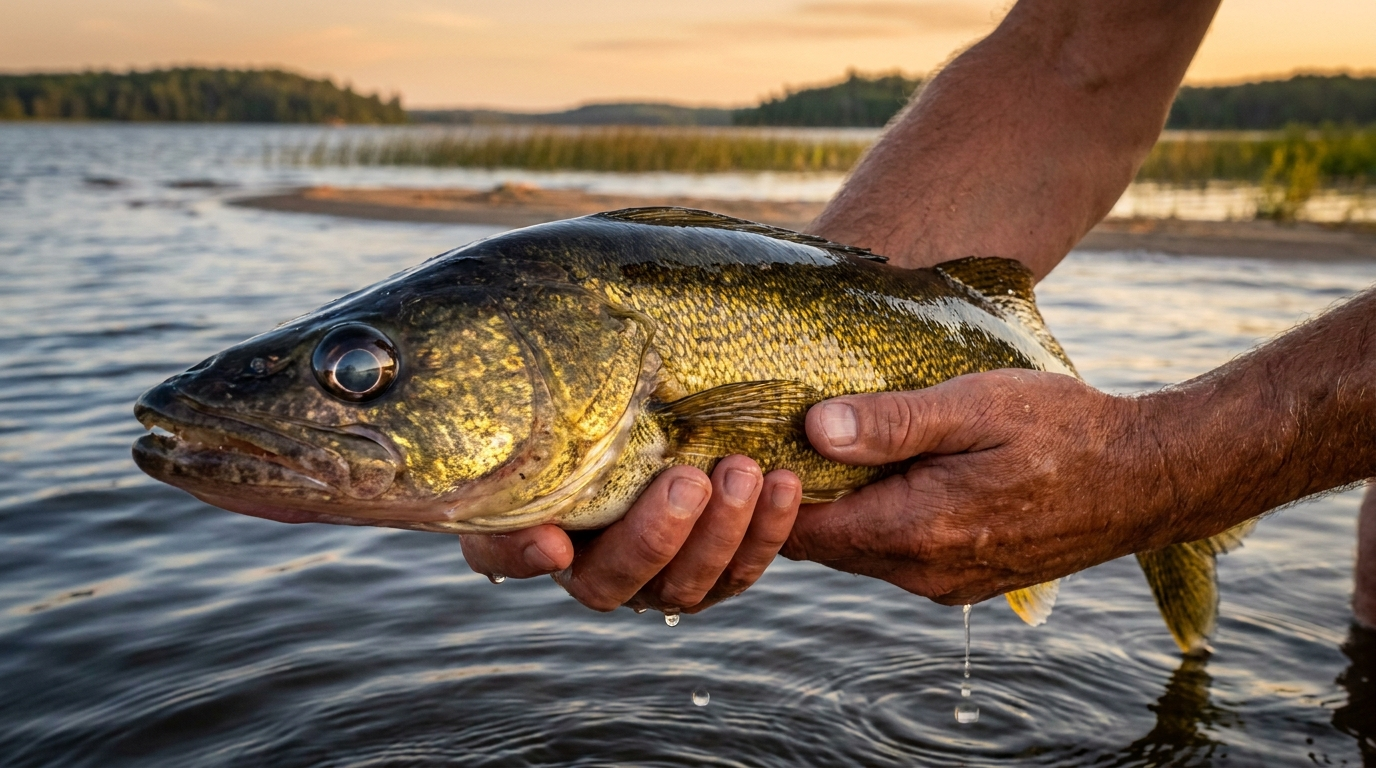
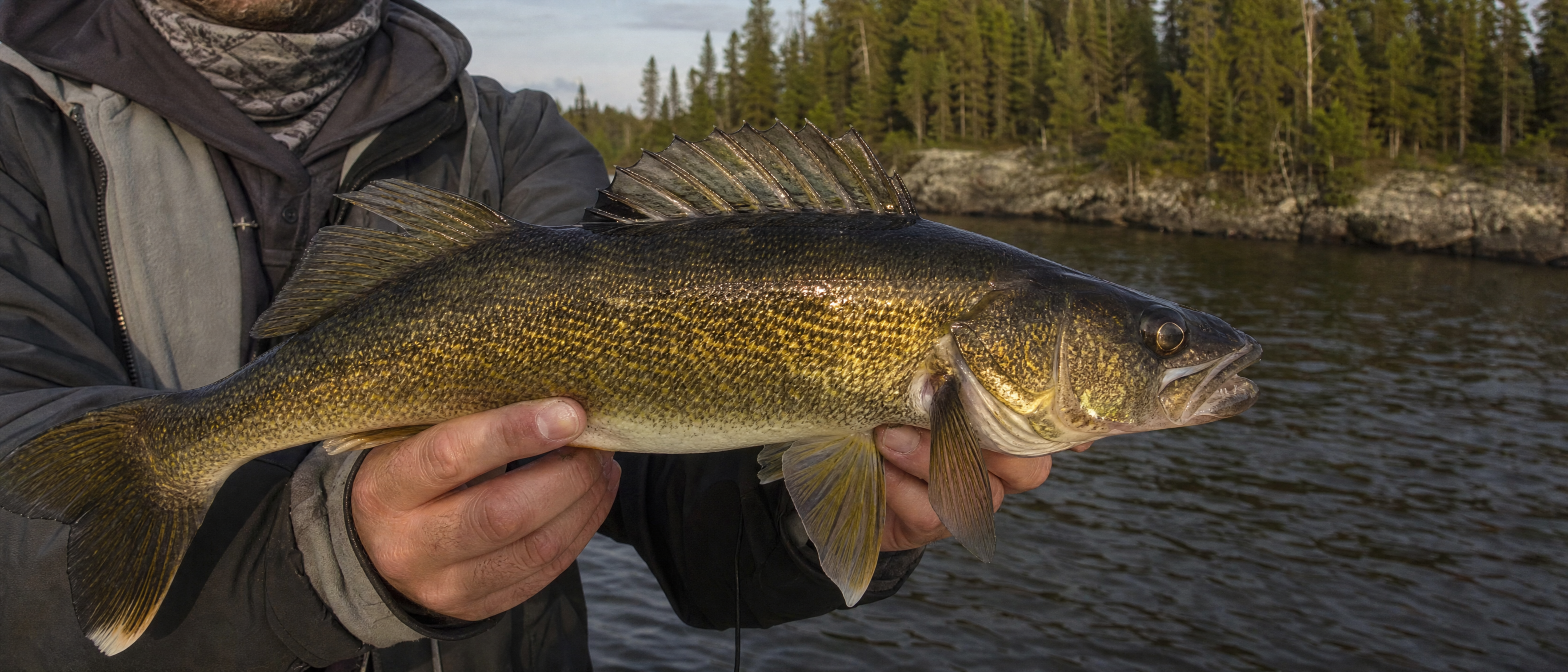
Lake of the Woods border-water walleye has no equivalent in any lake I've fished. Minnesota is still on the state goal, and this would be the trip.
Today's Bite Score · October 8, 2026
Above average conditions worth planning a trip
🌘Waning Crescent
Lake of the Woods Fishing Report
Updated October 2, 2026Synthesized from current fishing reports · Updated weekly
Lake of the Woods is running under late-summer conditions right now, with water temperature at 61 degrees and partly cloudy skies with light north winds at 9 mph. Anglers are finding walleyes and saugers actively feeding over the deep mud of Big Traverse Bay on the south end, and guides are reporting this remains the primary pattern this week. Electronics are essential for locating bait and fish marks suspended over the mud basin before deploying a full trolling spread.
The bite has been strongest on Big Traverse Bay using spinner rigs tipped with crawlers and trolled crankbaits, though the Rainy River and Northwest Angle are offering good alternatives for multiple species this week. Anglers are finding success by using sonar to mark the first bite, then watching for additional fish at the same depth or suspended band. When targeting walleyes and saugers over deep mud, guides are reporting that repeating a productive trolling direction is more effective than returning to a single waypoint. The Rainy River currently holds resident walleyes along current breaks, channel edges, and holes, while the Northwest Angle is producing both walleyes and muskies around island structure and reefs.
Right now, a crawler harness behind a bottom bouncer heavy enough to stay near the bottom is producing on the south shore, with the line running close to a 45-degree angle. Crankbaits set to the depth shown on electronics are also working this week. For the Rainy River, jig and minnow combinations, live-bait rigs, and crankbaits are all effective depending on current and fish position. At the Northwest Angle, spinners and crankbaits are working when fish are dispersed, while jigs are keeping presentations in the zone when electronics show compact schools on rock structure.
Get More Fishing Report Specifics
Tap a topic button below for a report on current conditions.
Tap a topic above to get a current report for Lake of the Woods.
Answers are generated on demand and cached. No AI call fires until you tap a tab.
Lake of the Woods Fishing Guides
Looking for a Lake of the Woods fishing guide? 14,632 islands and the walleye capital of the world — without a guide who knows these waters, you'll spend your whole trip navigating instead of fishing. Go here → to check out our recommended fishing guides for Lake of the Woods. Then scroll down on that page to see all of the Lake of the Woods fishing guides.
Lake of the Woods Fishing Strategies by Species
Seasonal patterns and techniques by target species · Verified against official sources
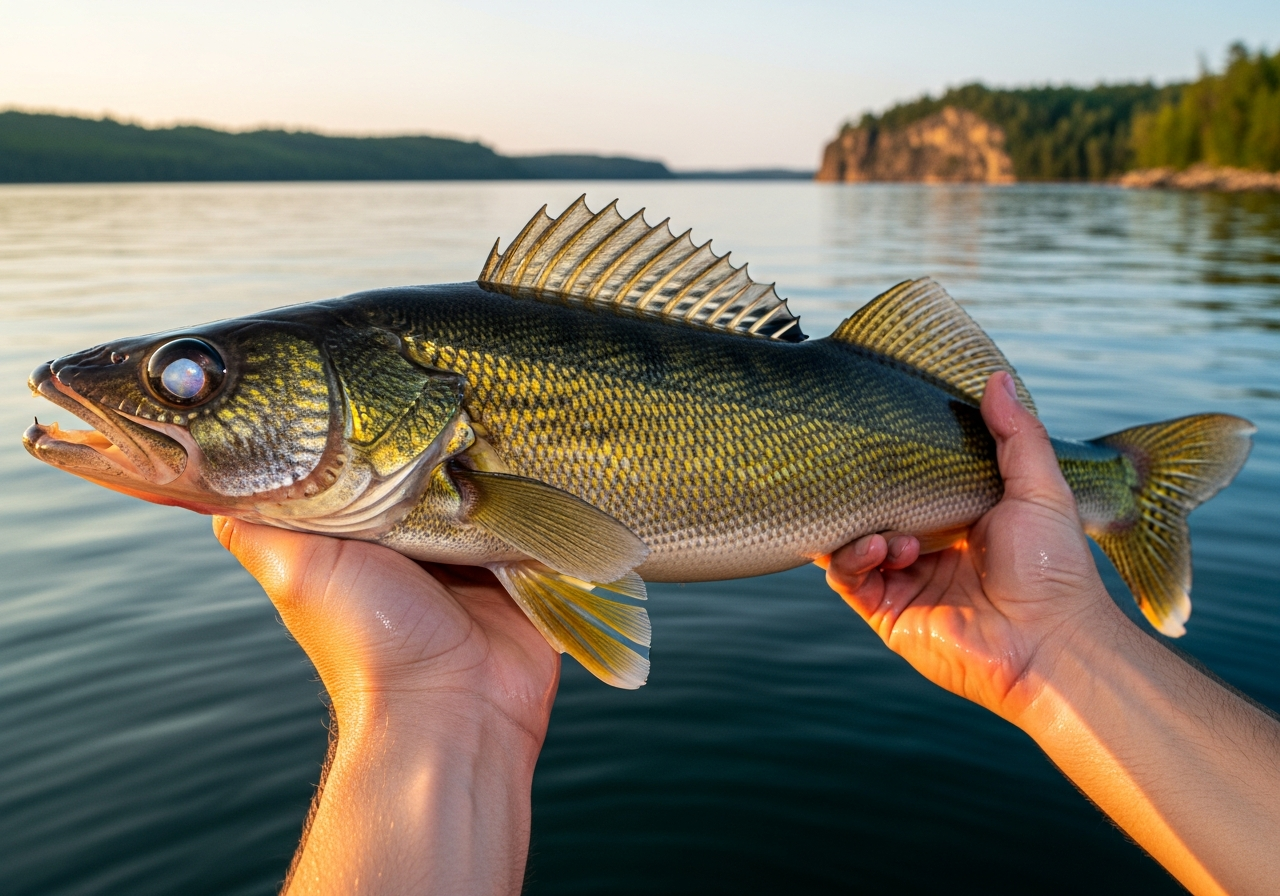
Walleye are the defining species at Lake of the Woods, nicknamed the "Walleye Capital of the World" for a population that supports year-round fishing that rivals any lake in North America. Open water walleye concentrate in Big Traverse Bay and Four Mile Bay near Baudette at the May opener, pushing to 28 to 36 feet in the main basin by midsummer before returning to reef structure in fall. Ice fishing from December through late March is a full-scale season, not a secondary activity, producing walleye comparable to open water catch rates. The combined walleye and sauger daily limit is 6 fish (max 4 walleye), with a protected slot requiring immediate release of walleye from 19.5 to 28 inches. Muskellunge, northern pike, and yellow perch round out the fishery across the lake's 14,632 islands.
Lake of the Woods Walleye Fishing Report
Minnesota DNR regulations for Lake of the Woods treat walleye and sauger as an aggregate. The combined daily limit is 6 fish, with a maximum of 4 walleye within that 6. A protected slot requires immediate release of walleye between 19.5 and 28 inches. Only 1 walleye over 28 inches may be in possession. The season runs approximately May 10 through February 22, with a catch-and-release only period through mid-April. Verify current season dates and limits at Minnesota DNR before fishing. The open water season starts with walleye in 6 to 22 feet of water near sandy shorelines and the mouths of creek arms. Big Traverse Bay on the south shore and Four Mile Bay near Baudette both concentrate early season fish in accessible depth ranges. A jig and minnow in 8 to 15 feet covers the most water in May and June. Summer pushes walleye deeper as water temperatures rise. By July and August, fish are holding at 28 to 36 feet in the basin areas of Big Traverse Bay and out from the reef structure. The reefs throughout the lake hold cooler, oxygenated water that keeps walleye active through the heat. Crankbaits trolled along the 30-foot contour account for the most summer fish. The Rainy River mouth at Four Mile Bay concentrates walleye in fall when the shiner migration up the river begins. Ice fishing opens in mid-December when the ice reaches safe thickness. Early ice, walleye are in 12 to 22 feet over sand. By mid-winter they push to 28 to 36 feet over mud structure. The bite moves throughout the winter: anglers who track the fish depth week to week rather than returning to the same spot consistently outperform those who don't. The late-February window before ice-out sends some fish back toward reef structure, producing big fish for those willing to fish in deteriorating ice conditions.
Lake of the Woods Northern Pike Fishing Report
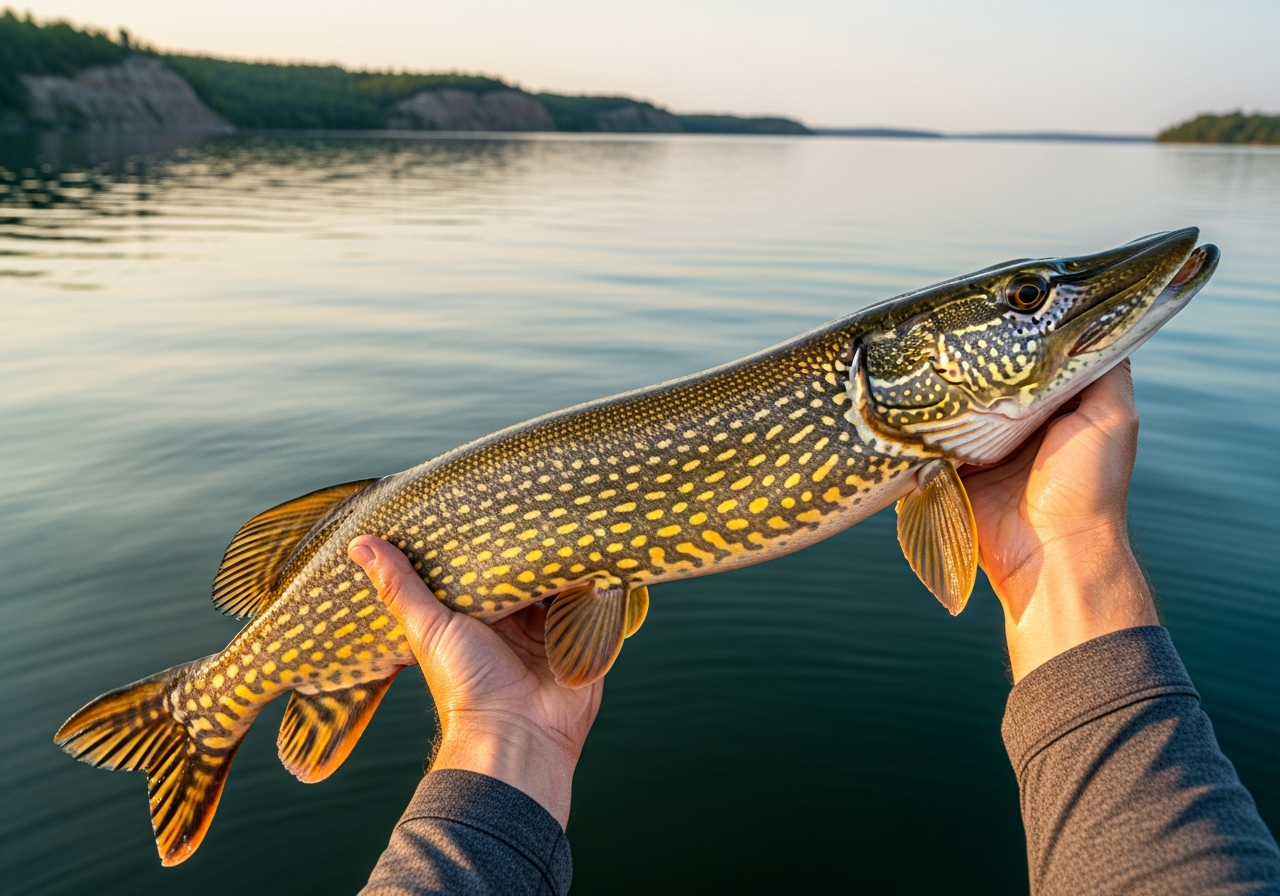
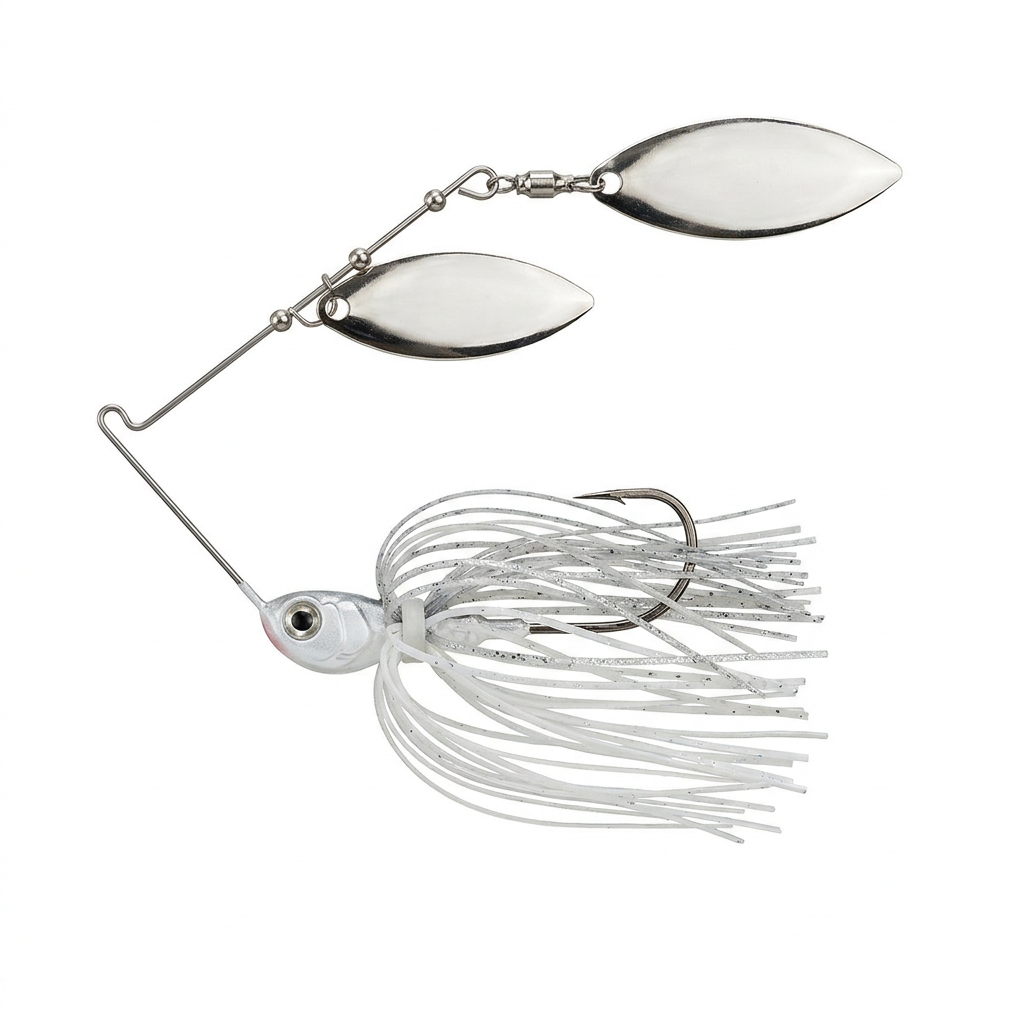
Lake of the Woods produces large northern pike, and the regulations reflect an intentional management approach to maintain the trophy fish class. The daily bag limit is 3 pike with a protected slot requiring immediate release of all pike between 30 and 40 inches. Only 1 pike over 40 inches may be kept per day. The lake qualifies as border water, meaning standard Minnesota zone regulations do not apply here: these specific limits govern. Verify current regulations at Minnesota DNR. Pike are accessible year-round and don't require the same depth adjustments that walleye do through summer. Shallow bays with emerging vegetation hold pike from ice-out through June. The weed edges off the bays near Rainy Lake and the island clusters in the upper lake produce well in spring. A large spinnerbait or a 6-inch swimbait worked over the weed tops at 4 to 10 feet catches fish from late May through June. Summer pike on Lake of the Woods follow the weed edge deeper as vegetation grows out. Weeds in 8 to 14 feet are the primary structure. A jig with a large plastic tail worked along the outside weed edge covers both pike and the occasional muskie using the same habitat. Pike activity picks back up in fall as water temperatures cool into the 50s and fish move aggressively before ice. Ice fishing for pike is productive but less targeted than the walleye fishery. Pike sit in 8 to 18 feet under the ice near cabbage and other vegetation that holds oxygen through winter. Large tip-ups with sucker minnows set at the right depth produce fish throughout the season.
Lake of the Woods Muskellunge Fishing Report
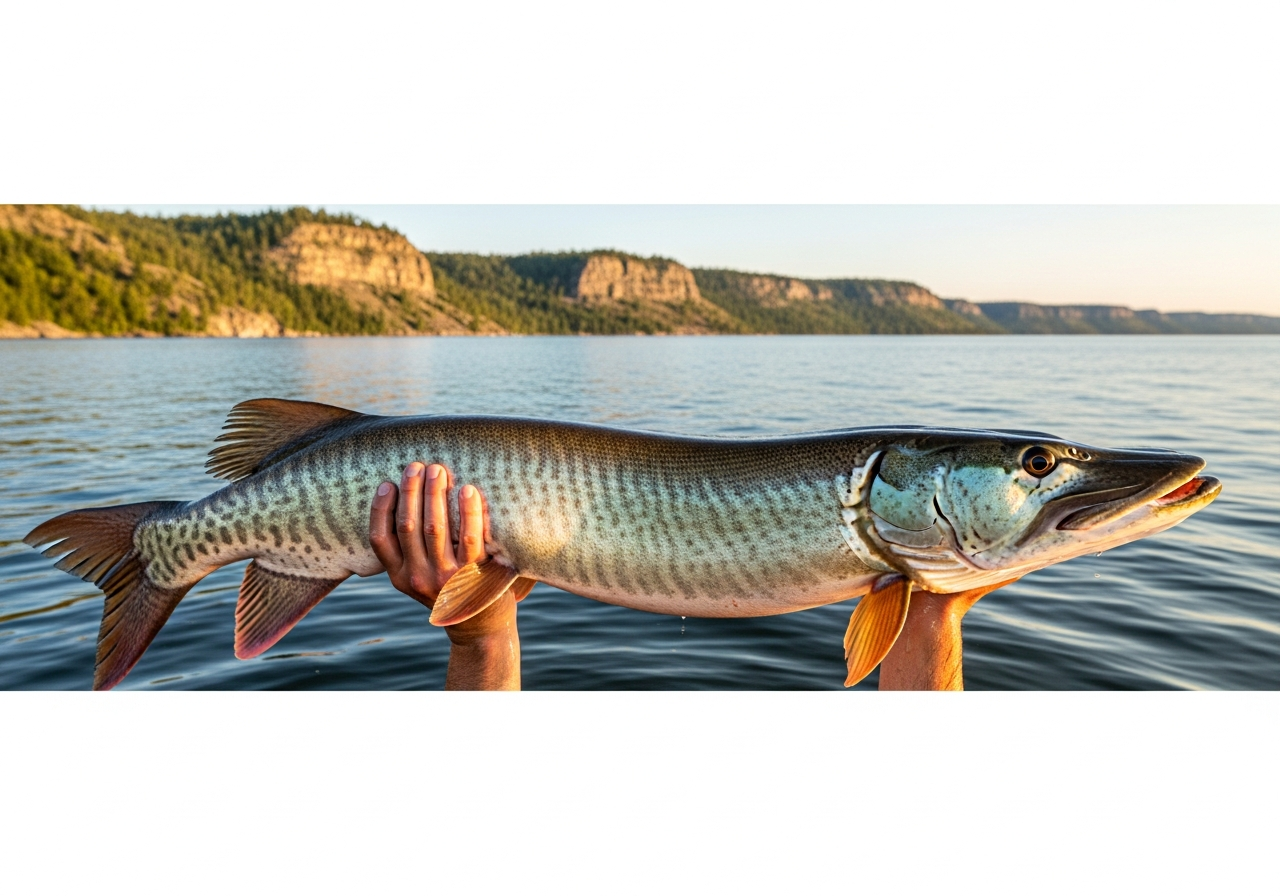
Lake of the Woods holds muskellunge throughout the lake, concentrated in and around the island clusters and rocky structure in the mid-lake areas. The fish grow large: 50-inch class fish are caught each season, and the lake produces legitimate trophies. Most muskie fishing on Lake of the Woods is catch-and-release by practice if not by regulation, and the fish population reflects the lower harvest pressure. Muskie follow the classic pattern of the species: low strike frequency, large presentations, and a seasonal calendar that rewards persistence. The island clusters between the Minnesota and Canadian portions of the lake hold fish on rocky points and in the bays between island groups. Casting large bucktails, figure-eight at boatside on every cast, and working main lake points from late June through October covers the primary bite windows. Figure-eight boatside retrieves produce a meaningful percentage of all muskie caught on Lake of the Woods. Fish follow presentations for long distances in the clear water and commit at the side of the boat. Spending 8 to 10 seconds on every figure-eight is not optional: it is where bites happen. The fall period in September and October before the water drops into the 50s is the best shot at a trophy-class fish.
Lake of the Woods Yellow Perch Fishing Report
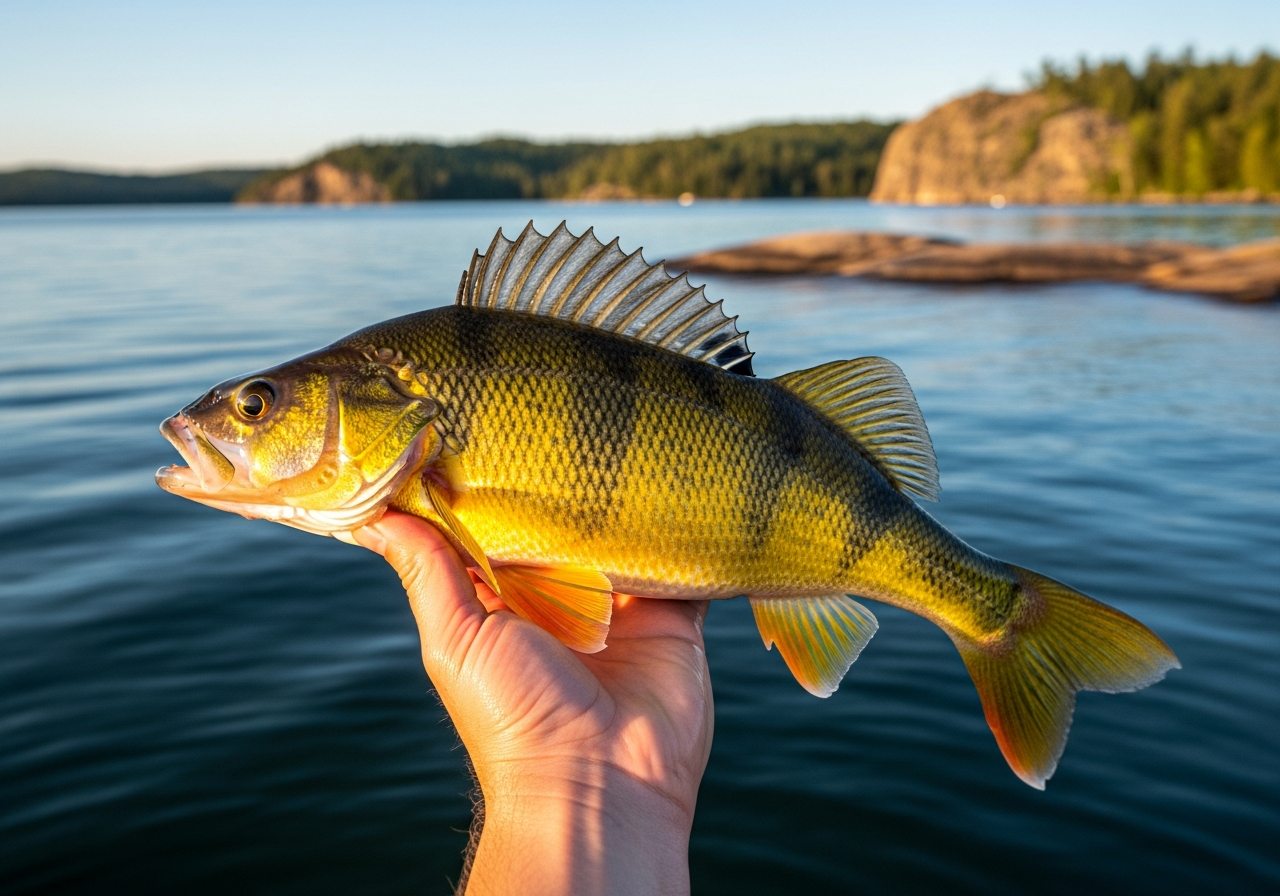
Yellow perch are a consistent secondary catch on Lake of the Woods and a primary target during the ice fishing season. The lake produces good numbers of 9 to 12 inch perch that provide action when the walleye bite is slower. Perch concentrate around the same sand and mud bottom structure that holds walleye in winter, often in slightly shallower water. During the open water season, perch school around the island groups and in the bays off the main lake. A small jig with a wax worm or a perch spinner worked over 12 to 20 feet of mixed bottom finds schools. Electronics help: perch on Lake of the Woods school tightly and moving off a cold spot to find the school pays off. Ice fishing for perch is straightforward: drill holes at the depth walleye are running, drop small jigs tipped with wax worms or perch eyes, and work smaller bites. The same ice houses targeting walleye in 28 to 36 feet often pick up perch incidentally throughout the winter season.
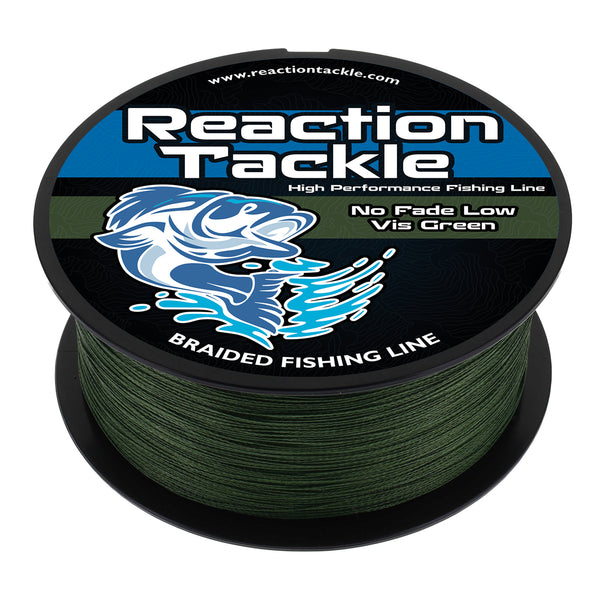
Before you head out, check your line. If it's been sitting on the reel all winter or has seen a lot of rocks and timber, it's worth replacing before a serious trip. I order most of my braid from Reaction Tackle and have been happy with it.
Top Fish to Target in Lake of the Woods
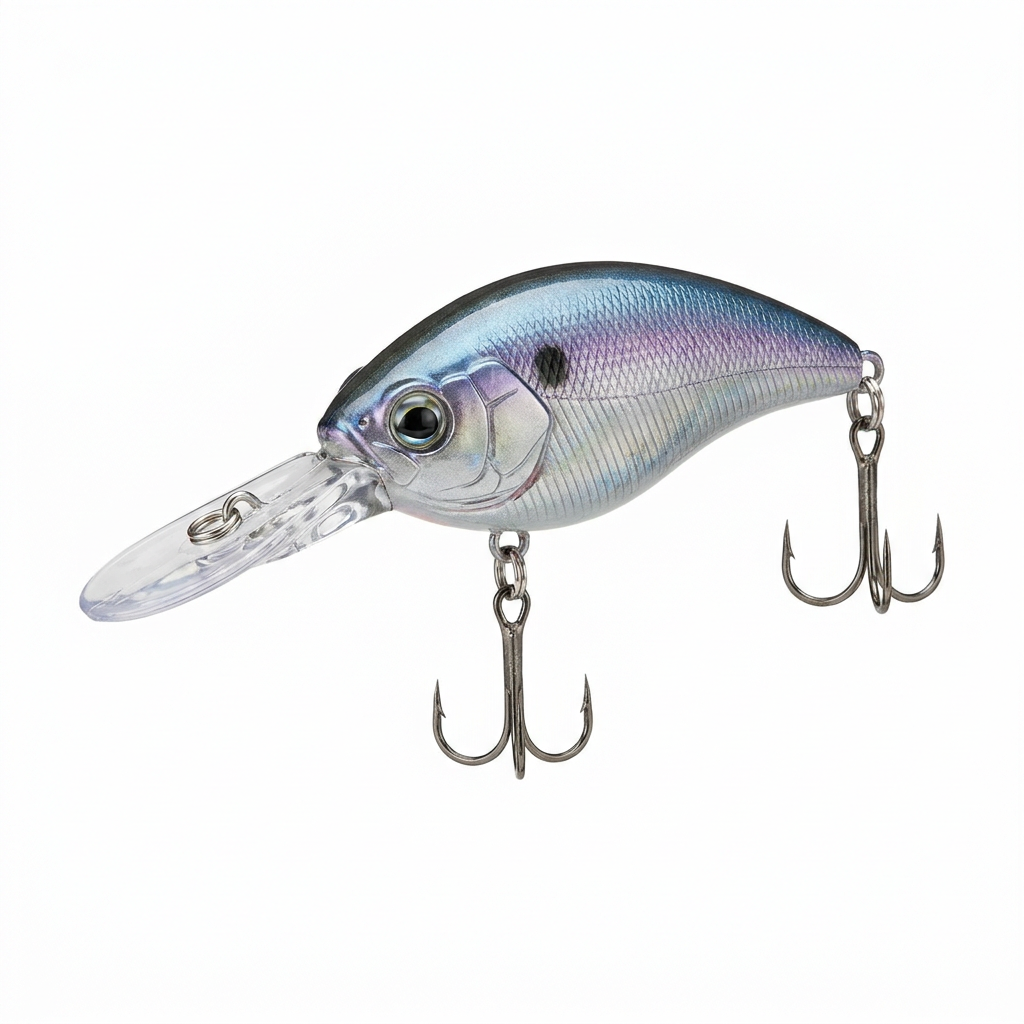
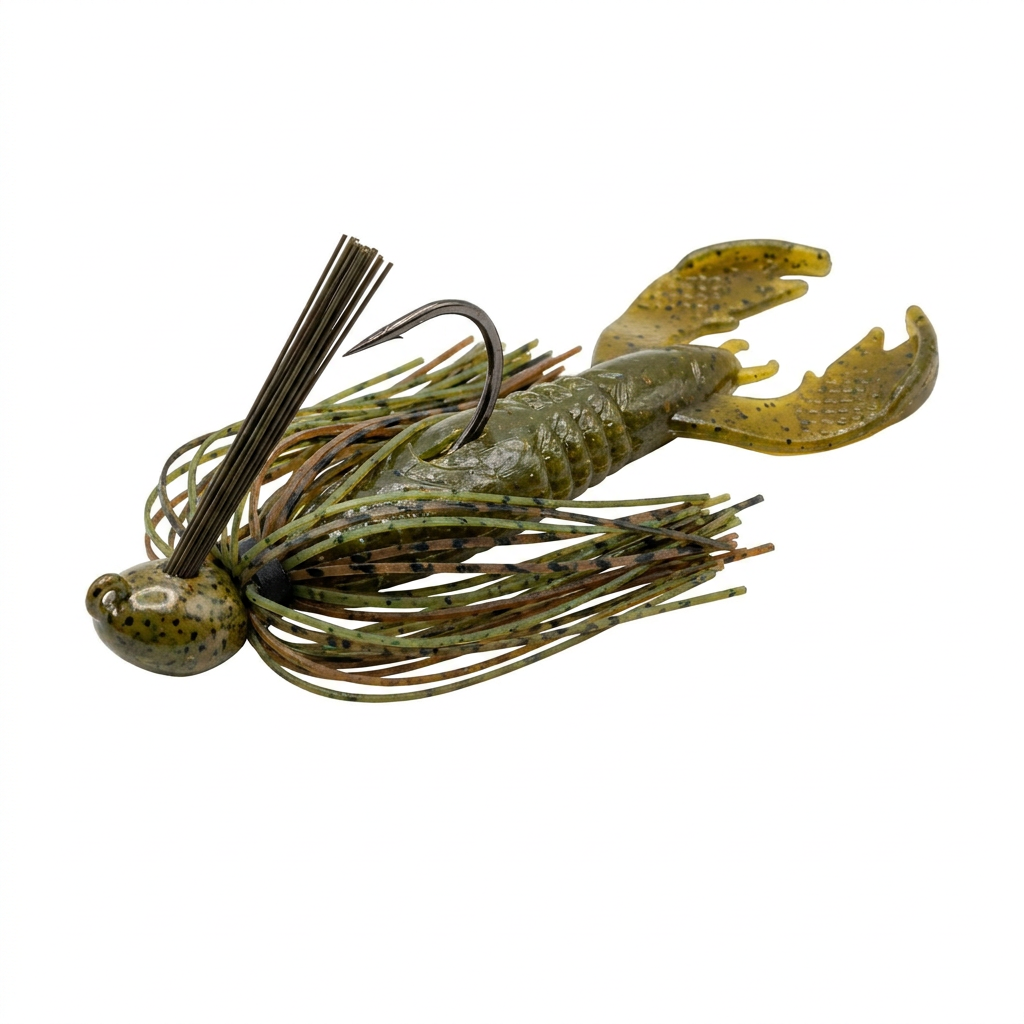
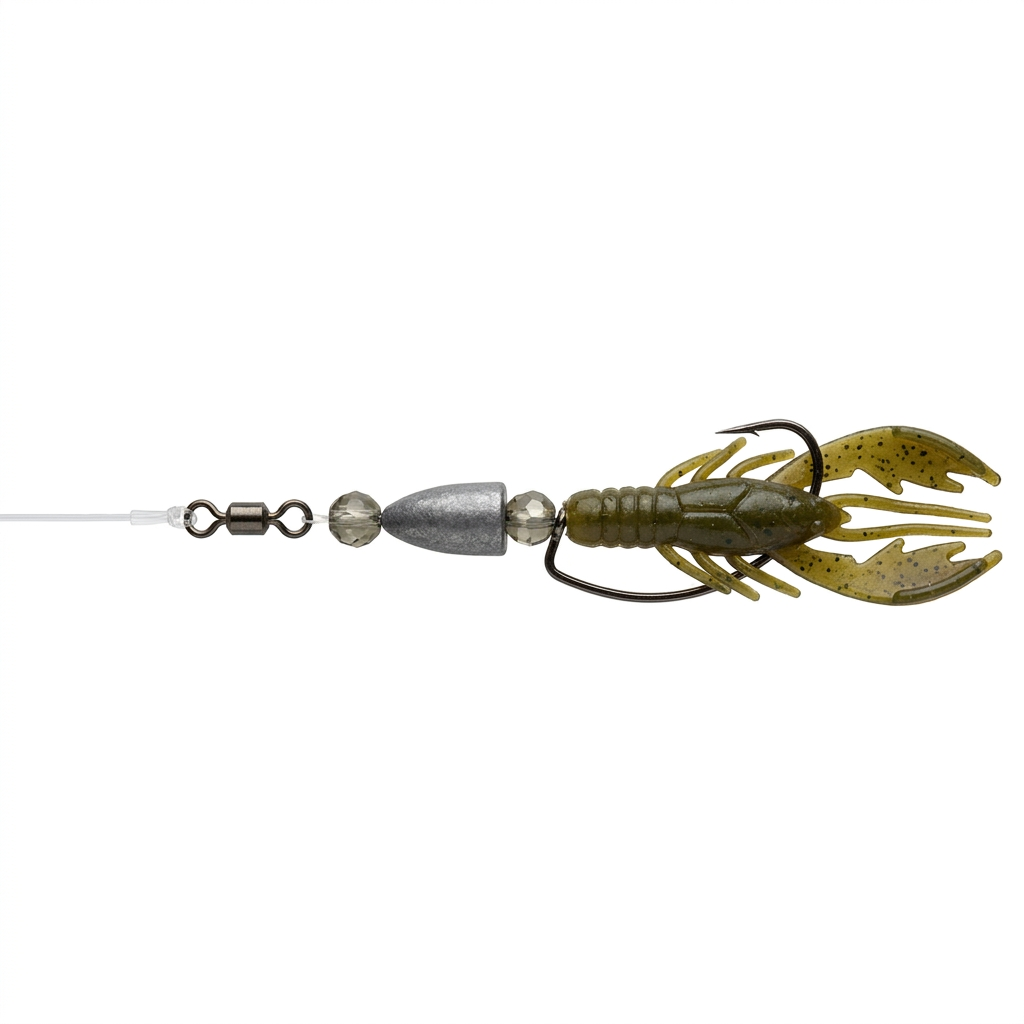
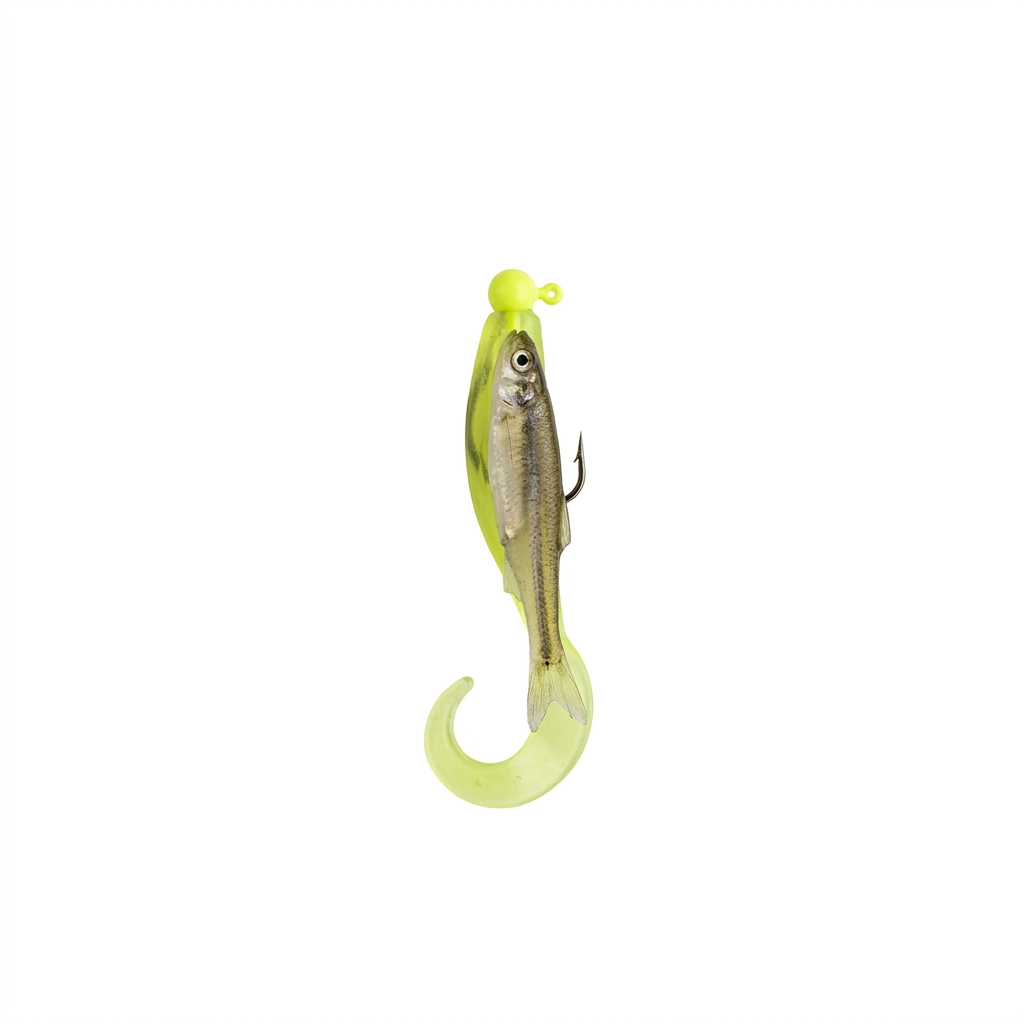
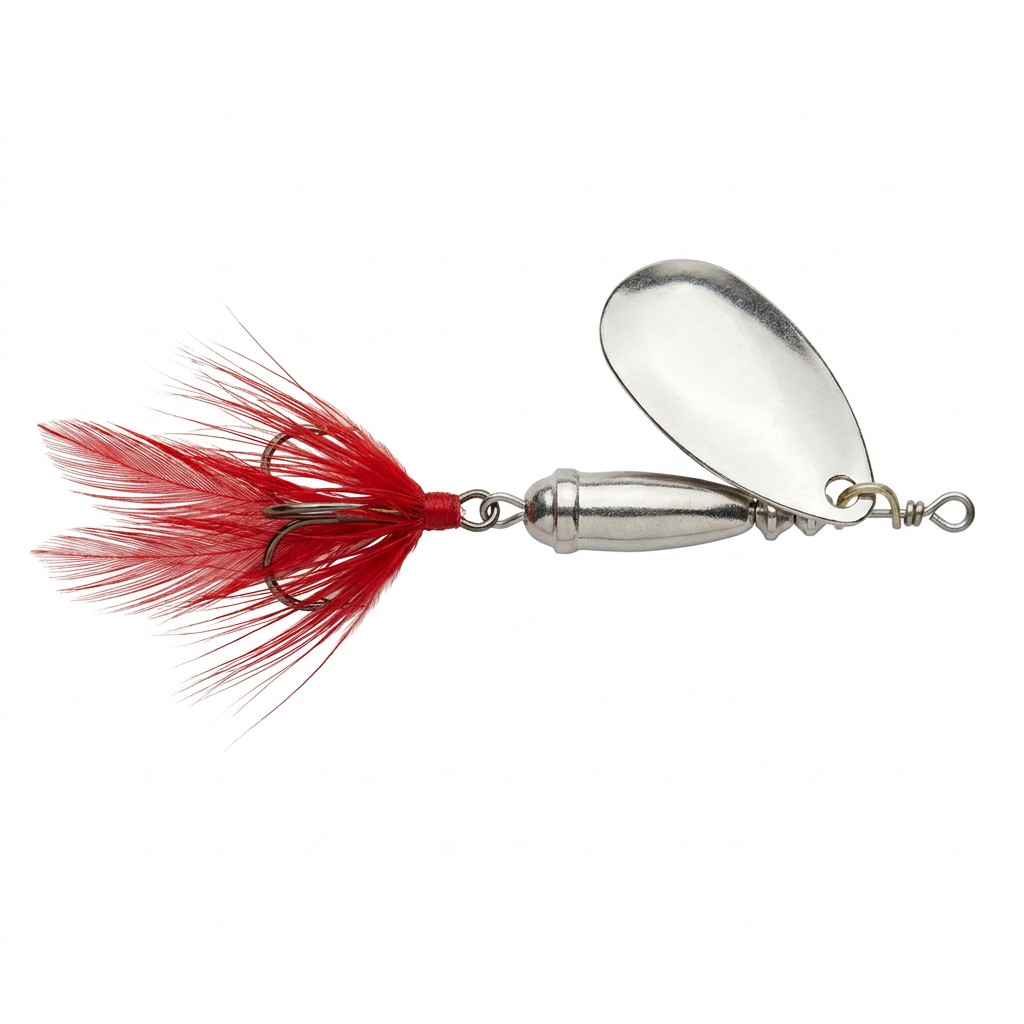
Lures for Lake of the Woods
Tackle matched to this lake's species and structure.
One thing I always check before a big trip is my main line. For most of the presentations that work here, you want braid. The sensitivity makes a real difference, especially when fish are finicky. I've been ordering from Reaction Tackle for a while now and haven't looked back.
About Lake of the Woods
Lake of the Woods operates on a scale that's hard to wrap your head around until you look at the map. The border water walleye fishing here has no real equivalent anywhere I've fished, and the fall bite on those Canadian reefs sounds like something I genuinely want to experience before I finish the state goal. Minnesota is still ahead of me.
Lake size and geography. Lake of the Woods covers approximately 951,000 total acres spanning Minnesota, Ontario, and Manitoba. The Minnesota (US) portion accounts for roughly 307,000 acres. The lake contains 14,632 islands and more than 65,000 miles of shoreline when all islands are included: more than Lake Superior. Maximum depth reaches 210 feet. The Northwest Angle, accessible by land only through Canada, is the northernmost point of the contiguous United States.
Location. Lake of the Woods County, Minnesota borders the lake on the US side. Baudette and Warroad are the primary Minnesota access cities. The lake is approximately 4 hours north of Minneapolis-Saint Paul on US Highway 71 to Baudette.
Walleye regulations. Lake of the Woods is border water with regulations specific to the lake. The combined walleye and sauger daily limit is 6 fish, with a maximum of 4 walleye. A protected slot requires immediate release of walleye measuring 19.5 to 28 inches. Only 1 walleye over 28 inches may be in possession per day. The season runs approximately May 10 through February 22, with catch-and-release only through mid-April. Verify current dates and limits at Minnesota DNR before fishing: regulations change annually.
Northern pike regulations. The daily bag limit for northern pike is 3 fish. All pike between 30 and 40 inches must be immediately released. Only 1 pike over 40 inches may be kept per day. These are border water-specific regulations that differ from standard Minnesota zone limits.
Ice fishing. The winter season typically opens in mid-December and runs through late March. Ice fishing produces walleye comparable to the open water season in terms of total harvest. Fish houses are permitted on the lake. The season draws anglers from across the Midwest, and guide services on the Minnesota side operate dedicated winter programs.