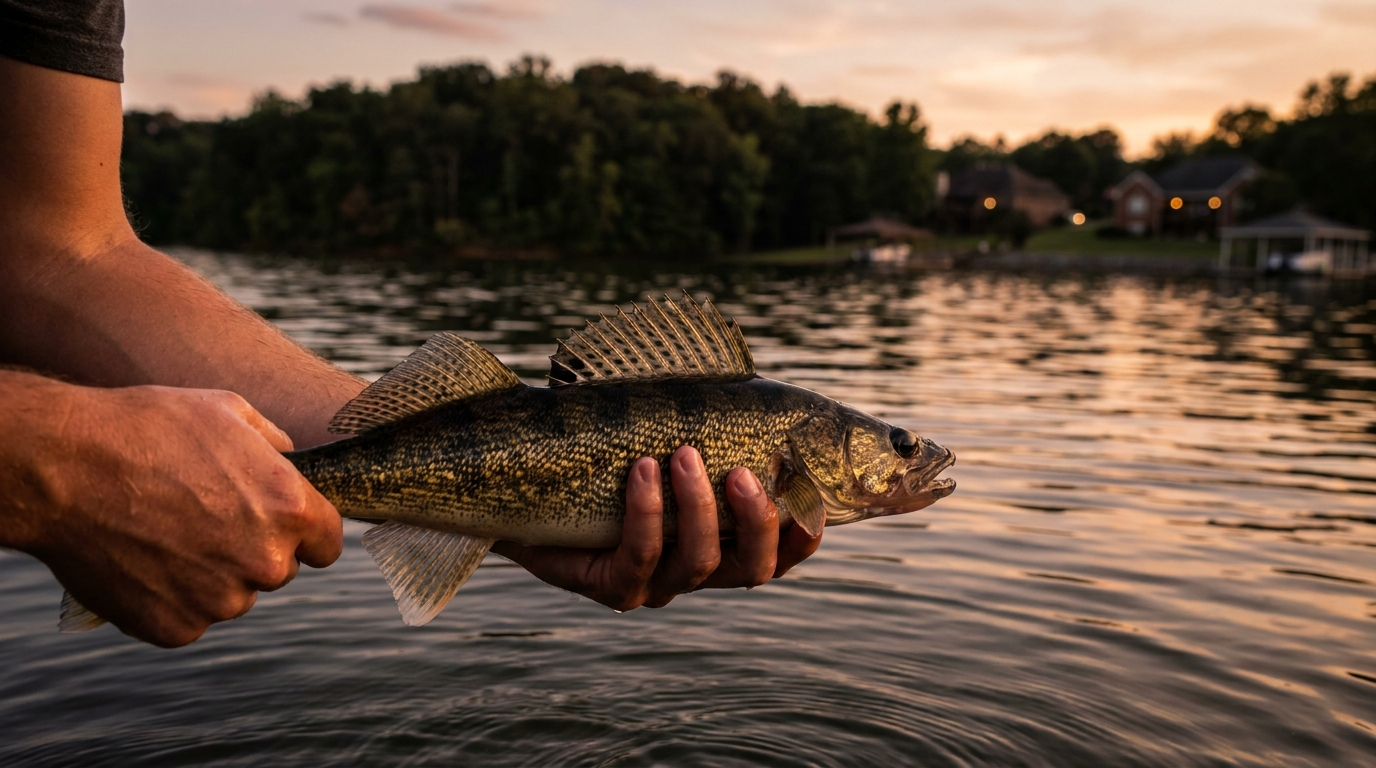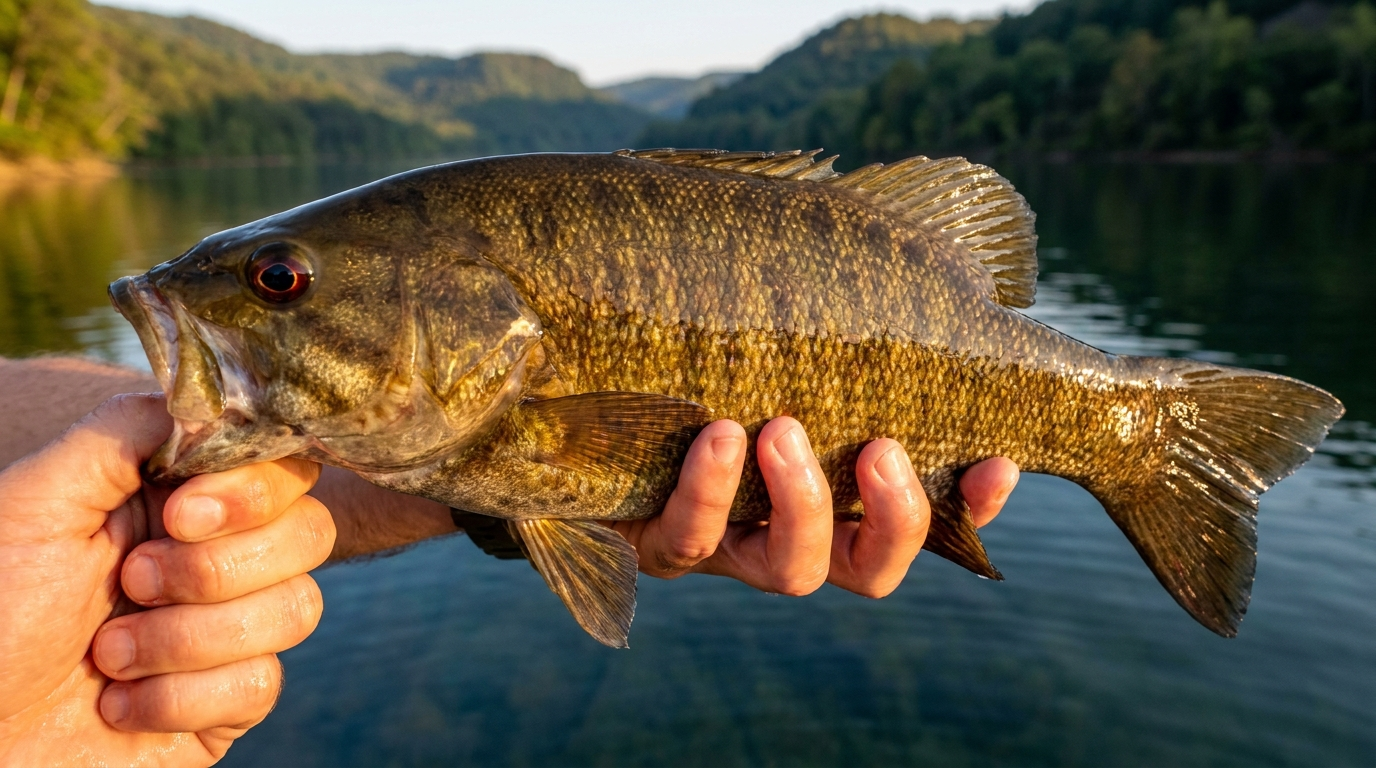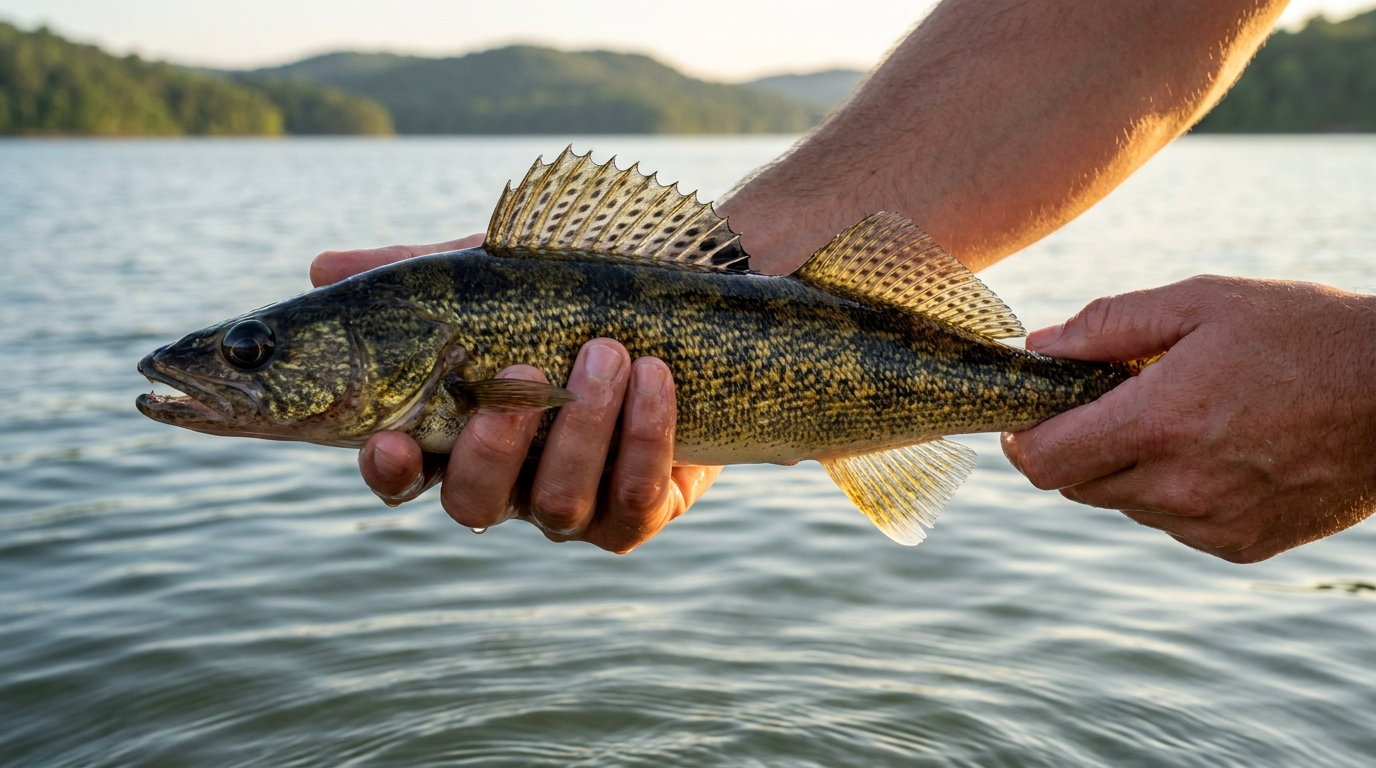
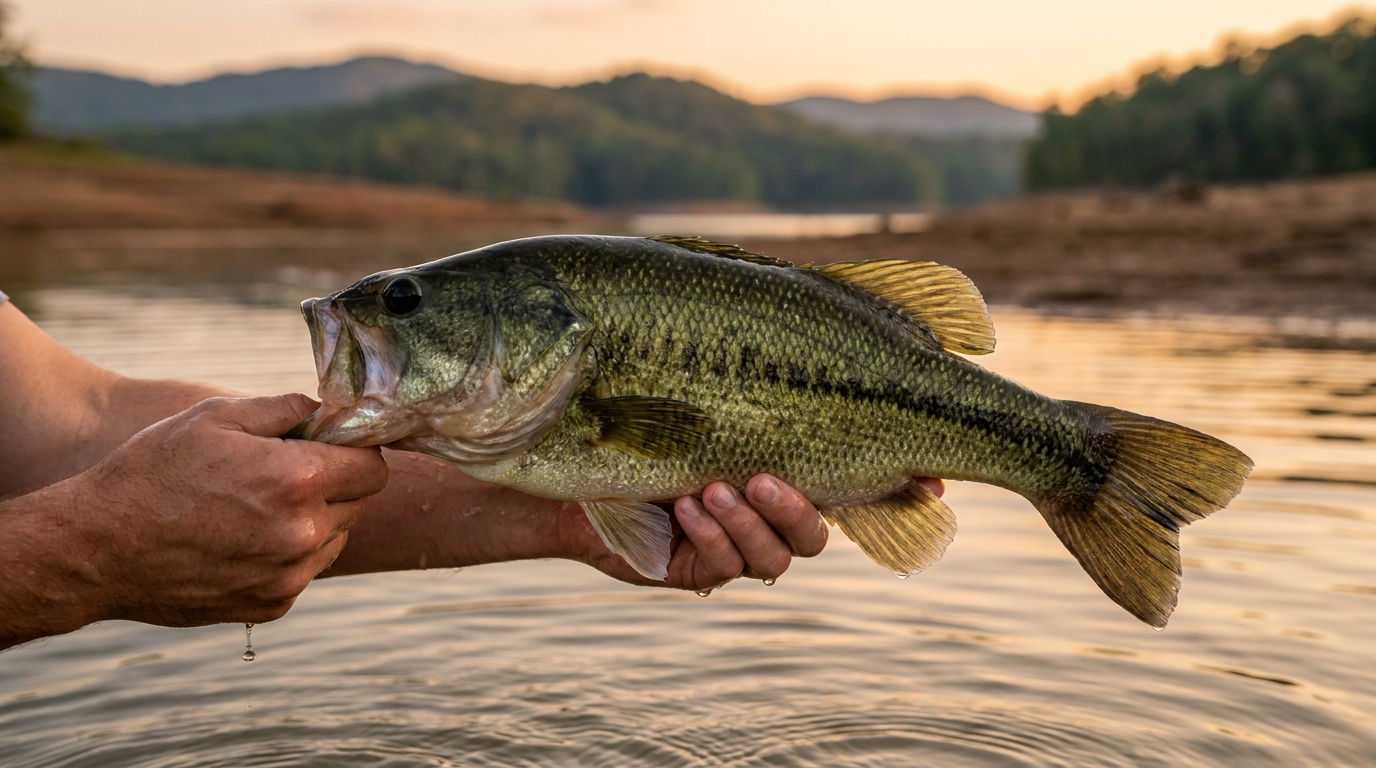

Douglas Lake doesn't get the same attention as Dale Hollow or Norris but it should. The largemouth bass fishery here is genuinely excellent because of what the TVA drawdown cycle does to the flats every spring. The sauger and walleye run up the French Broad River in late winter is a legitimate regional event. 28,000 acres in the Smoky Mountains foothills, Dandridge right on the water. This one rewards anglers who show up outside of peak summer.
Today's Bite Score · October 8, 2026
Very favorable conditions for catching fish
🌘Waning Crescent
Douglas Lake Fishing Report
October FishingMonthly fishing report · October patterns and techniques
October conditions at Douglas Lake are bringing cooler water temperatures that shift fish behavior significantly. As the month progresses, anglers are finding that the lake's thermal patterns are changing, pushing fish into new zones and affecting their feeding activity. Water clarity and temperature fluctuations this month create distinct fishing windows, with early morning and late afternoon hours becoming particularly productive as fish respond to the cooling trend.
In October, largemouth bass and crappie are among the most active species at Douglas Lake. Anglers are finding these fish moving toward deeper structure and vegetation as they adjust to the month's conditions. The bite is strongest where rocky points, submerged timber, and deeper channels intersect, as fish use these areas as transition zones during the seasonal shift. Crappie in particular are congregating in predictable locations this month, making them a primary target for anglers working the right depths.
For October fishing at Douglas Lake, anglers are finding success with live shiners and shad, which remain highly effective for bass and larger panfish species. Jigs and small crankbaits are also producing good results as the bite responds to slower presentations. The bite is most reliable when anglers focus on depths between 15 and 25 feet, where fish are transitioning to their October holding areas. Working structure deliberately and matching bait size to current conditions will help anglers take advantage of the activity this month.
Get More Fishing Report Specifics
Tap a topic button below for a report on current conditions.
Tap a topic above to get a current report for Douglas Lake.
Answers are generated on demand and cached. No AI call fires until you tap a tab.
Douglas Lake Fishing Guides
Looking for a Douglas Lake fishing guide? This TVA French Broad River reservoir has quality bass and walleye, but the current patterns and seasonal structure changes reward guides who are on the water consistently. Here are 2 fishing guides for Douglas Lake that are worth checking out.
Douglas Lake Fishing Strategies by Species
Seasonal patterns and techniques by target species · Verified against official sources
Largemouth bass, crappie, walleye, sauger, smallmouth bass, and channel catfish are the primary sport fish at Douglas Lake (Douglas Reservoir), a 28,420-acre TVA reservoir on the French Broad River in Jefferson, Cocke, Sevier, and Hamblen counties, Tennessee, near Dandridge. TVA completed Douglas Dam on February 19, 1943, in 12 months and 17 days to power World War II aluminum production. Douglas Lake features a dramatic 44-foot seasonal TVA drawdown cycle from summer pool (elevation 1,000 feet) to winter pool (elevation 940 feet) that exposes extensive flats, stimulating spring bass and crappie reproduction when the lake refills. The late-winter sauger and walleye spawning run up the French Broad River is one of the region's most productive cold-water fisheries. TWRA statewide regulations apply with Douglas-specific exceptions: bass have a summer slot limit (June 1 through September 30, only 1 largemouth or smallmouth over 16 inches per day); crappie 10-inch minimum, 15-fish daily limit; walleye 15-inch minimum, 5-fish combined daily limit with sauger. Verify current regulations at tn.gov/twra before fishing.
Douglas Lake Largemouth Bass Fishing Report
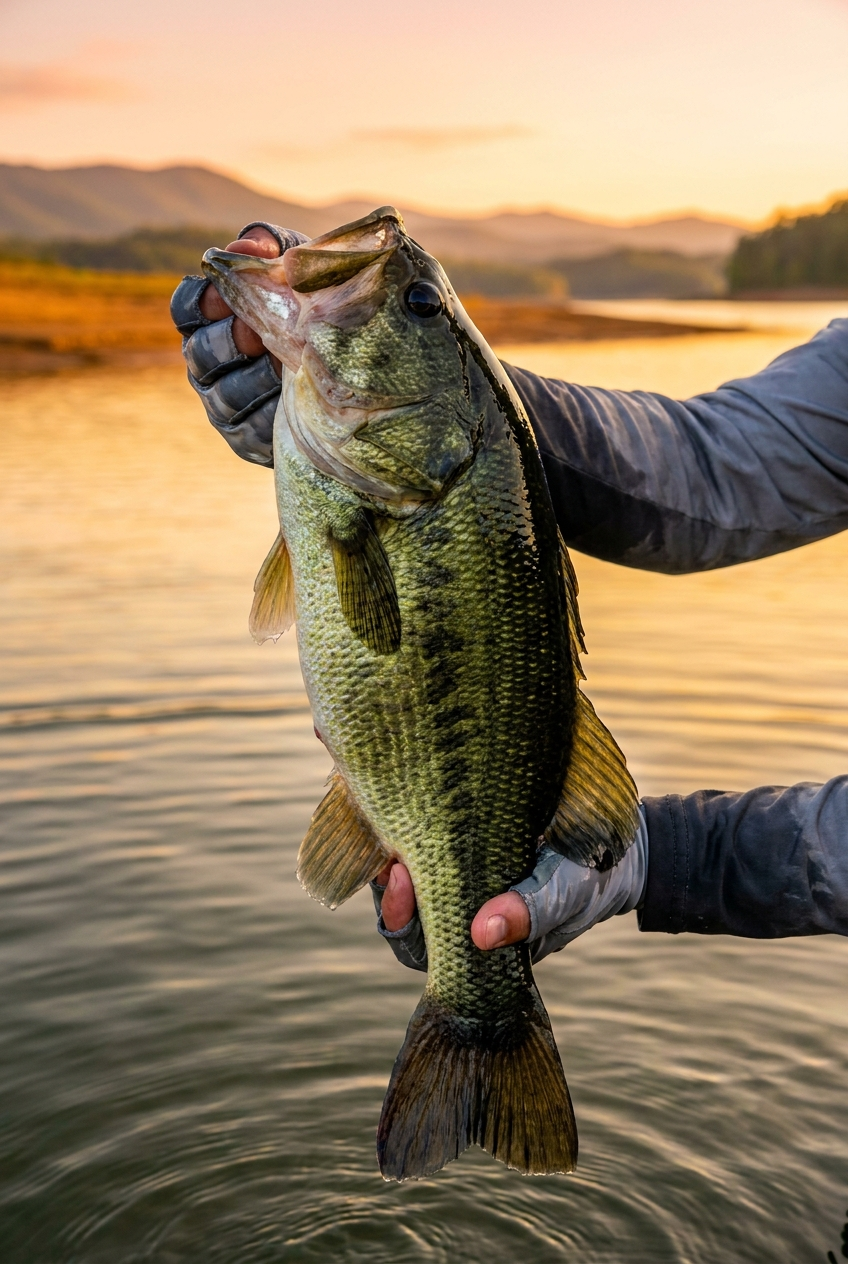
Largemouth bass at Douglas Lake are the primary sport fish and benefit directly from the TVA drawdown cycle. Each year the lake drops to winter pool (elevation 940 feet), exposing extensive shallow flats. When TVA refills to summer pool (elevation 1,000 feet) in spring, those newly flooded flats provide exceptional spawning habitat and bait-rich shallows that produce fast bass growth rates. TWRA regulation: Oct. 1 through May 31, no length limit, 5-fish daily limit; June 1 through Sept. 30, only 1 largemouth or smallmouth over 16 inches per day may be kept. Verify at tn.gov/twra. Spring is the peak season, with prespawn largemouth staging on the secondary points and main-lake ledges in March before flooding onto the newly refilled flat areas to spawn in April and May. Spinnerbaits and crankbaits worked along flooded timber edges and the transition zones between the old and new pool lines produce consistent spring fish. Summer bass relate to the deeper timber and the submerged channel in 10 to 20 feet. Fall crankbait and jig fishing on the main-lake points produces actively feeding fish through October before winter drawdown begins again.
Douglas Lake Crappie Fishing Report
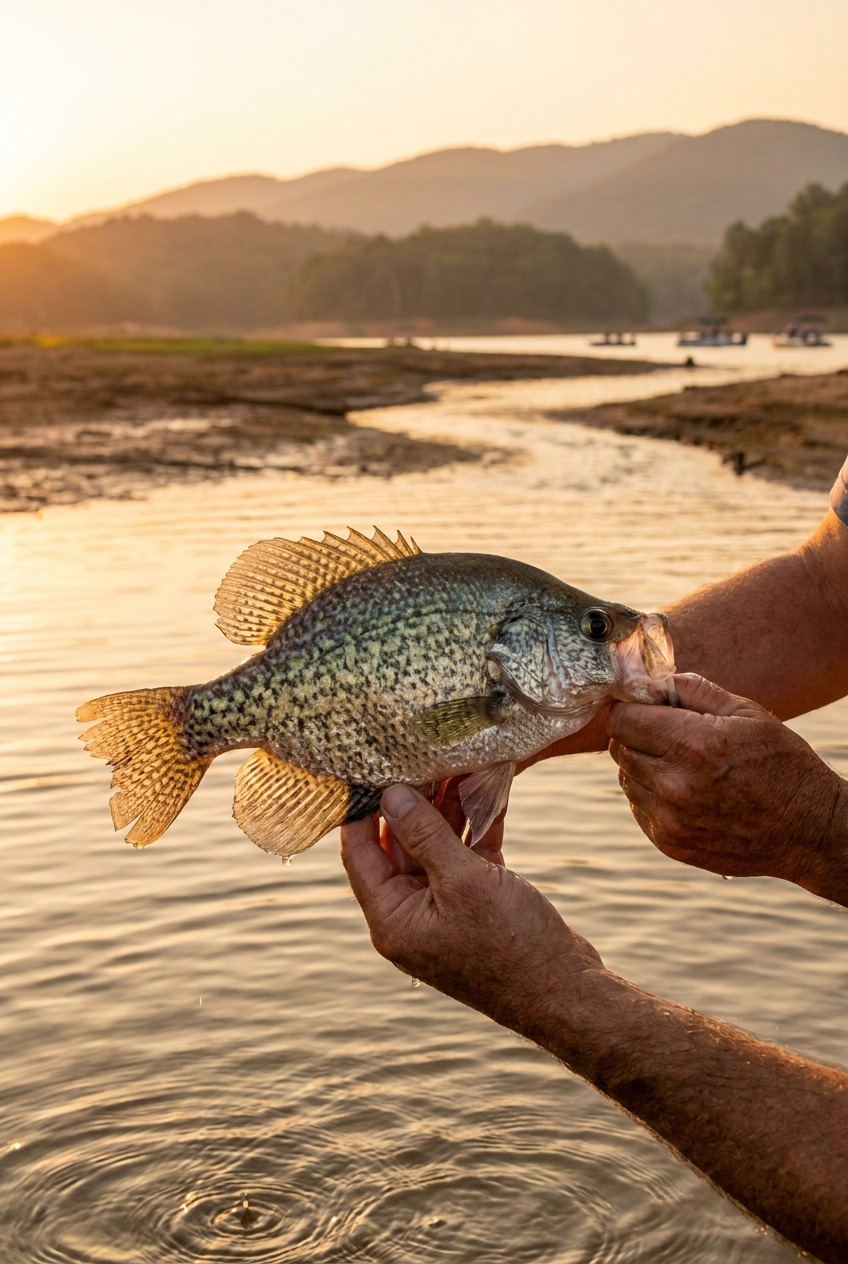
Crappie at Douglas Lake benefit from the same drawdown cycle as the bass, with exceptional spring habitat created when the refilling pool floods the exposed flats. Both black and white crappie are present throughout the reservoir. TWRA regulation: 10-inch minimum, 15-fish daily limit. Verify at tn.gov/twra. Spring crappie fishing peaks in March and April as fish move from the deeper basin water into the newly flooded timber and brush on the refilling flats. Small tube jigs and crappie jig-minnow combinations worked vertically around submerged timber in 5 to 10 feet produce reliable catches during the peak spring season. TVA fish attractors at marked locations around the lake concentrate crappie year-round. Summer crappie suspend in 15 to 25 feet below the dock structure and floating habitat. Fall crappie return to shallower brush and dock structure and remain active through December.
Douglas Lake Walleye Fishing Report
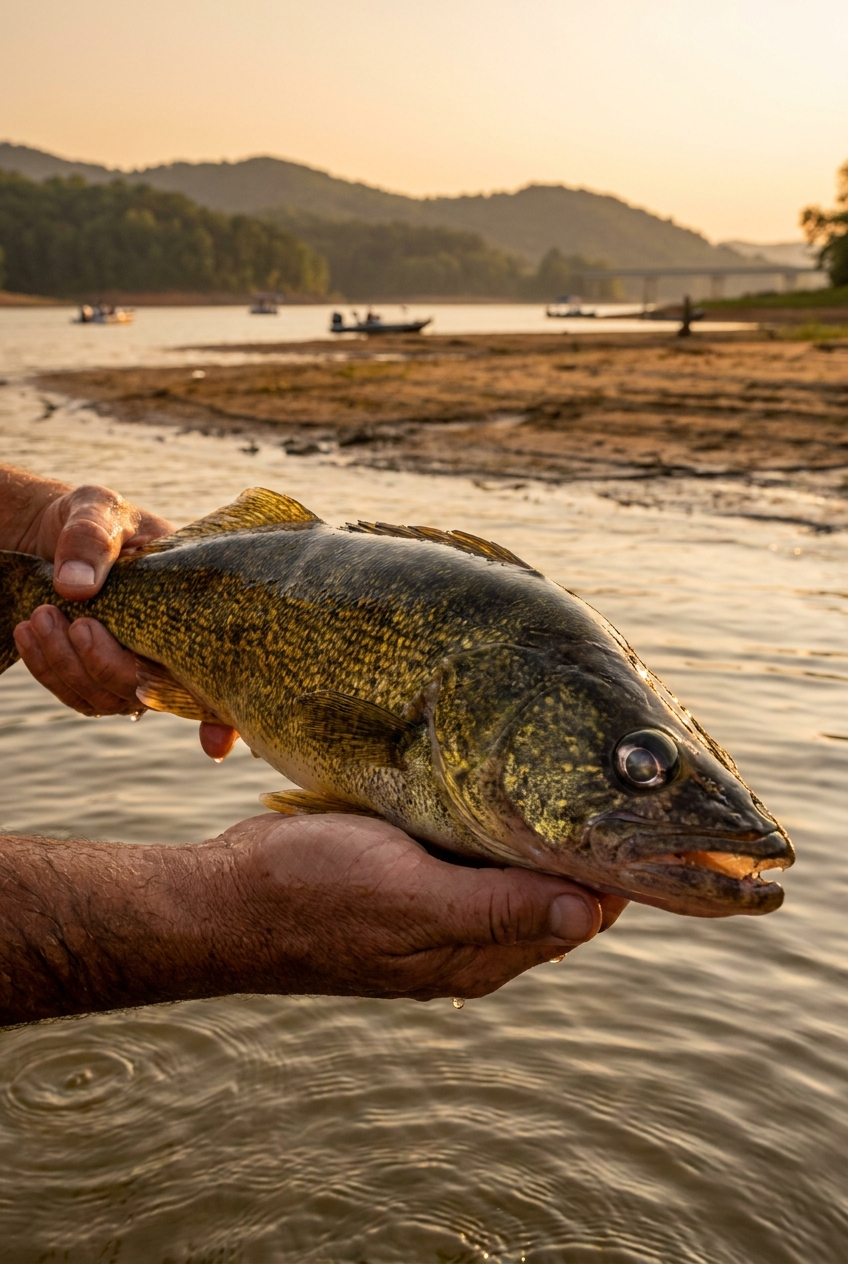
Walleye at Douglas Lake provide a distinctive cold-water fishery centered on the late-winter spawning run up the French Broad River. Fish move from the deeper main lake into the French Broad River arm and up toward the headwaters from January through March as water temperatures drop and spawning instinct drives fish upstream. TWRA regulation: 15-inch minimum, 5-fish combined daily limit with sauger. Verify at tn.gov/twra. Jigging with blade baits and minnow-tipped jigs along the main channel transitions in the French Broad River arm in 10 to 25 feet produces walleye during the January through March peak. Night fishing is most productive during warm months when walleye move from deeper daytime positions to feed in shallower water along the rocky main-lake structure. The upper French Broad River arm holds the most consistent walleye populations, particularly during the winter spawning run.
Douglas Lake Sauger Fishing Report
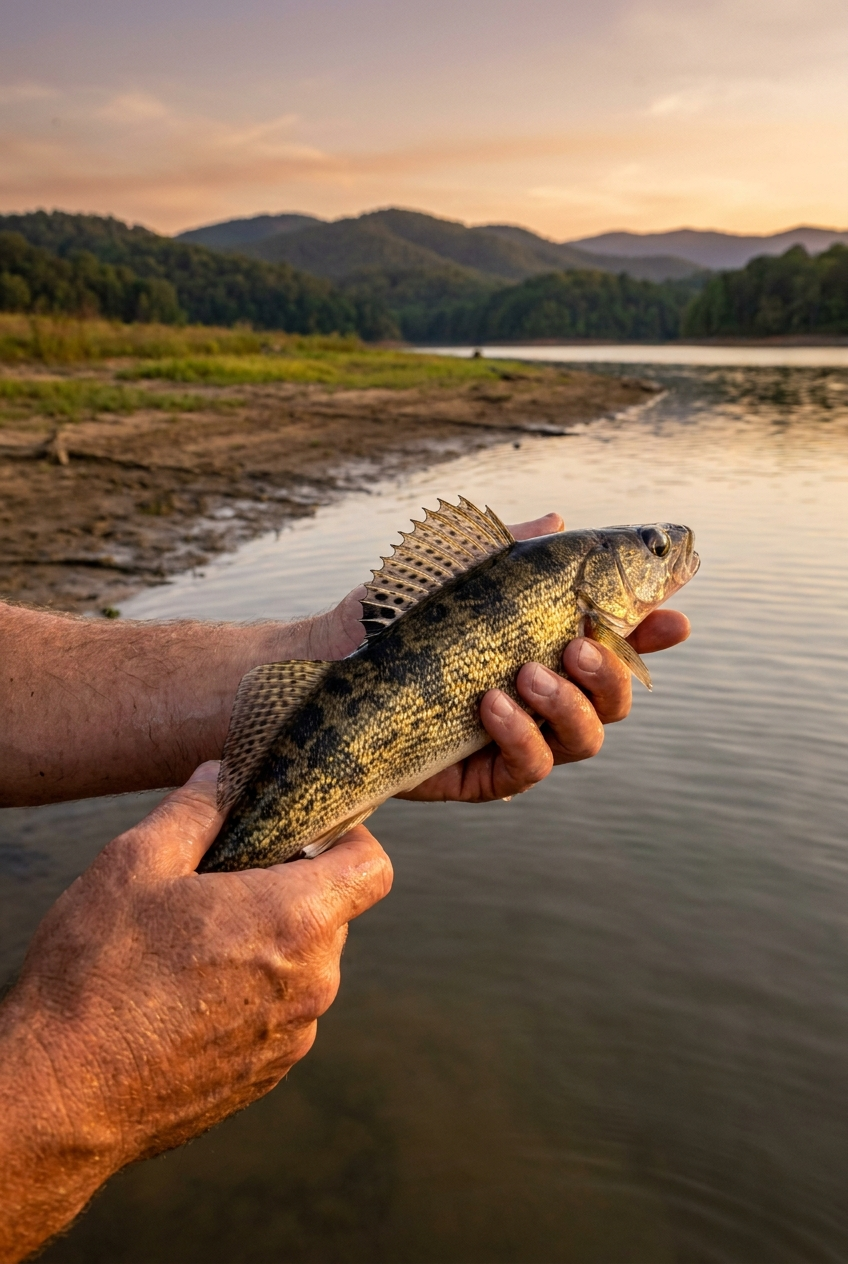
Sauger are native to the French Broad River system and provide a distinctive Tennessee River watershed fishery at Douglas Lake alongside walleye. The late-winter sauger and walleye run is one of the signature cold-water fishing events on East Tennessee TVA reservoirs. TWRA regulation: no minimum length for sauger (only 1 sauger over 16 inches per day), included in the 5-fish combined daily limit with walleye. Verify current regulations at tn.gov/twra. Sauger concentrate in the French Broad River arm during the January through March spawning migration. Jigging with small blade baits and minnow-tipped jigs along the main river channel bottom in 10 to 20 feet is the primary technique. Sauger are most active in low-light conditions and during night fishing periods. The section of the French Broad River arm nearest the main lake concentrates the most fish during winter.
Douglas Lake Smallmouth Bass Fishing Report
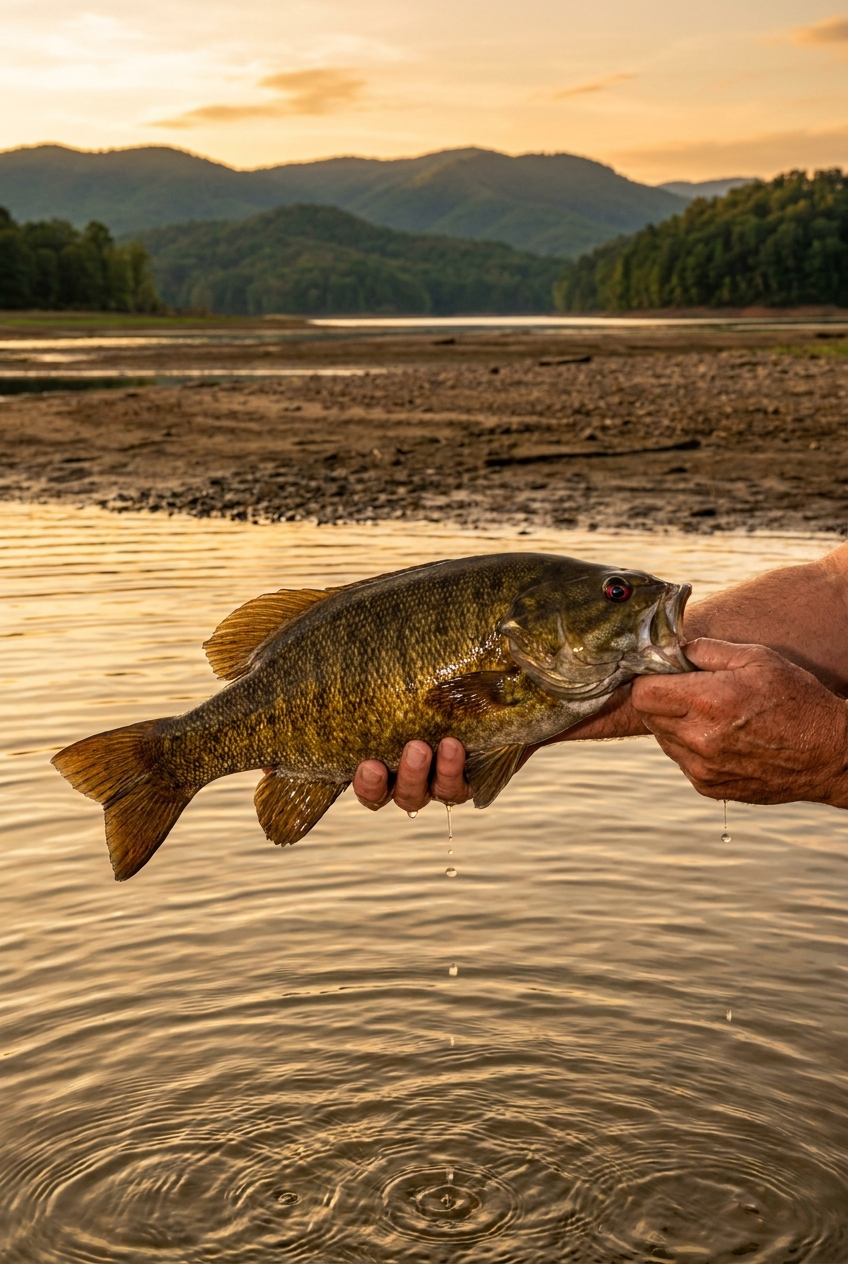
Smallmouth bass are present at Douglas Lake in the rocky main-channel sections and the harder-substrate areas of the French Broad River arm. The growing smallmouth population adds variety to the bass fishery. TWRA regulation: same slot as largemouth (June 1 through Sept. 30, only 1 largemouth or smallmouth over 16 inches per day), 5-fish combined daily limit. Verify at tn.gov/twra. Tube jigs and small crankbaits worked along rocky main-channel transitions and submerged rock structure in 5 to 15 feet produce smallmouth. Spring smallmouth fishing peaks in April when fish move to gravel and rock spawning areas in the French Broad River arm and the rocky sections of the main lake near Dandridge.
Douglas Lake Channel Catfish Fishing Report
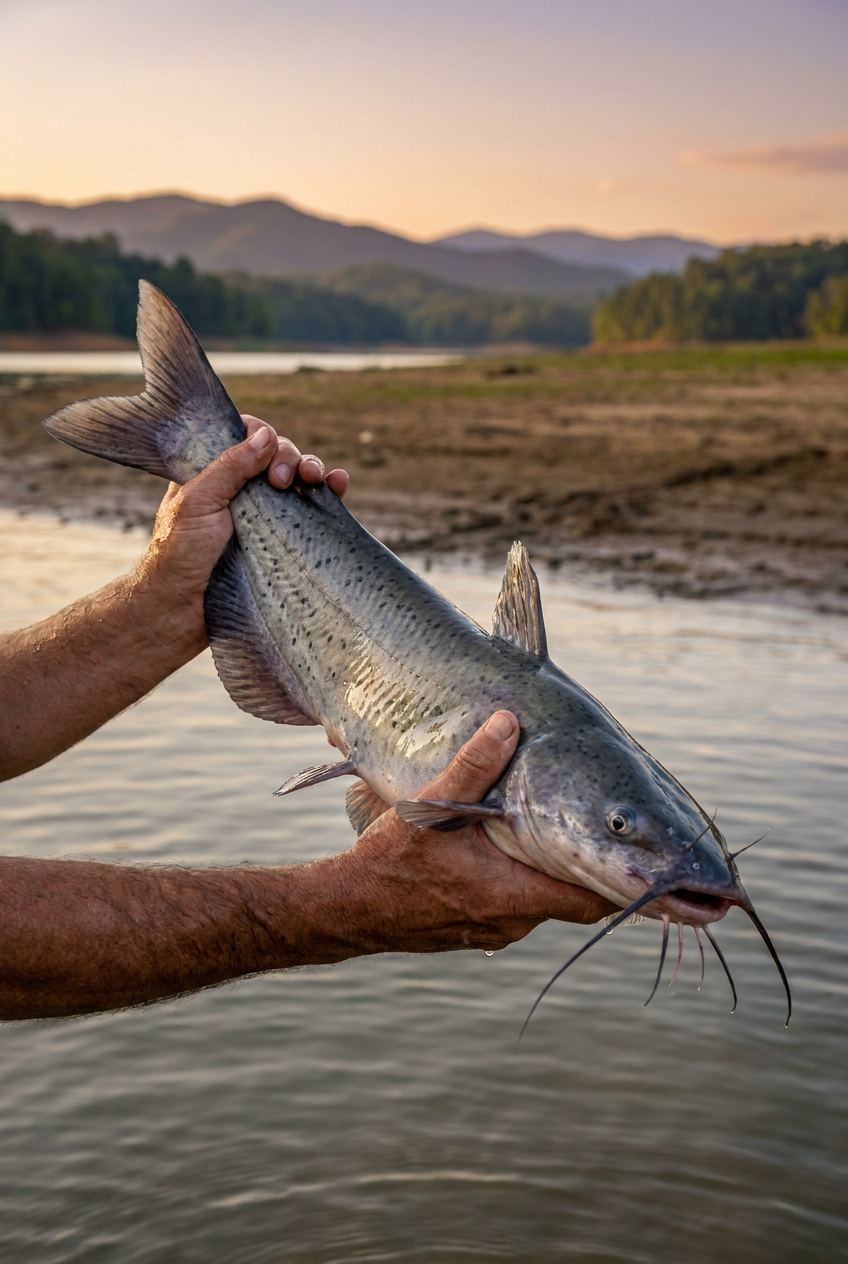
Channel catfish are distributed throughout Douglas Lake in the cove bottoms and the French Broad River channel. The lake provides accessible catfish fishing at TVA public access areas around the reservoir. TWRA regulation: no creel limit for channel catfish under 34 inches; only 1 fish over 34 inches per day may be kept (Tennessee statewide rule). Verify at tn.gov/twra. Cut shad and prepared catfish baits fished on the bottom near the French Broad River channel transitions and tributary mouths produce consistent channel catfish. Summer night fishing from public access areas around Dandridge and the upper lake arms is the primary catfish approach.
For fishing heavy cover after Largemouth Bass, I run 50-65lb braid. Zero stretch means you feel every bite and you can pull fish out of structure before they wrap you. Reaction Tackle is where I restock. Their low-vis green disappears in most water conditions.
Top Fish to Target in Douglas Lake
Lures for Douglas Lake
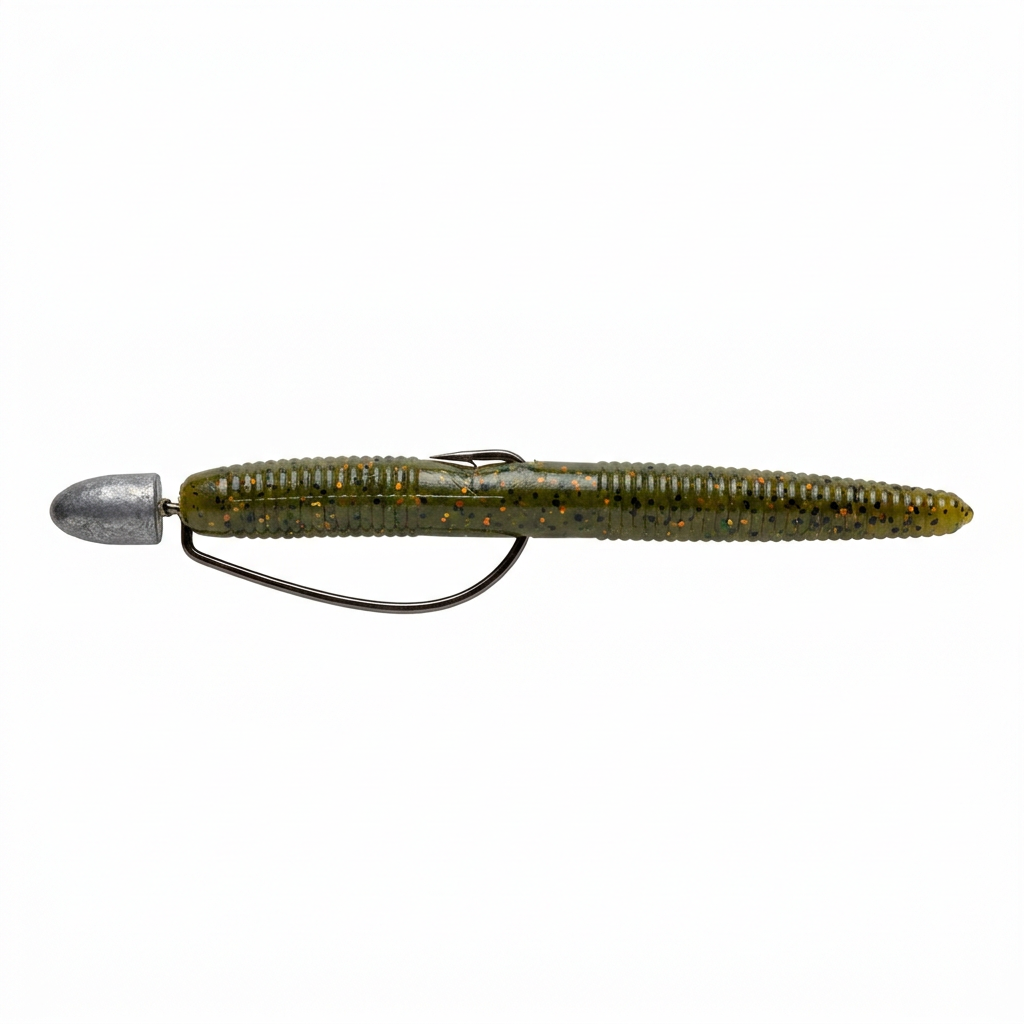
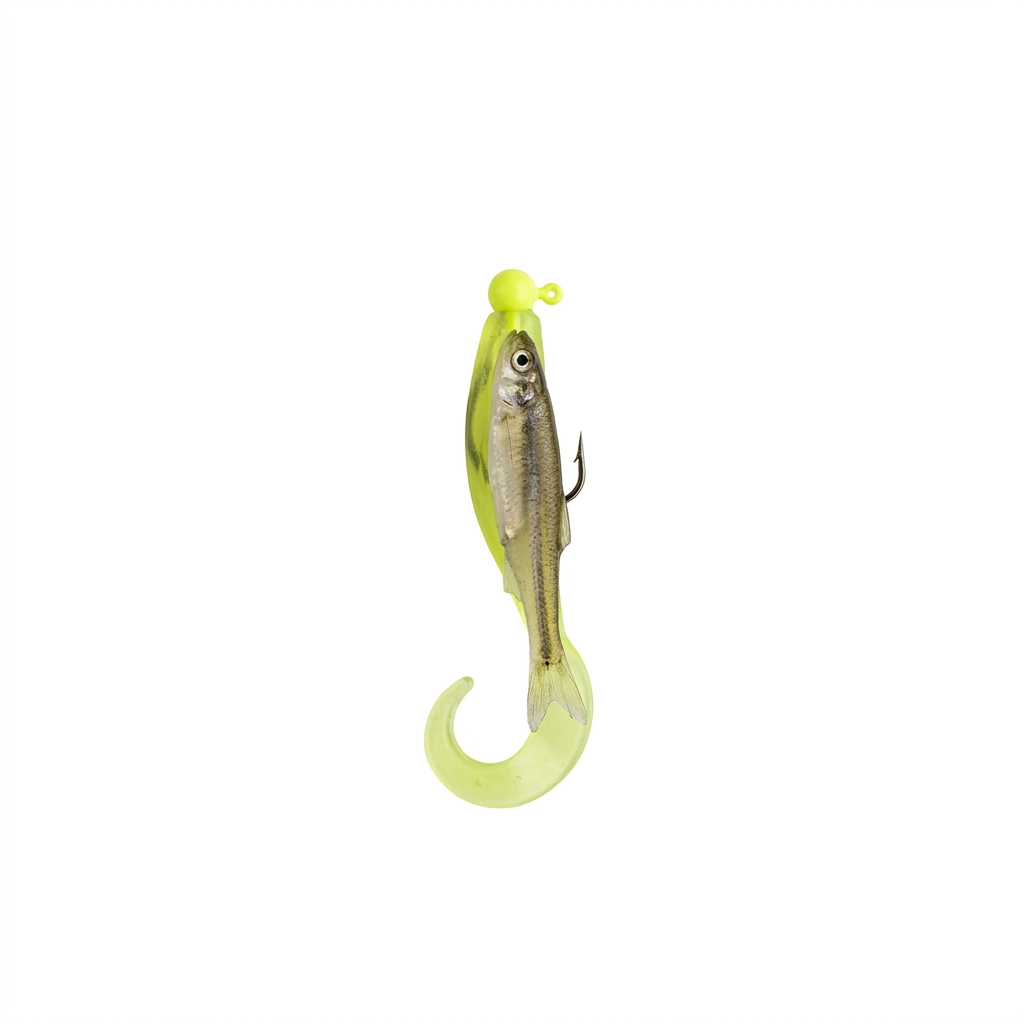
Tackle matched to this lake's species and structure.
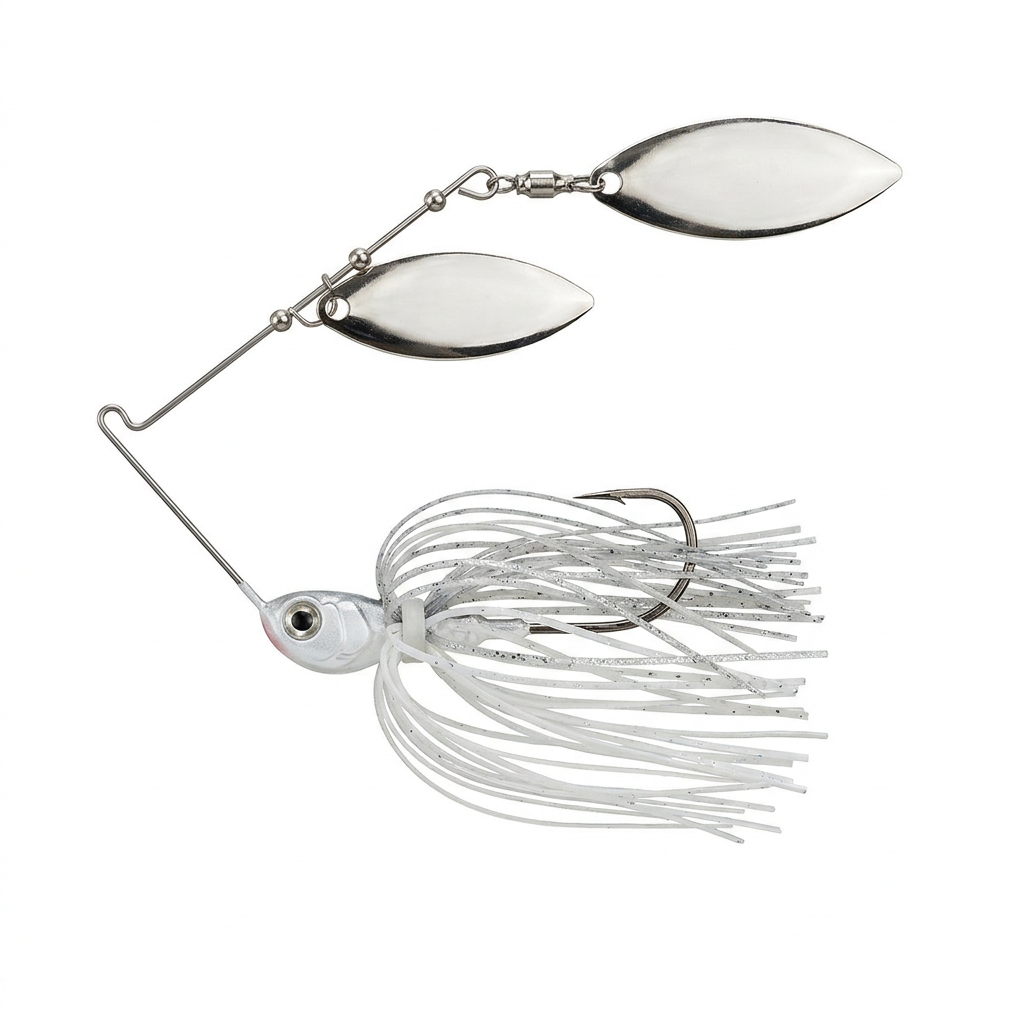
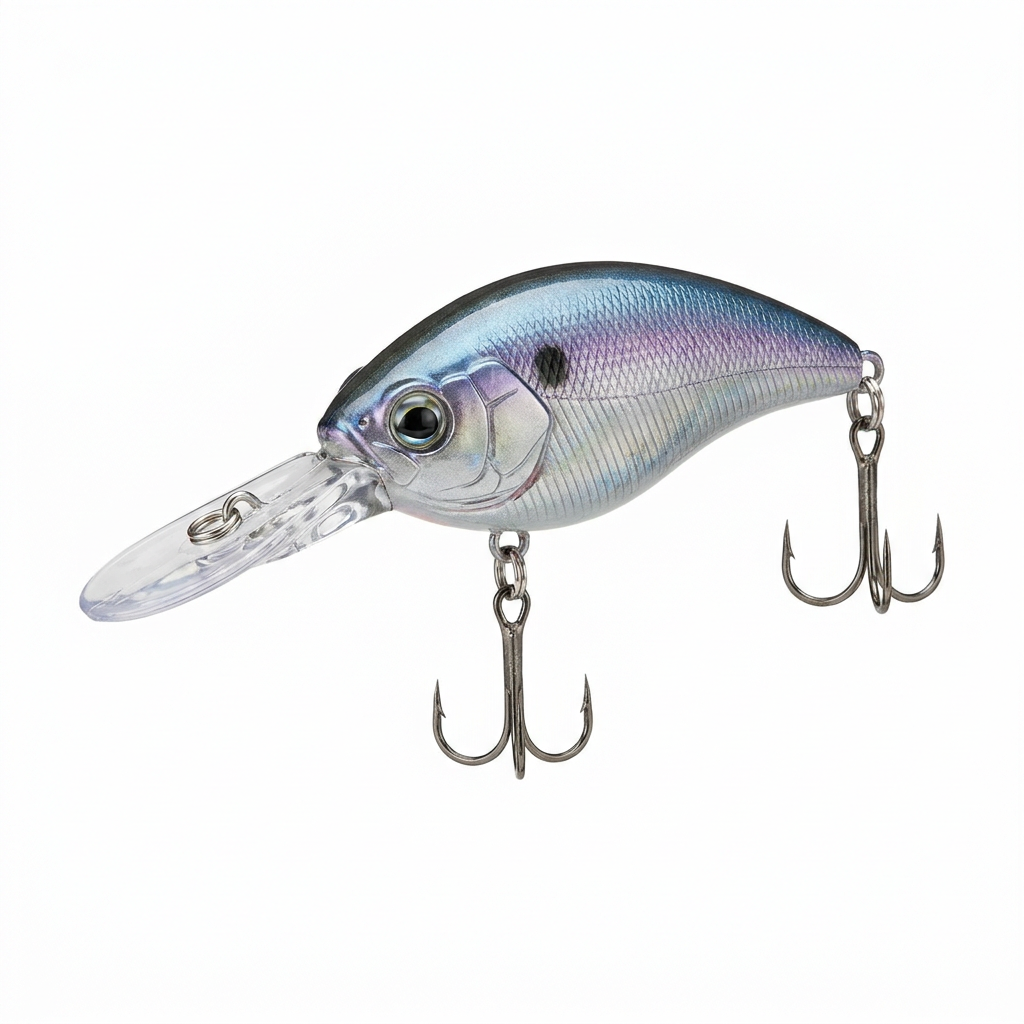
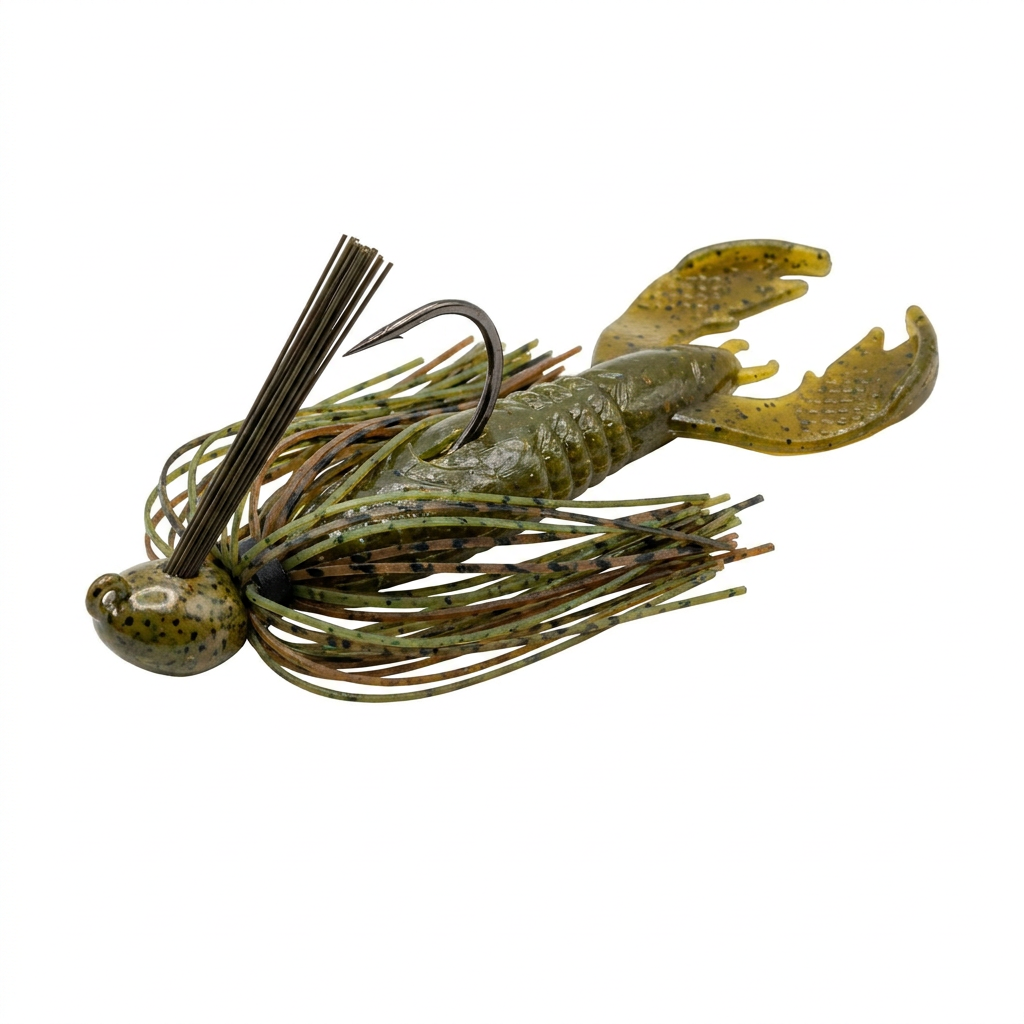
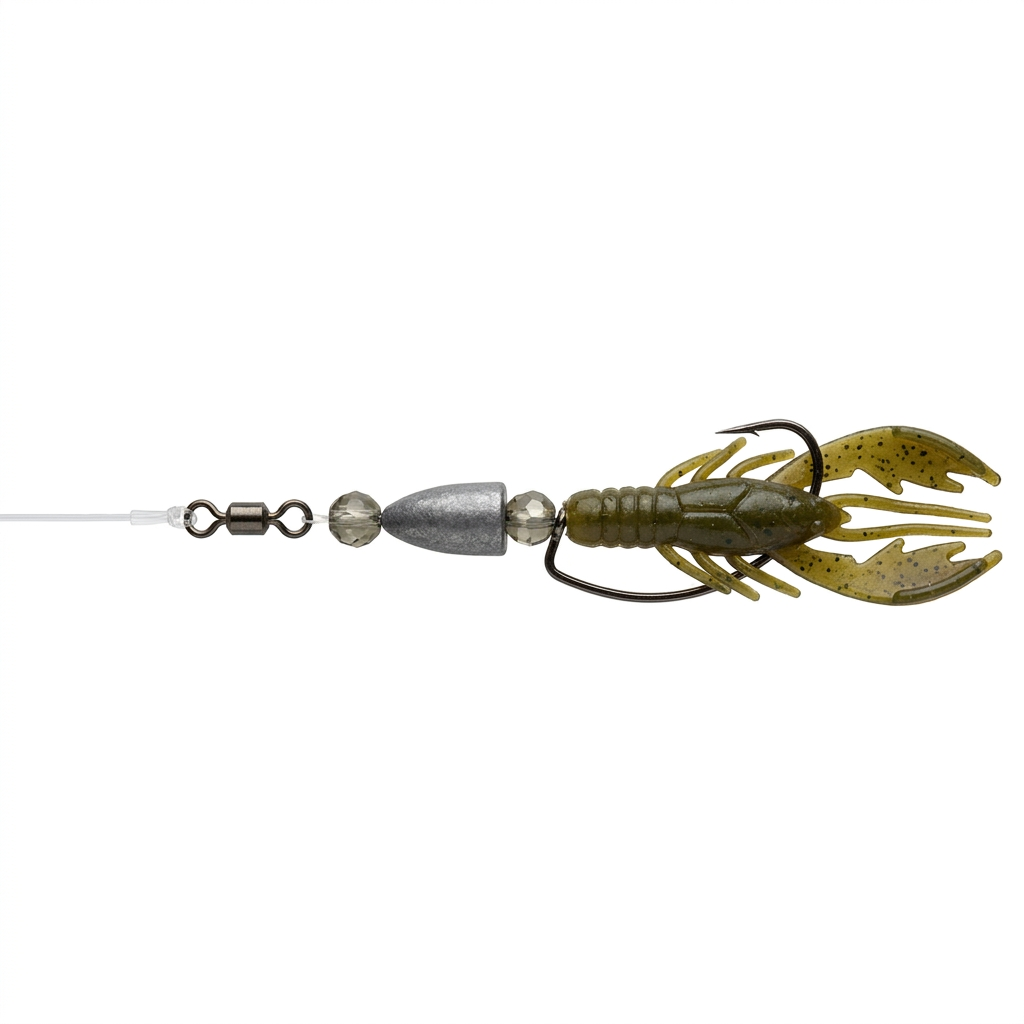
Worth checking before any trip: your line. Old braid gets brittle at the tag end and loses sensitivity over time. I rotate mine every season. Reaction Tackle is where I order from when it's time to restock.
About Douglas Lake
Douglas Lake is a TVA reservoir with two distinct identities. The largemouth bass fishing here is among the best in East Tennessee, driven by a 44-foot seasonal drawdown cycle that exposes and then refloods extensive flats each spring, creating ideal spawning habitat and bait production every year. The walleye and sauger run up the French Broad River in late winter is a different fishery entirely -- a cold-water, native-species event that draws anglers who know what they're doing. TVA completed Douglas Dam in February 1943 in a record 12 months and 17 days to supply power for WWII aluminum production near Alcoa, Tennessee. Dandridge, one of Tennessee's oldest towns, sits directly on the lake in Jefferson County.
The TVA drawdown advantage. Douglas Lake drops approximately 44 feet each fall and winter from summer pool (elevation 1,000 feet) to winter pool (elevation 940 feet). This is one of the largest drawdown cycles on the TVA system. When the lake refills in spring, the newly flooded flats provide exceptional bass and crappie spawning habitat with reduced predation pressure and abundant shallow forage. The spring refill period consistently produces excellent fishing as fish move onto the recovering structure.
French Broad River arm. The French Broad River enters Douglas Lake from the south and east through the Sevier County arm of the reservoir. This section holds the best walleye and sauger concentrations during the January through March spawning run, as fish migrate upstream from the main lake. The French Broad arm also holds smallmouth bass in the rockier sections and provides excellent crappie habitat in the flooded timber near Newport (Cocke County).
Lake size and location. Douglas Lake covers approximately 28,420 acres at normal summer pool (elevation 1,000 feet) on the French Broad River, spanning Jefferson, Cocke, Sevier, and Hamblen counties in East Tennessee. Douglas Dam is located at Dandridge (Jefferson County). The lake is approximately 30 miles east of Knoxville via US-411 and TN-66. The Smoky Mountains are visible to the south from the upper lake arms. TVA manages pool elevations seasonally.