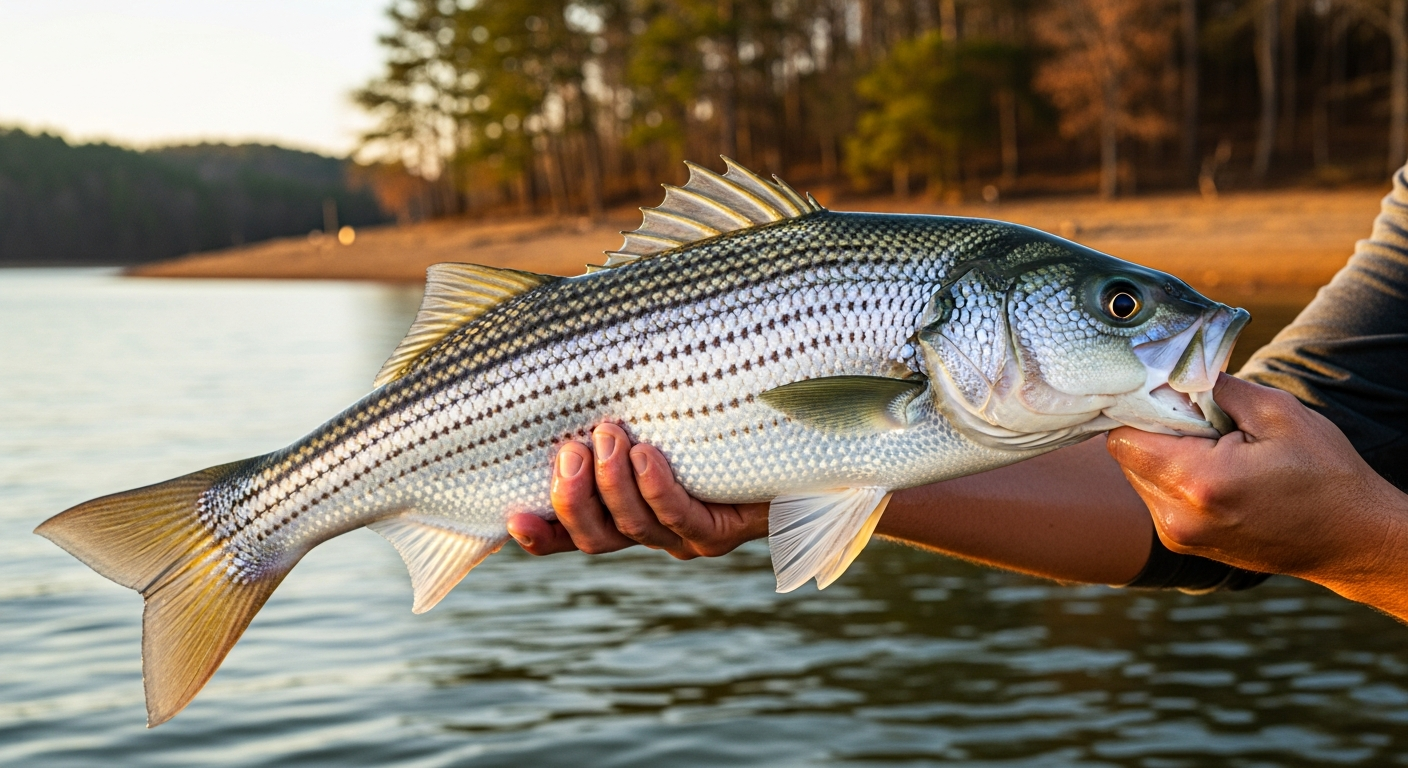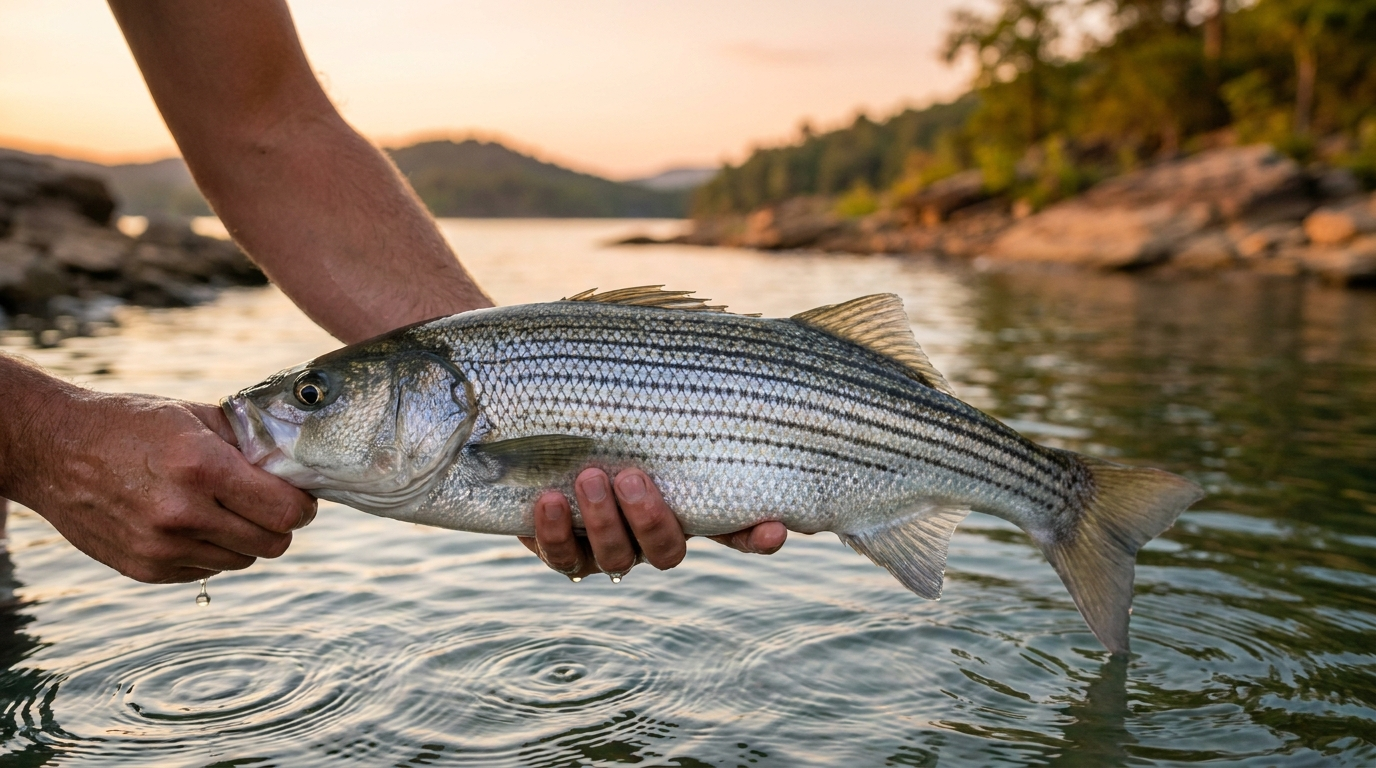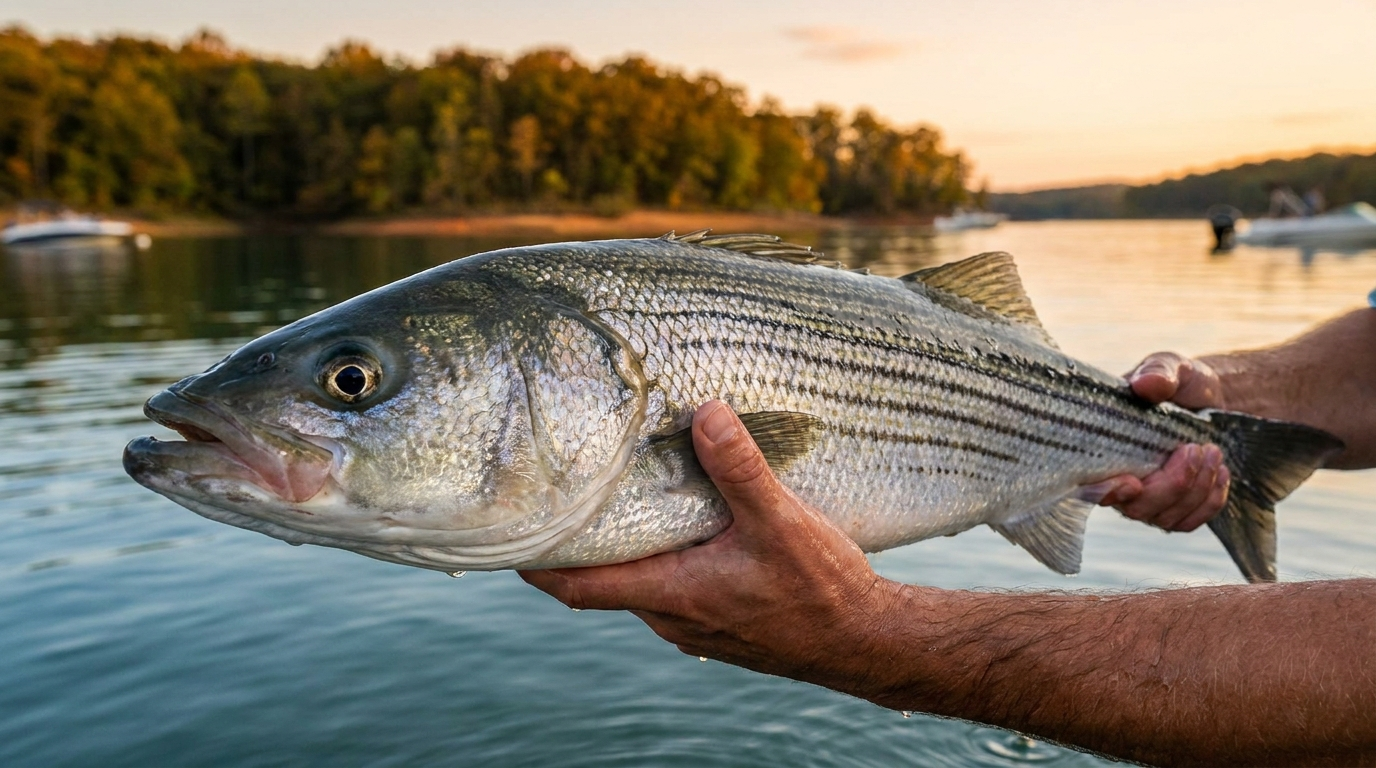
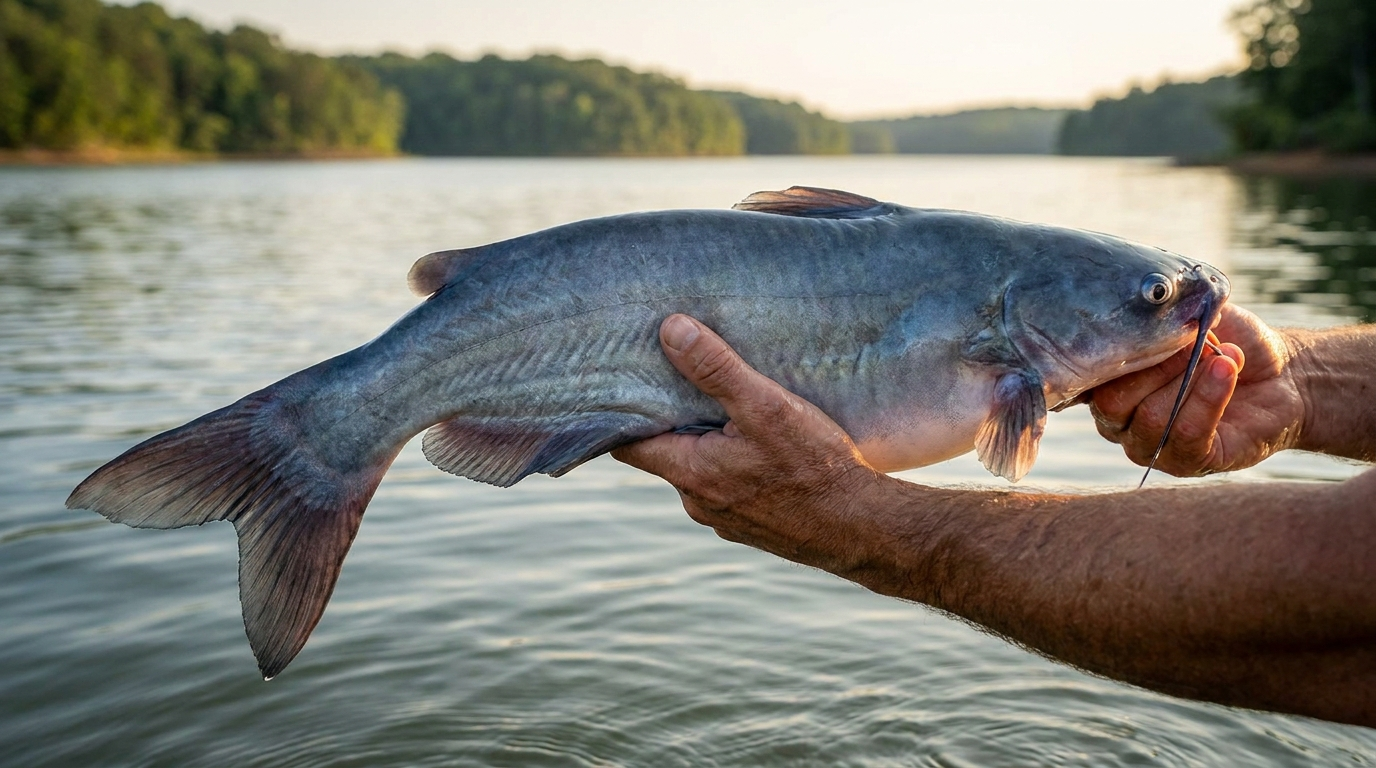
Kerr Lake is a bucket-list fishery for a few reasons stacked on top of each other: the world record blue catfish came from here in 2011, it holds the only naturally reproducing landlocked striped bass population in Virginia, and it was ranked the number one crappie lake in the country. 50,000 acres, 850 miles of shoreline on the Virginia-North Carolina border. It's the kind of lake where every session has the possibility of something unusual.
Today's Bite Score · October 8, 2026
Very favorable conditions for catching fish
🌘Waning Crescent
Kerr Lake Fishing Report
October FishingMonthly fishing report · October patterns and techniques
Water temperatures at Kerr Lake are dropping into the mid-60s in October, triggering significant changes in fish behavior across this 50,000-acre Virginia impoundment. The lake's 850 miles of shoreline experience cooling conditions that push fish away from shallow flats and toward deeper structure. In October, anglers find that most species are transitioning toward their fall patterns, with fish becoming more active feeders as they prepare for winter. The lake's main river channel and creek arms show the most dramatic temperature shifts, creating defined feeding zones that anglers can exploit throughout the month.
Largemouth bass dominate October fishing at Kerr Lake and are most active in the main creek channels and around the numerous rocky points that define this reservoir's geography. Fish are moving to depths between 15 and 35 feet where they'll remain through winter, but in October they still make forays into shallower water during early morning and late afternoon hours. Striped bass and white bass also become increasingly active this month, schooling along the deeper ledges and in the main river channel where baitfish congregate. Crappie fishing improves significantly in October as cooler water triggers spawning movements, and anglers find these fish holding around bridge pilings, submerged timber, and rocky structure throughout the lake's many creek systems.
Topwater plugs and soft plastics near shallow structure produce largemouth bass in the early morning hours before water temperatures stabilize. In October, anglers find spinnerbaits and crankbaits highly effective when worked along creek channel ledges and rock outcrops. For striped bass, live shad and herring presentations work best when drifted or cast along the main river channel's deeper structure. Crappie anglers should focus on vertical jigging presentations with small minnows or jig combinations around standing timber and the lake's abundant dock systems. October at Kerr Lake rewards anglers who focus on the transition zones between shallow and deep water, where fish actively feed during the prime early and late hours of each day.
Get More Fishing Report Specifics
Tap a topic button below for a report on current conditions.
Tap a topic above to get a current report for Kerr Lake.
Answers are generated on demand and cached. No AI call fires until you tap a tab.
Kerr Lake Fishing Guides
Looking for a Kerr Lake fishing guide? The largest reservoir in Virginia has 850 miles of shoreline and one of the most underrated striper fisheries on the East Coast — local guides who know these Roanoke River channels fish it every week. Here are 3 fishing guides for Kerr Lake that are worth checking out.
Kerr Lake Fishing Strategies by Species
Seasonal patterns and techniques by target species · Verified against official sources
Striped bass, largemouth bass, crappie, blue catfish, channel catfish, and walleye drive fishing at Kerr Lake (John H. Kerr Reservoir, also known as Buggs Island Lake in Virginia), a 50,000-acre U.S. Army Corps of Engineers reservoir on the Roanoke River spanning Virginia and North Carolina. Kerr Lake is the only reservoir in Virginia with a naturally reproducing landlocked striped bass population. The lake has been ranked the number one crappie lake in the United States by In-Fisherman and produced the IGFA All-Tackle World Record blue catfish (143 pounds) in 2011. Important: Virginia and North Carolina regulations differ significantly for several species. Anglers must comply with the regulations of the state whose waters they are fishing. Verify current Virginia regulations at dwr.virginia.gov and North Carolina regulations at ncwildlife.org before fishing.
Kerr Lake Striped Bass Fishing Report
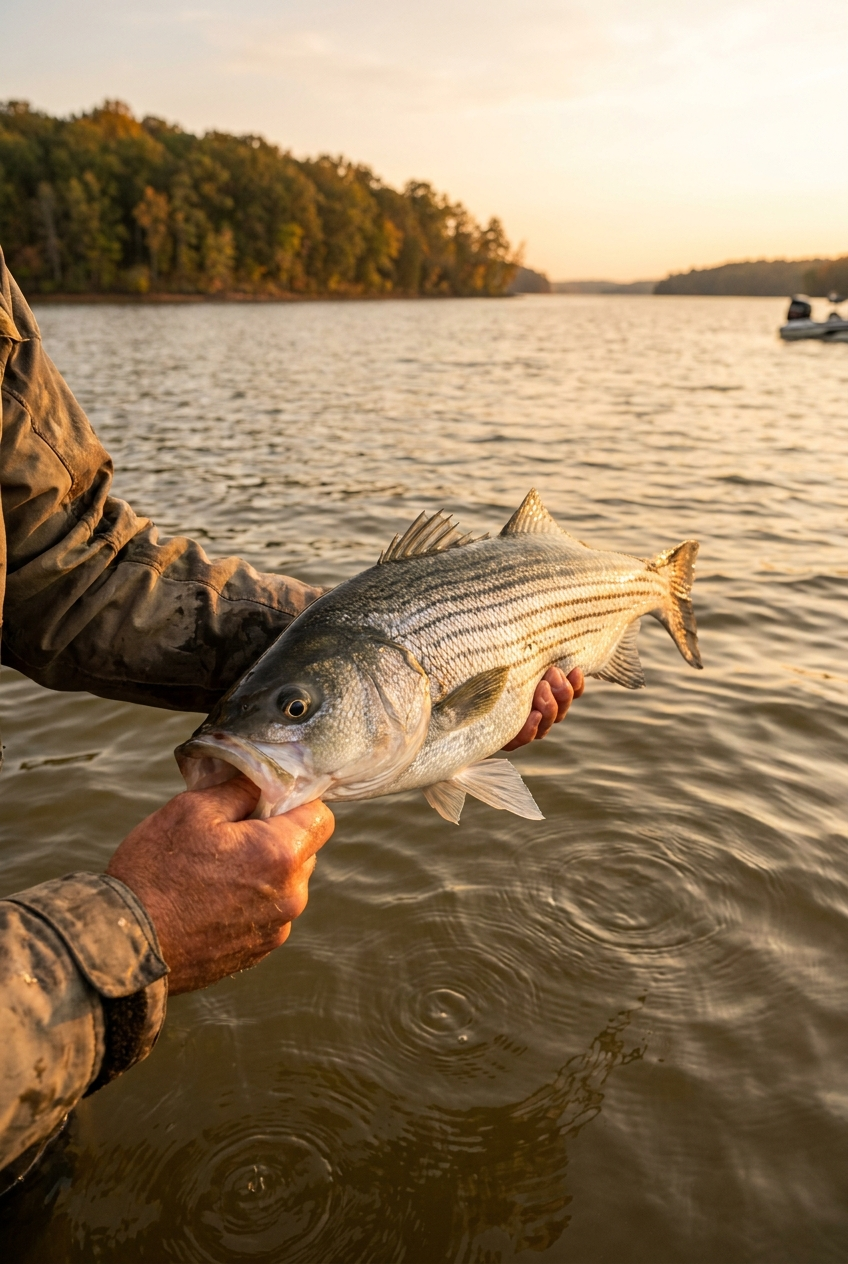
Striped bass at Kerr Lake are the centerpiece of a fishery that stands apart from most inland reservoirs: this is the only lake in Virginia with a naturally reproducing landlocked striper population. The fish have been self-sustaining for decades without stocking. Virginia regulations (October 1 through May 31): 20-inch minimum, no fish over 26 inches may be kept, 4-fish daily bag limit. Virginia regulations (June 1 through September 30): no minimum length, 4-fish daily limit. North Carolina regulations (October 1 through May 31): 20-inch minimum, no fish over 26 inches, 2-fish daily limit (aggregate with hybrids). Verify current regulations at dwr.virginia.gov and ncwildlife.org — regulations change and differ by state and season. Summer stripers at Kerr Lake concentrate near the dam in the deepest, coolest, most oxygenated water as surface temperatures rise. The area from the dam upstream to approximately Nutbush Creek mouth holds the most fish during June through September when the thermocline compresses habitat. Trolling deep-running crankbaits and umbrella rigs along the main channel in 20 to 40 feet is the primary summer technique. Spring and fall produce active surface feeding when stripers chase shad schools on the main lake points and open water. Night fishing with topwater lures during the spring run produces aggressive surface strikes.
Kerr Lake Largemouth Bass Fishing Report
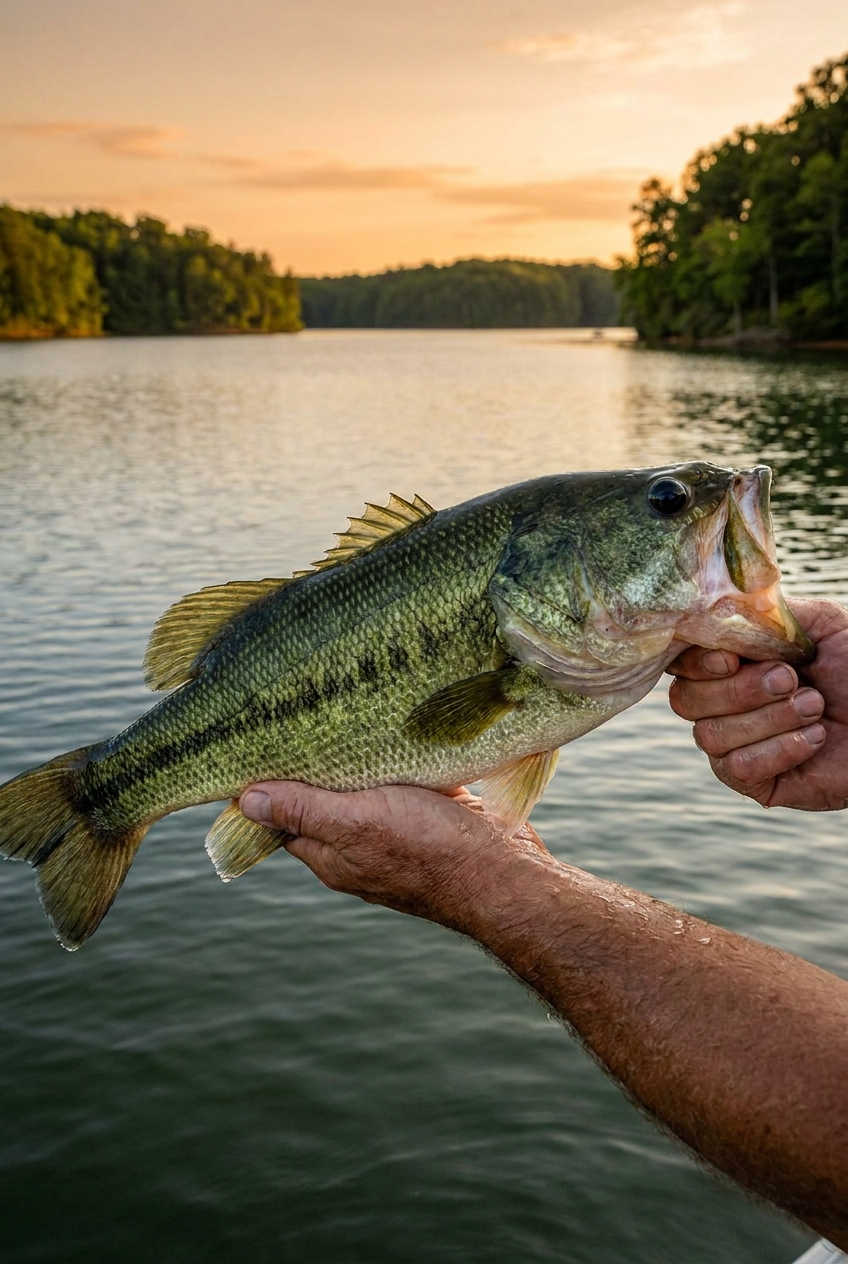
Largemouth bass at Kerr Lake relate to the extensive woody shoreline cover and the cove structure throughout the 850 miles of shoreline. Virginia regulation: 14-inch minimum (with a modification allowing 2 of the 5-fish bag to be under 14 inches). North Carolina regulation: 12-inch minimum, 5-fish daily bag. Verify current regulations at dwr.virginia.gov and ncwildlife.org before fishing. Spring is the primary season, with prespawn bass staging on the main lake points in late March and April before moving into the cove pockets and shoreline timber to spawn in May. Spinnerbaits and crankbaits worked along woody cover and the secondary cove entrances produce consistent spring fish. Summer bass relate to the deeper timber and shaded cove structure on the North Carolina side of the lake. Fall fishing on the main lake points with crankbaits produces actively feeding fish through October.
Kerr Lake Crappie Fishing Report
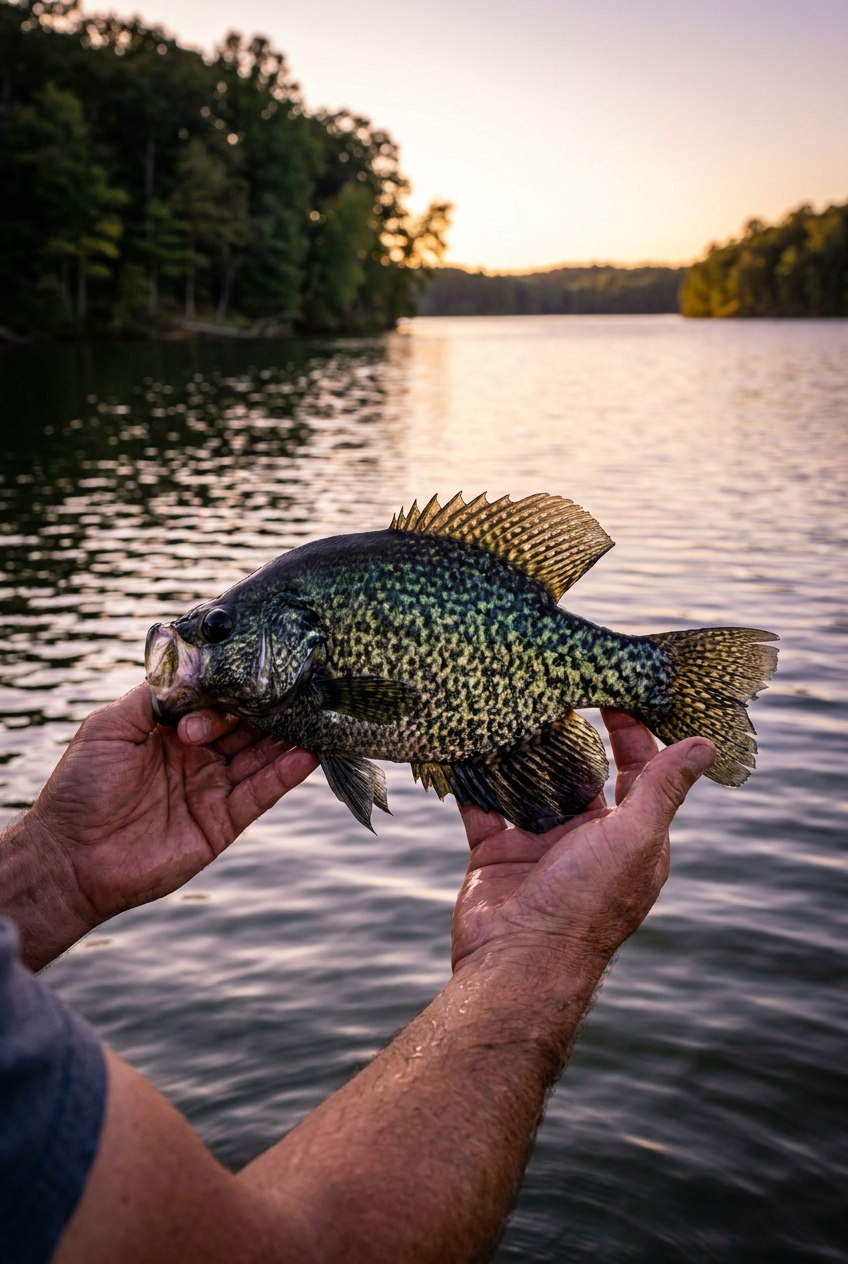
Crappie at Kerr Lake produced the number one crappie lake ranking in the United States from In-Fisherman, reflecting the quality and abundance of the fishery. Both black and white crappie are present throughout the reservoir. North Carolina regulation: 9-inch minimum, 25-fish daily bag on John H. Kerr Reservoir. Verify Virginia crappie regulations at dwr.virginia.gov — Virginia statewide crappie limits apply on the Virginia portion. Spring crappie fishing peaks in February through April as fish move from the deeper basin water into the cove timber and the brushy shoreline structure at 5 to 10 feet. The extensive wooded shoreline provides exceptional spawning habitat and crappie can be found throughout the lake during peak spring conditions. Small tube jigs and crappie jig-minnow combinations worked vertically around standing timber produce reliable catches. Fall crappie return to deeper structure at 12 to 20 feet and remain active through December.
Kerr Lake Blue Catfish Fishing Report
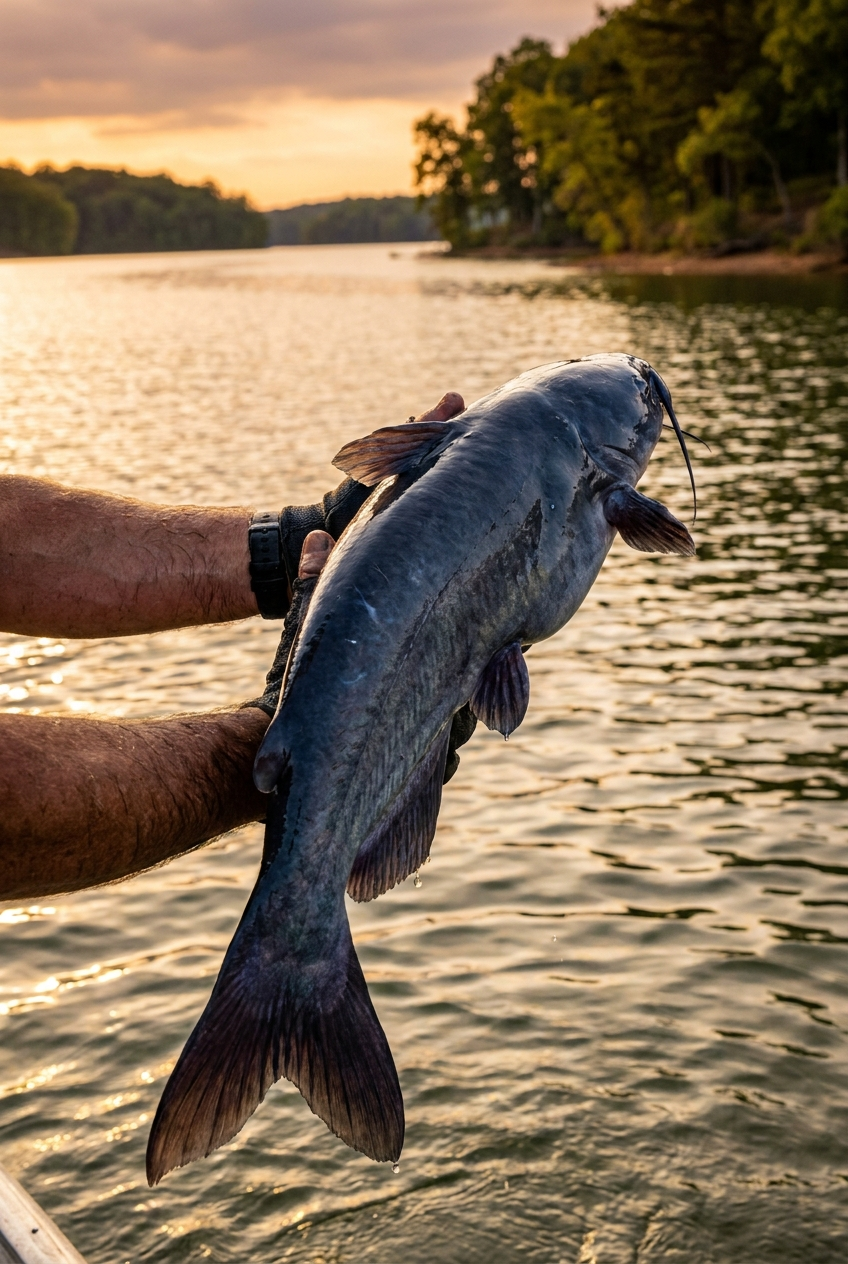
Blue catfish at Kerr Lake have produced the most notable catch in the lake's history: the IGFA All-Tackle World Record blue catfish of 143 pounds, caught on June 18, 2011 by Richard Nicholas Anderson, confirmed by the Virginia Department of Wildlife Resources and the International Game Fish Association. Verify current Virginia and North Carolina catfish regulations before fishing. Blue catfish and channel catfish are abundant throughout Kerr Lake in the deeper channel bends and the Roanoke River and Dan River inflow areas. The lake's size and productivity support a large population of fish in the 5 to 20-pound range with larger trophy fish present throughout the reservoir. Cut shad, chicken liver, and prepared baits fished on the bottom near channel transitions and tributary mouths produce consistent action through the warm months. Summer night fishing is particularly productive as catfish move from deep daytime holding areas into the cove edges and shallows.
Kerr Lake Channel Catfish Fishing Report
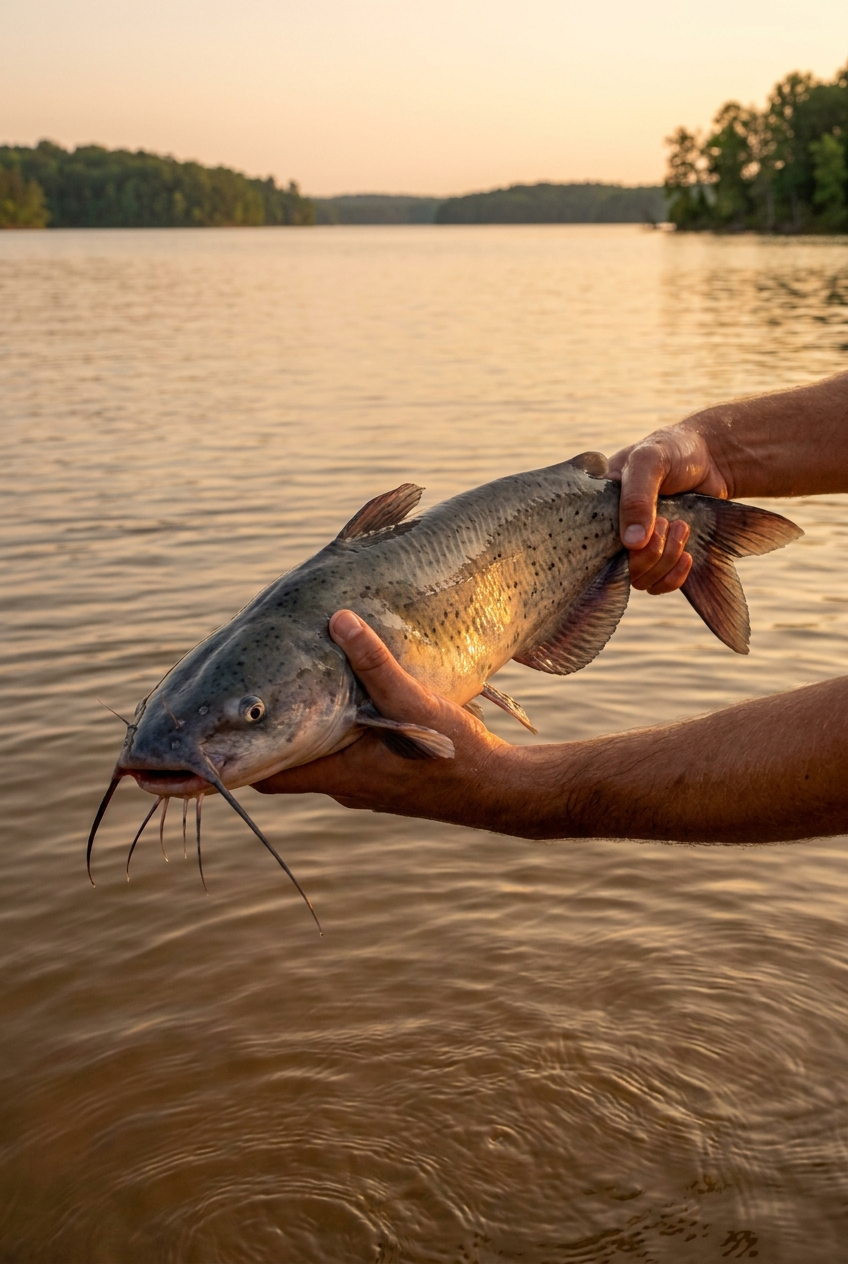
Channel catfish are widespread throughout Kerr Lake and provide accessible fishing from bank access points at the numerous USACE recreational areas around the reservoir. The lake's productive, tannic Piedmont water supports a healthy channel catfish population across all size classes. Verify current catfish regulations at dwr.virginia.gov (Virginia) and ncwildlife.org (North Carolina) before fishing. Cut bait, chicken liver, and prepared catfish baits fished on the bottom near the cove transitions and river inflow areas produce consistent channel catfish. The Staunton River and Dan River arms concentrate catfish during spring inflow periods. Summer night fishing from USACE bank access points around the reservoir is the most popular catfish approach.
Kerr Lake Walleye Fishing Report
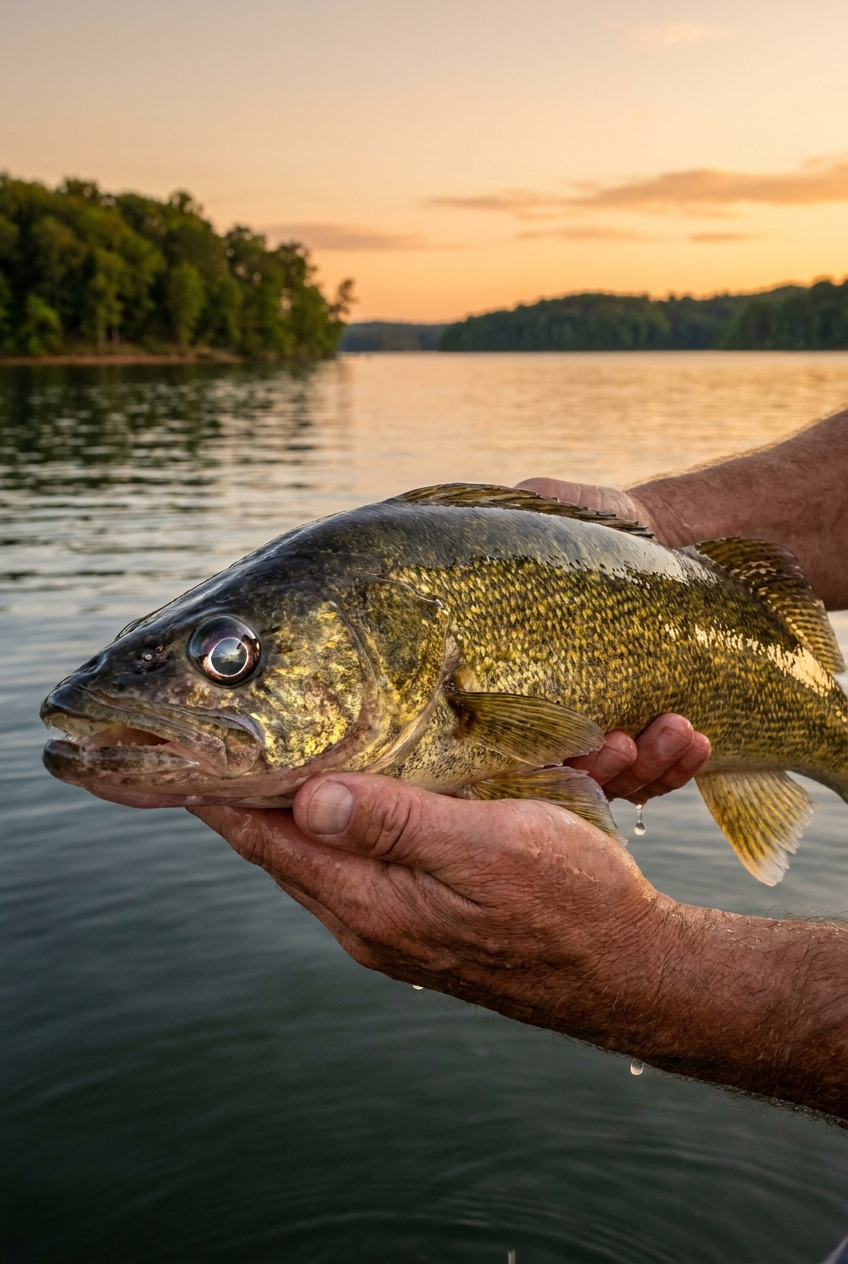
Walleye are a developing fishery at Kerr Lake, with fish migrating in from Leesville Reservoir and the Staunton River providing a growing population of legal-size fish. Virginia DWR surveys have noted increasing walleye presence. The South Bend and Goat Island areas have been identified as productive walleye locations. Verify current Virginia walleye regulations at dwr.virginia.gov before fishing. Jigs tipped with minnows and spinner rigs worked along the main channel transitions in 15 to 30 feet produce walleye, particularly during the March through June peak season. Night fishing is most productive during warm months when walleye move from deeper daytime holding areas to feed in shallower water along the main lake structure.
If you haven't replaced your braided line in a season or two, now's the time. Braid holds up better than mono, but abrasion from wood and rock adds up. Reaction Tackle is one of my favorite places to order from.
Top Fish to Target in Kerr Lake
Lures for Kerr Lake
Tackle matched to this lake's species and structure.
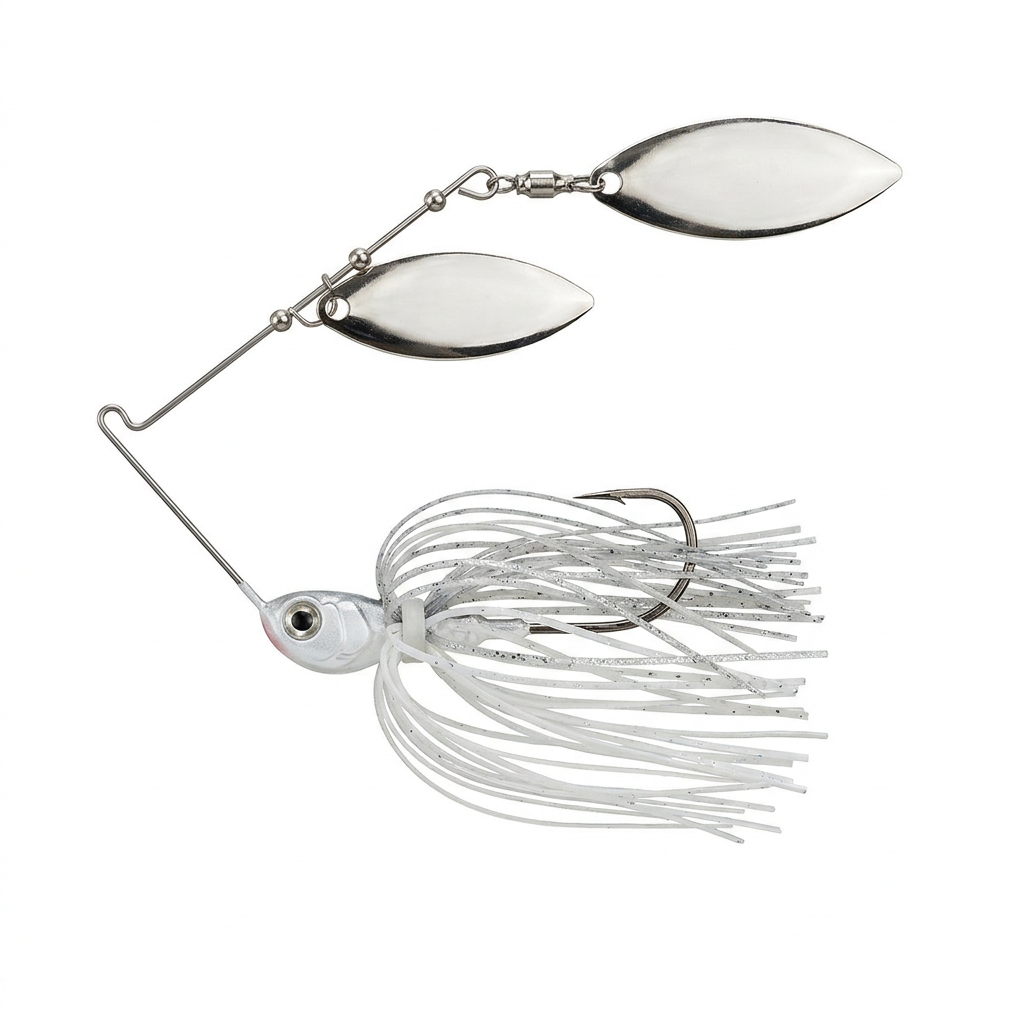
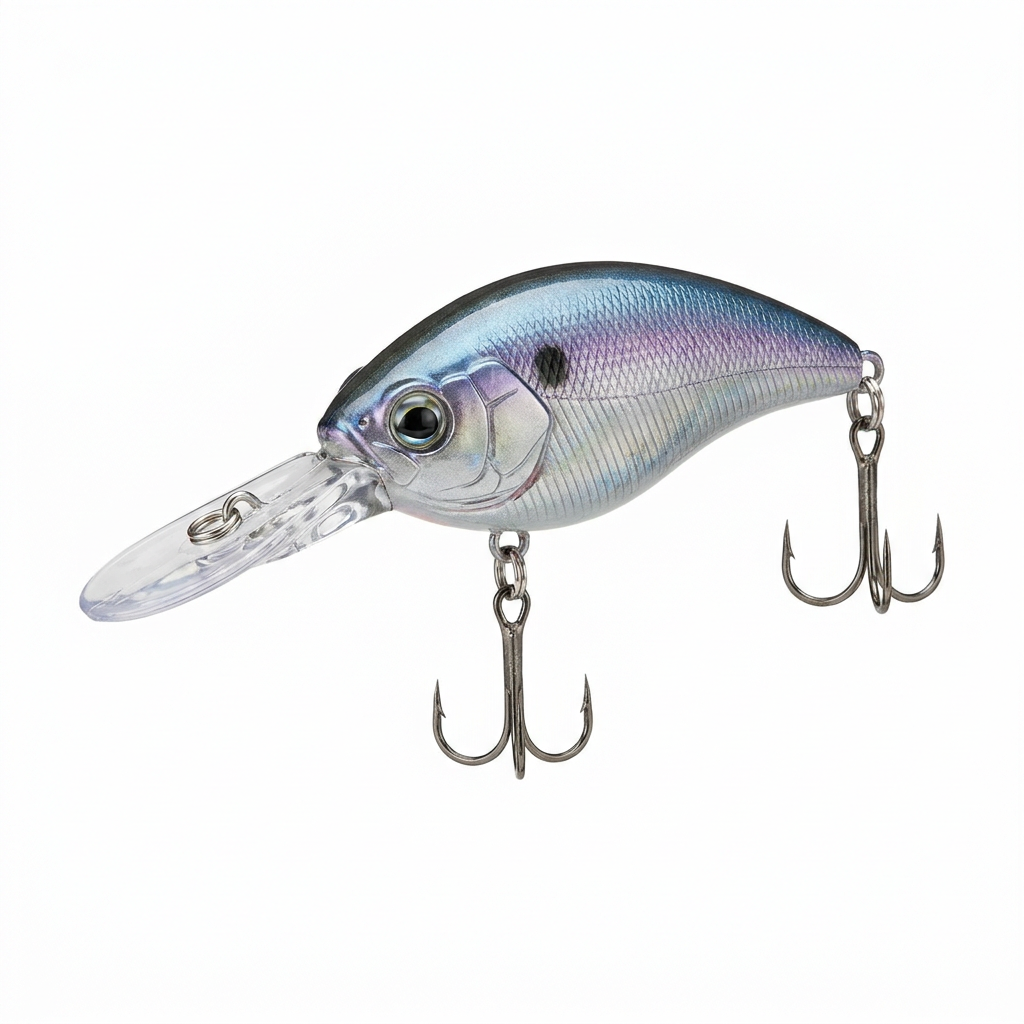
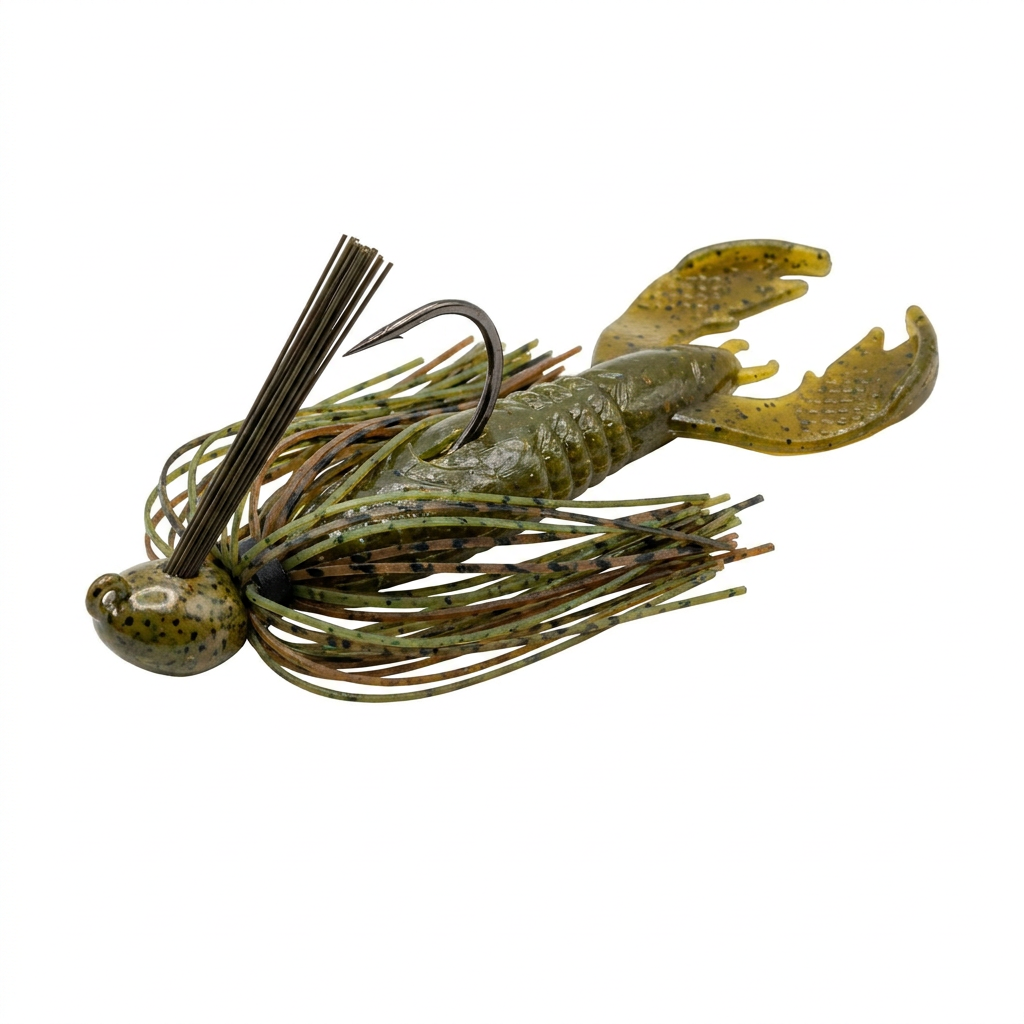
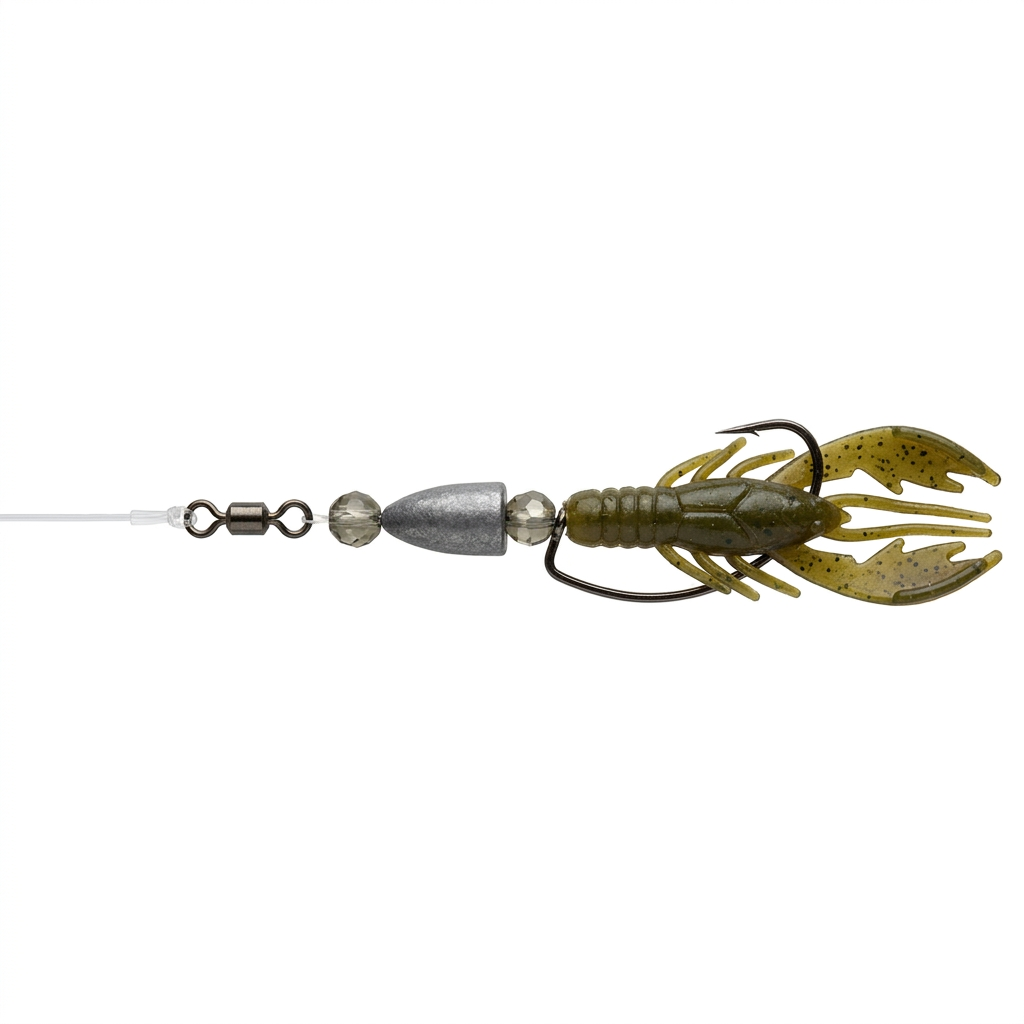
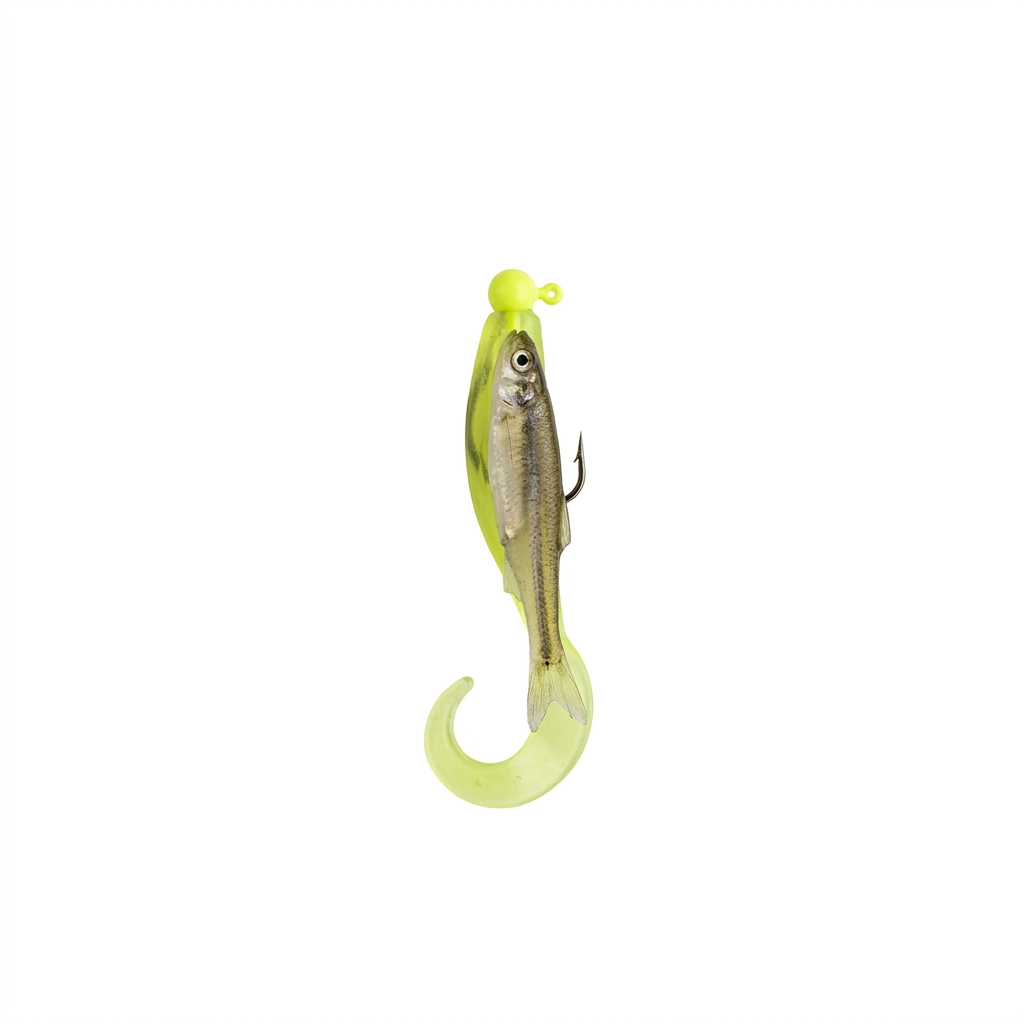
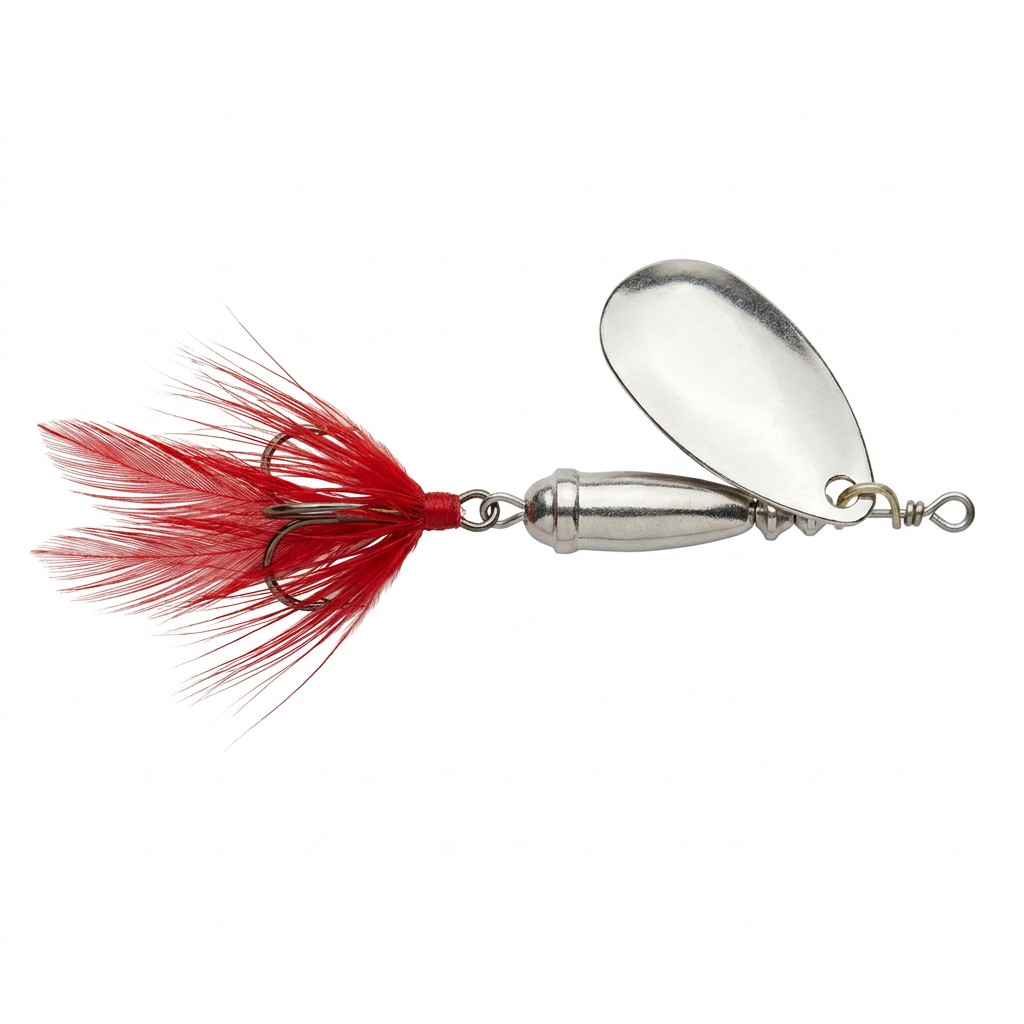
The right line matters as much as the lure. For the presentations that work on this lake, whether flipping timber, fishing main lake structure, or working deep brush, braid is the move. No stretch, more feel, and it lasts. Reaction Tackle is where I get mine.
About Kerr Lake
Kerr Lake is one of the most compelling multi-species fisheries on the East Coast. The combination of naturally reproducing landlocked striped bass, a world record blue catfish (143 pounds, 2011), and a crappie fishery ranked number one in the country by In-Fisherman puts this lake in a category that very few reservoirs occupy. 50,000 acres, 850 miles of shoreline, spanning Virginia and North Carolina on the Roanoke River. I'd make a specific trip here.
Two states, two sets of regulations. Kerr Lake is managed jointly by Virginia Department of Wildlife Resources and the North Carolina Wildlife Resources Commission. Regulations differ significantly between the Virginia and North Carolina sides of the lake for striped bass, crappie, and other species. Anglers must comply with the regulations of the state whose waters they are fishing. Always verify current regulations at dwr.virginia.gov (Virginia) and ncwildlife.org (North Carolina) before fishing — do not assume the same limits apply on both sides.
Lake size and location. John H. Kerr Reservoir (Kerr Lake / Buggs Island Lake) covers approximately 50,000 acres at maximum capacity with approximately 850 miles of shoreline, spanning Mecklenburg and Halifax counties in Virginia and Vance, Granville, and Warren counties in North Carolina. The U.S. Army Corps of Engineers completed Kerr Dam on the Roanoke River in 1952. Henderson, North Carolina and Boydton, Virginia are the primary gateway towns. The lake is approximately 60 miles north of Raleigh via I-85.
World record blue catfish. Richard Nicholas Anderson caught a 143-pound blue catfish from Kerr Lake on June 18, 2011. The catch was confirmed by the Virginia Department of Wildlife Resources and certified as the IGFA All-Tackle World Record for blue catfish. The record stands as of 2026.
USACE recreation areas. The U.S. Army Corps of Engineers manages multiple developed recreation areas around Kerr Lake with boat ramps, bank fishing access, and campgrounds. Anglers log over 400,000 fishing hours per year on the reservoir. Facility information is available through the USACE Wilmington District.