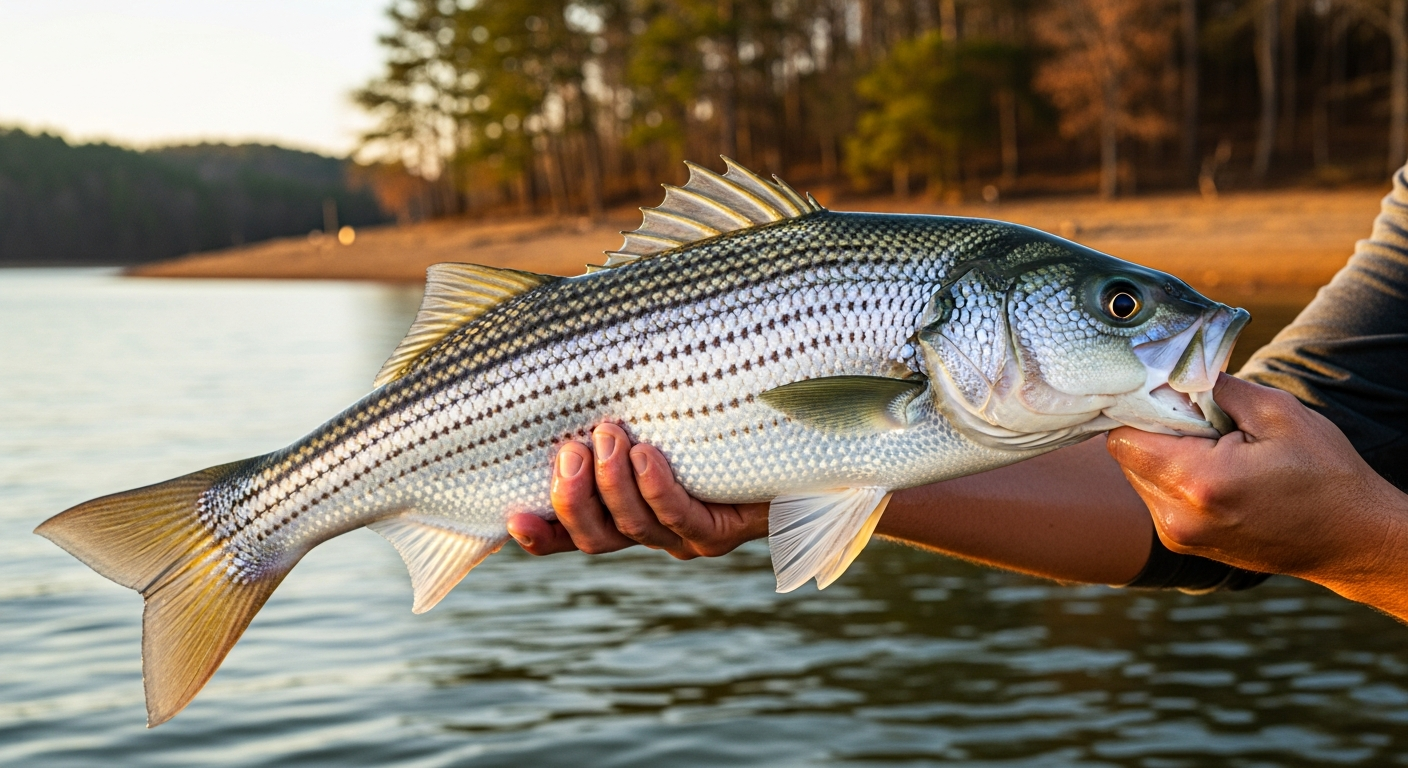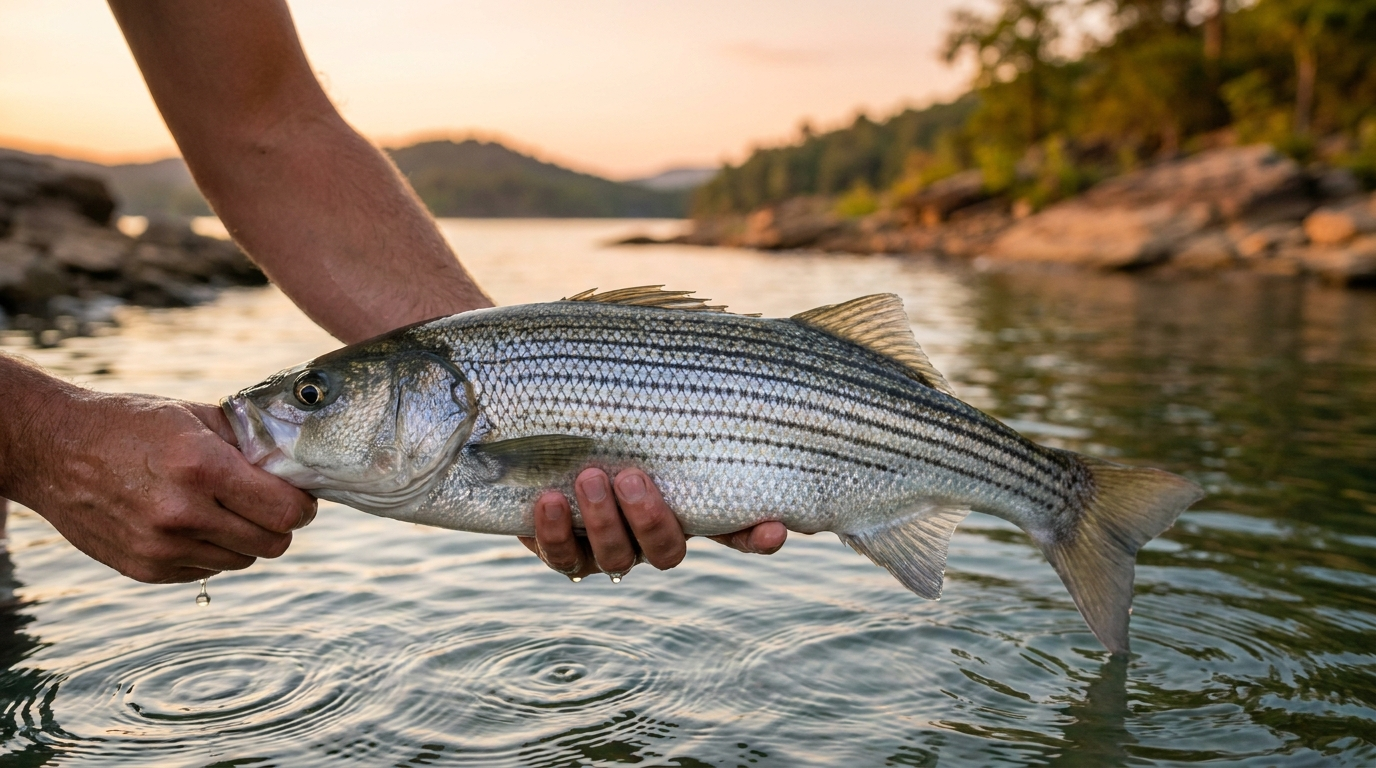
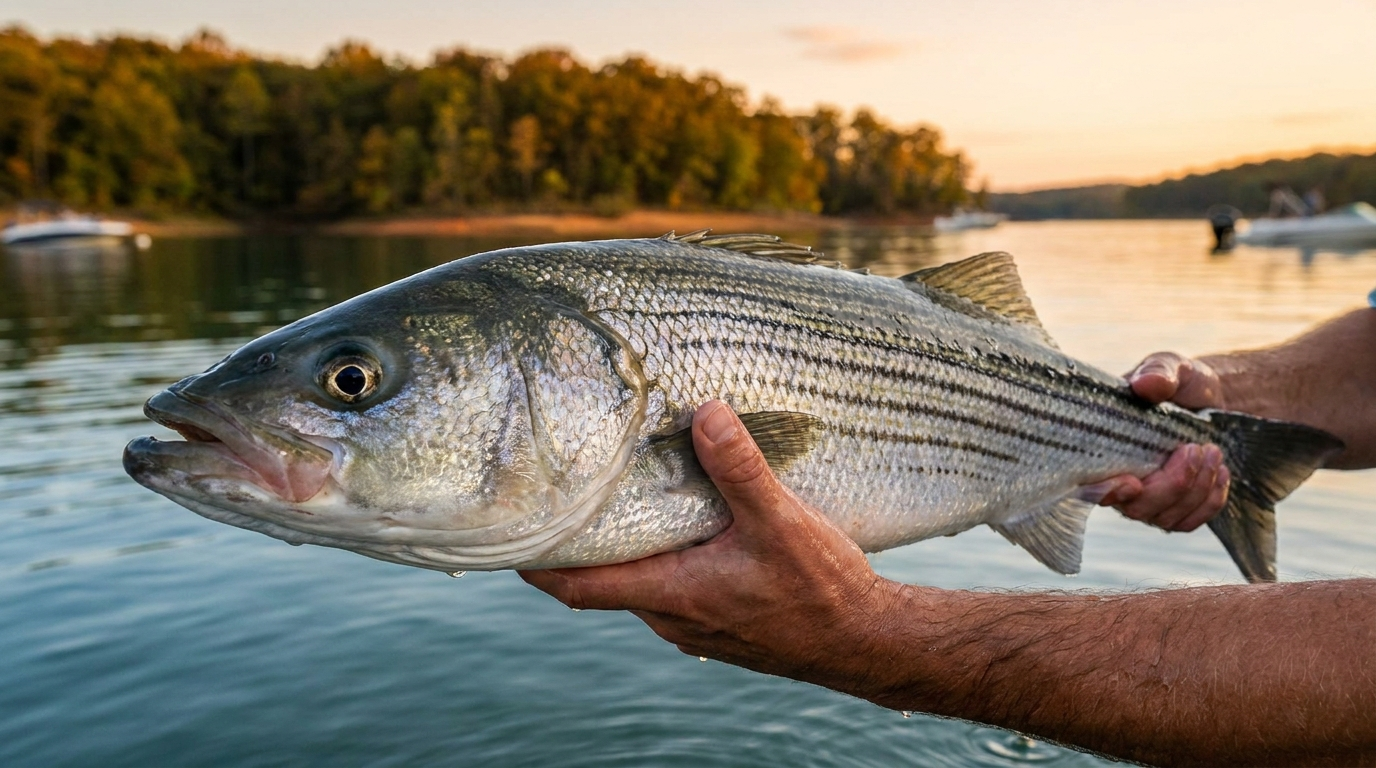
Lake Gaston does not get the same press as Kerr Lake just upstream, but the striper fishing here is exceptional in its own right. I have trolled the main river channel below the dam with live shad and watched the meter light up with fish stacked in the thermocline in 40 feet of water. The lake has a classic Piedmont feel: wide, warm, and full of structure the locals know well. If you time the fall striper run right, Gaston will absolutely deliver.
Today's Bite Score · October 8, 2026
Very favorable conditions for catching fish
🌘Waning Crescent
Lake Gaston Fishing Report
October FishingMonthly fishing report · October patterns and techniques
Lake Gaston in October experiences cooling water temperatures that typically range from the upper 60s to low 70s Fahrenheit, creating ideal conditions for aggressive feeding. This month marks a transition period where the lake's 20,000-acre surface begins to show seasonal change, with clearer water conditions developing as summer algae blooms fade. Fish are becoming more active in this month as they prepare for winter, and anglers find that deeper structure holds concentrations of bass and catfish seeking stable conditions.
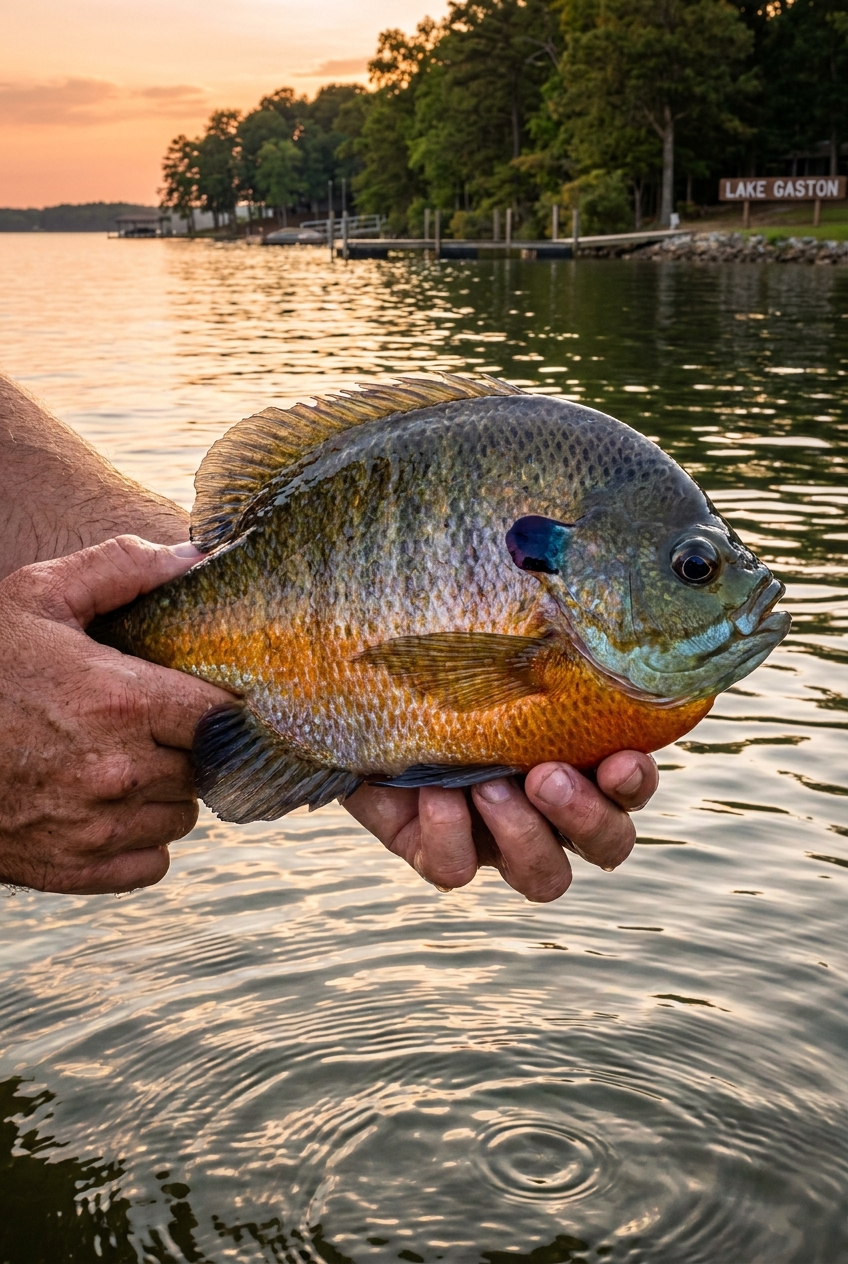
Largemouth bass dominate in October on Lake Gaston, with fish holding tight to the 40-to-60-foot depths along the main channel ledges and creek channels that snake through the reservoir. Striped bass are also highly active this month, schooling aggressively in open water and near the dam structure where deeper holes provide relief from warming shallows. Channel catfish and flatheads move into current areas and deeper holes as the month progresses, making them accessible to anglers targeting the main lake structure. Bluegill and crappie remain shallow near standing timber and submerged brush piles, particularly in the northern creek arms where cooler tributary water influences fish location.
Anglers find spinnerbaits and crankbaits most effective this month, with silver and chartreuse patterns working well along the channel breaks where bass hunt baitfish. Medium-diving crankbaits reaching 15-to-25 feet trigger strikes from fish positioned along the steep banks and ledges characteristic of Lake Gaston's structure. Live shiners and shad work exceptionally well for striped bass trolled near the dam and around the main channel humps. For catfish, cut bait and chicken liver produce consistent results in October, particularly during evening hours when fish feed most actively in deeper holes. Anglers should focus their efforts on the creek channels feeding into the main lake basin, as these areas concentrate baitfish and predators in this month. Early morning and late afternoon periods produce the most aggressive feeding responses, though Lake Gaston's relatively stable October conditions allow productive fishing throughout daylight hours.
Get More Fishing Report Specifics
Tap a topic button below for a report on current conditions.
Tap a topic above to get a current report for Lake Gaston.
Answers are generated on demand and cached. No AI call fires until you tap a tab.
Lake Gaston Fishing Guides
Looking for a Lake Gaston fishing guide? The landlocked striper trolling game on Gaston is technical and highly seasonal, and dual VA/NC regulations add a layer of complexity that local guides navigate every day. Here are 1 fishing guides for Lake Gaston that are worth checking out.
Lake Gaston Fishing Strategies by Species
Seasonal patterns and techniques by target species · Verified against official sources
Lake Gaston is a 20,000-acre Piedmont reservoir on the Roanoke River, straddling the Virginia-North Carolina border just downstream of Kerr Lake. The lake is best known for its landlocked striped bass population, which supports both trolling and jigging fisheries across multiple seasons. Largemouth bass, crappie, and channel catfish round out the primary species, with white perch providing consistent action for light-tackle anglers. Fishing Gaston well means understanding two states' regulations, as the boundary crosses the main body of the lake.
Lake Gaston Striped Bass Fishing Report
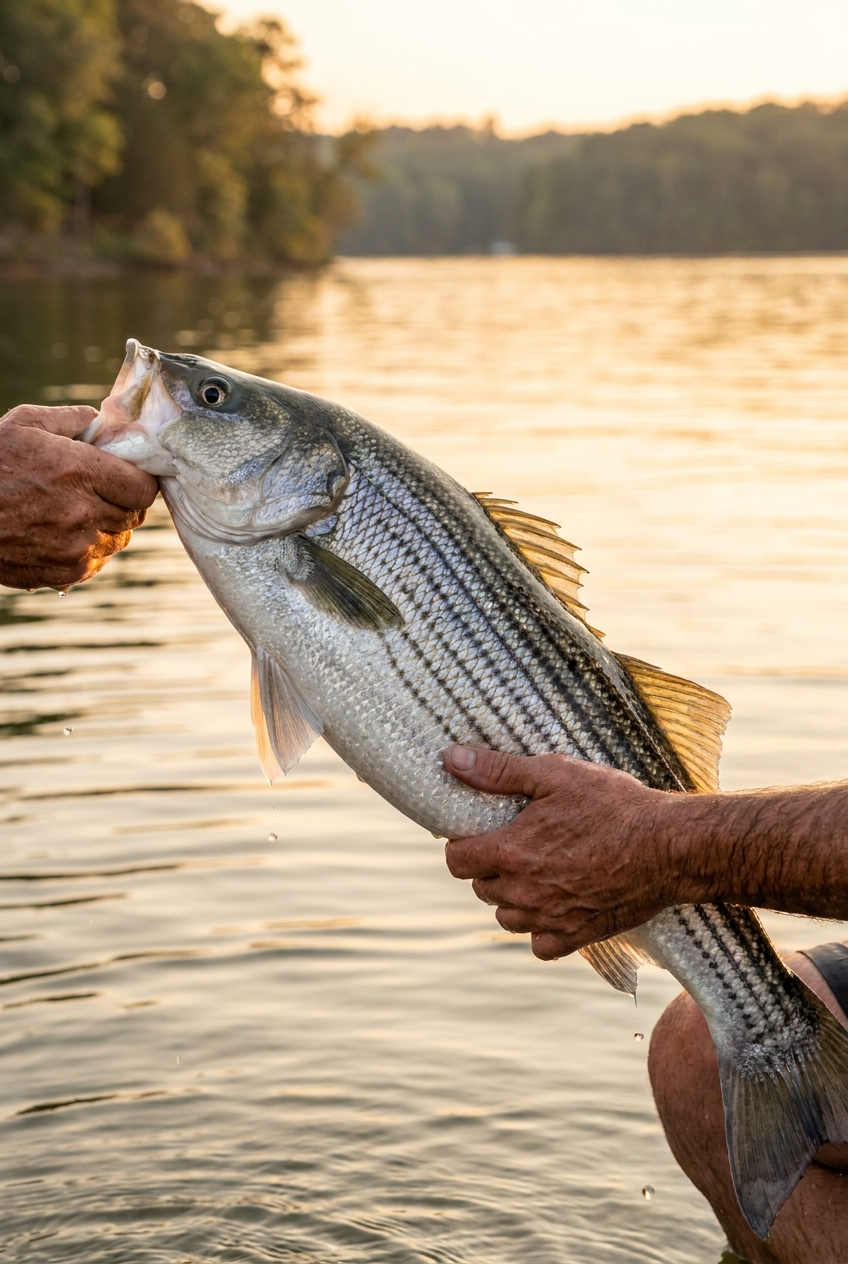
Lake Gaston's striped bass fishery is the product of a landlocked population that has maintained itself in the Roanoke River system below Kerr Dam since the lake was impounded in 1963. The fish use the deeper river channel extensively, and during summer they stack in the thermocline between 30 and 50 feet to find cooler, more oxygenated water. Trolling umbrella rigs and large minnow-style crankbaits along the main channel from the Roanoke Rapids area toward the dam is the standard summer approach. Downriggers are standard equipment for reaching fish in the 35 to 50 foot range during peak heat. Fish that follow the balls but do not commit can often be triggered with a drop-shot or flutter spoon worked vertically once the boat stops. In fall, as surface temperatures drop into the low 60s, stripers push shad to the surface across main lake points and the ends of major coves. Live shad fished under a float or cast-and-retrieved Alabama rigs produce consistently during the fall run. Spring fishing picks back up as stripers move toward the upper end of the lake and into the Roanoke River arm below Kerr Dam to follow the shad spawn. Fish in the 15 to 30 pound range are caught regularly, and larger fish are not unusual given the quality of the forage base. Always verify current size and bag limits with the Virginia Department of Wildlife Resources and the NC Wildlife Resources Commission before fishing, as regulations differ by location on the lake.
Lake Gaston Largemouth Bass Fishing Report
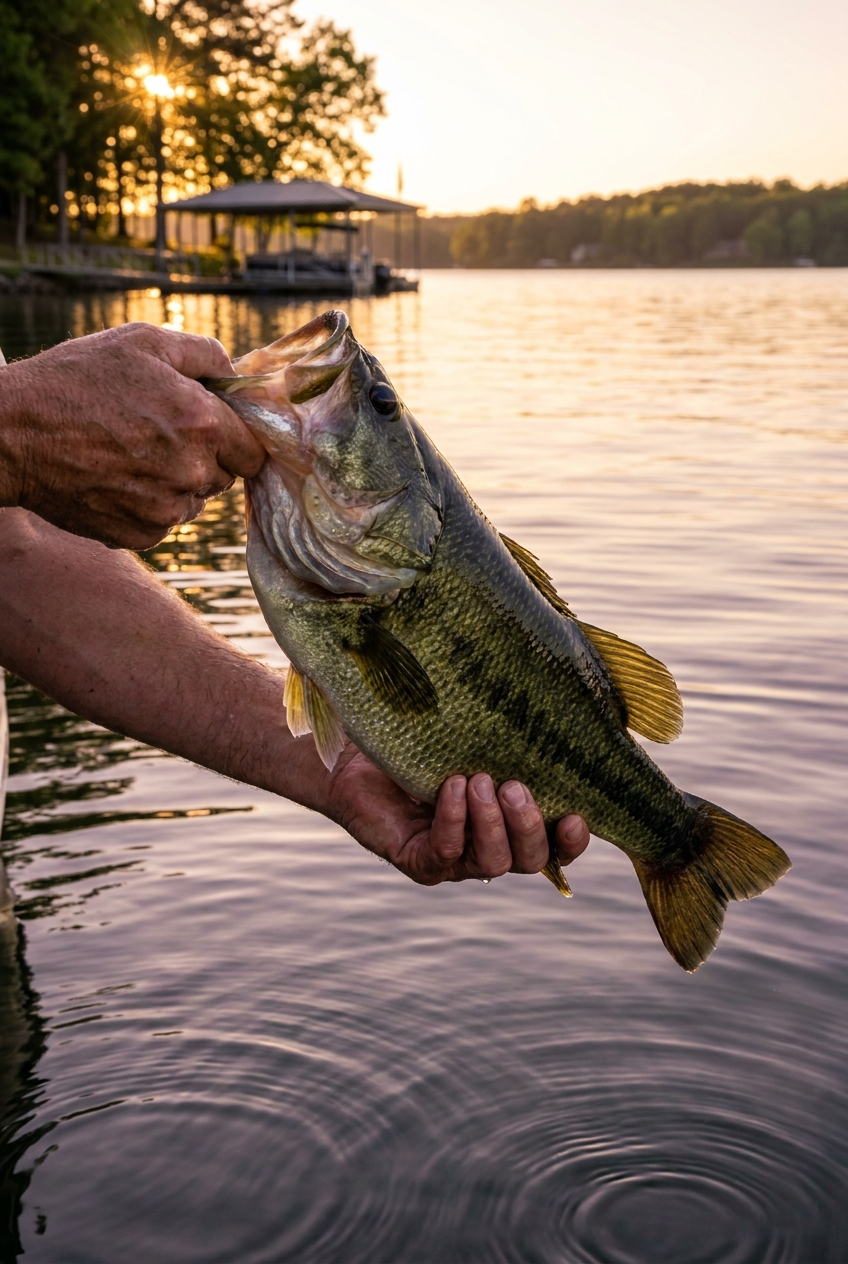
Largemouth bass on Lake Gaston are found throughout the lake's numerous coves, creek arms, and along the 350 miles of shoreline. The lake has a healthy population of fish in the 2 to 5 pound range with quality fish pushing 7 to 8 pounds for anglers targeting the right structure at the right time. Spring is prime time on Gaston: bass stage on secondary points and the outside edges of grass flats in late March and early April before moving shallow to spawn in protected coves. The backs of the major creek arms off the VA side, including Nutbush Creek and Grassy Creek, hold spawning fish in April and May. Texas-rigged worms and jigs worked through shallow wood and grass are the go-to presentations. Summer largemouth fishing shifts to a dawn-and-dusk pattern. Fish hold on the edges of deep creek channels adjacent to shallow flats and can be taken on Carolina rigs and crankbaits worked through the 8 to 15 foot range during the low-light windows. The Eastland Creek arm and the sections of shoreline with dock concentrations on the NC side of the lake are reliable summer spots. Fall delivers some of the best topwater action of the year as bass push shad into pocket coves. Popping frogs and walking baits along the edges of shallow timber and grass produce aggressive strikes into October. Always check current Virginia DWR and NC Wildlife Resources Commission regulations for size and bag limits before your trip, as statewide minimums apply differently depending on where you are on the lake.
Lake Gaston Crappie Fishing Report
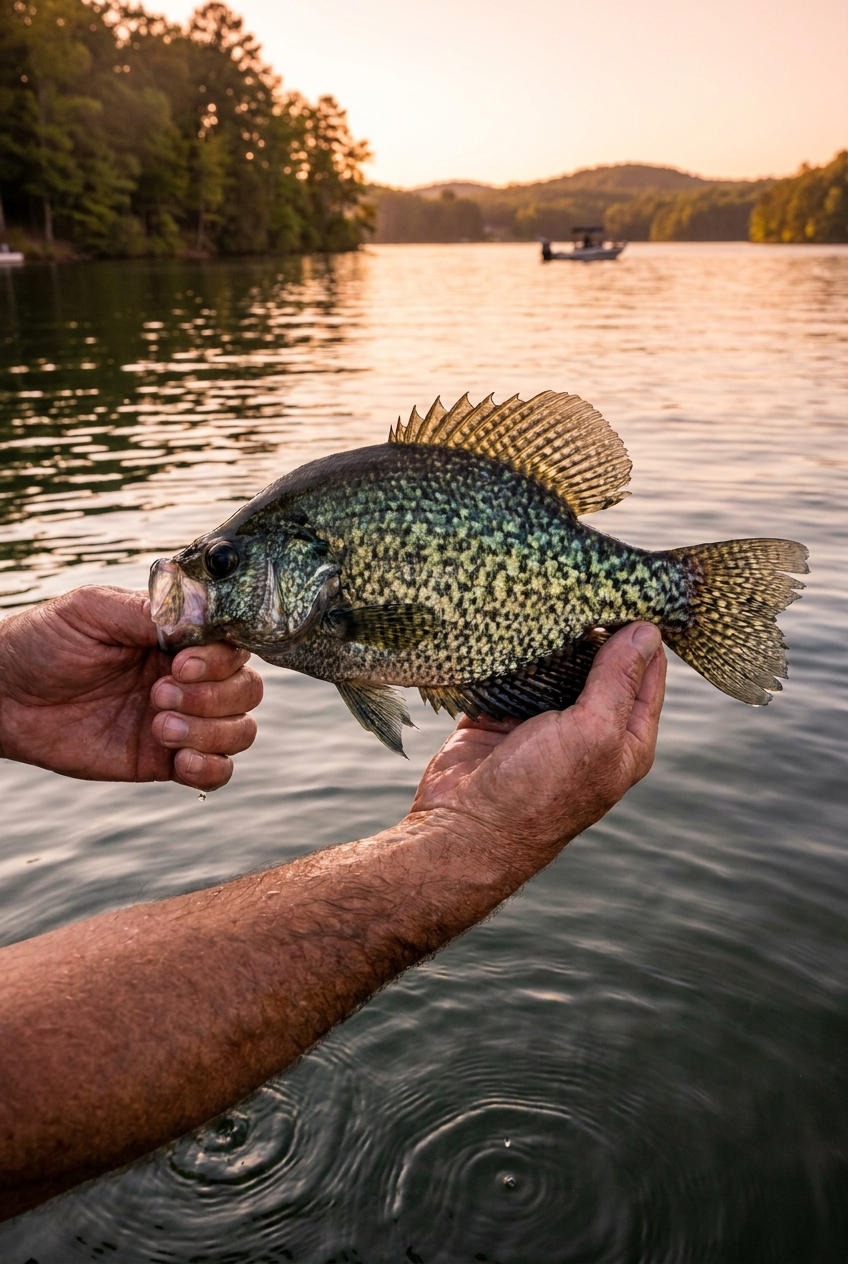
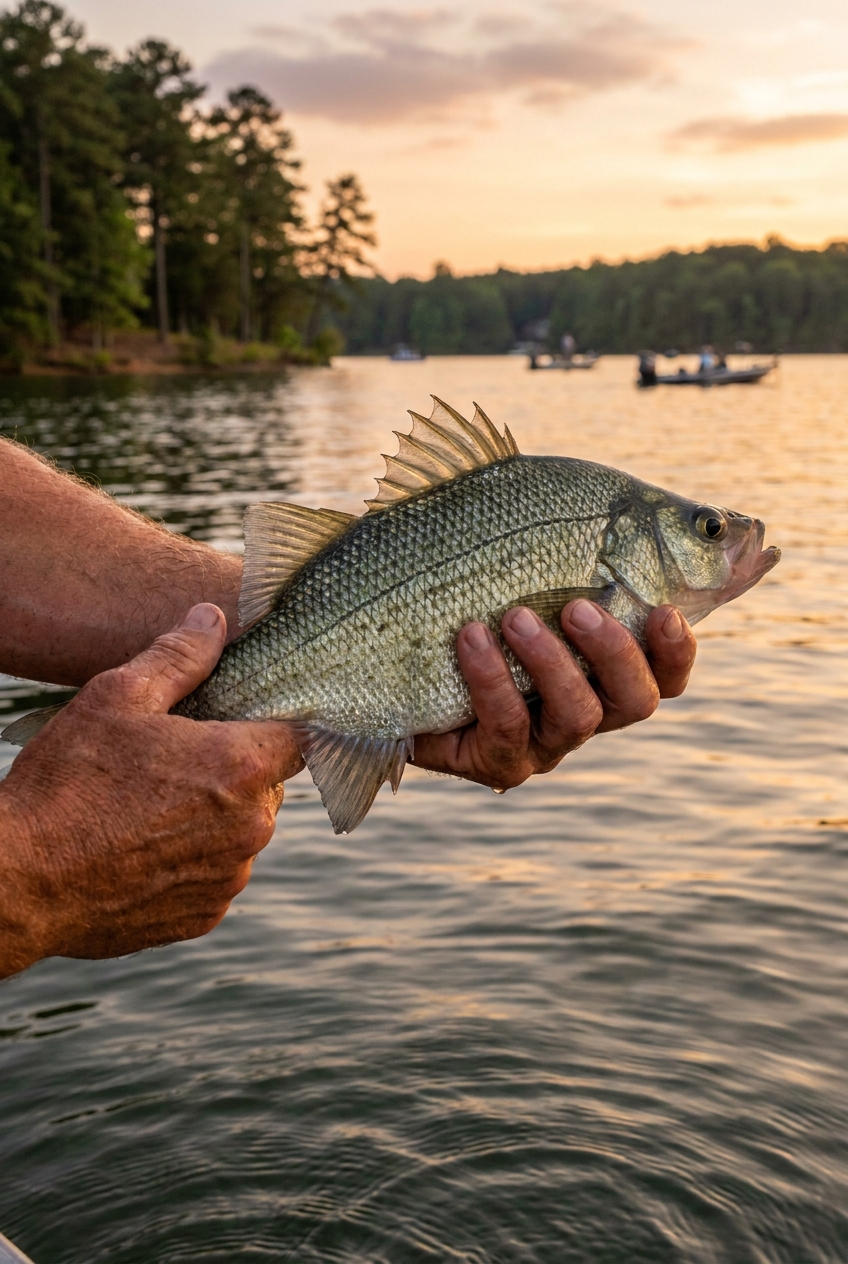
Crappie fishing on Lake Gaston is a year-round pursuit, with both white and black crappie present in good numbers. The lake's ample dock structure, submerged timber, and bridge pilings give crappie year-round holding spots across the main lake and into the creek arms. Spring is the classic season: crappie stack in the backs of coves in 4 to 8 feet of water from late February through April. Small jigs and live minnows fished around any visible structure in these shallow areas will produce consistent catches. The Highway 903 bridge area and the Roanoke River arm on the upper end of the lake are consistent producers during the pre-spawn period. Summer crappie move out to deeper timber and bridge pilings in 12 to 20 feet, where water temperatures are more stable. Vertical jigging with crappie jigs tipped with minnows is effective all summer on the deeper structure. The fishing tends to pick up again in October as cooling water draws fish back shallow. Gaston receives significant crappie pressure, particularly in spring, but the population is large enough to support solid catches throughout the season. Verify current crappie regulations with VDGIF (Virginia side) or the NC Wildlife Resources Commission (NC side), as bag and size limits may vary.
Lake Gaston Channel Catfish Fishing Report
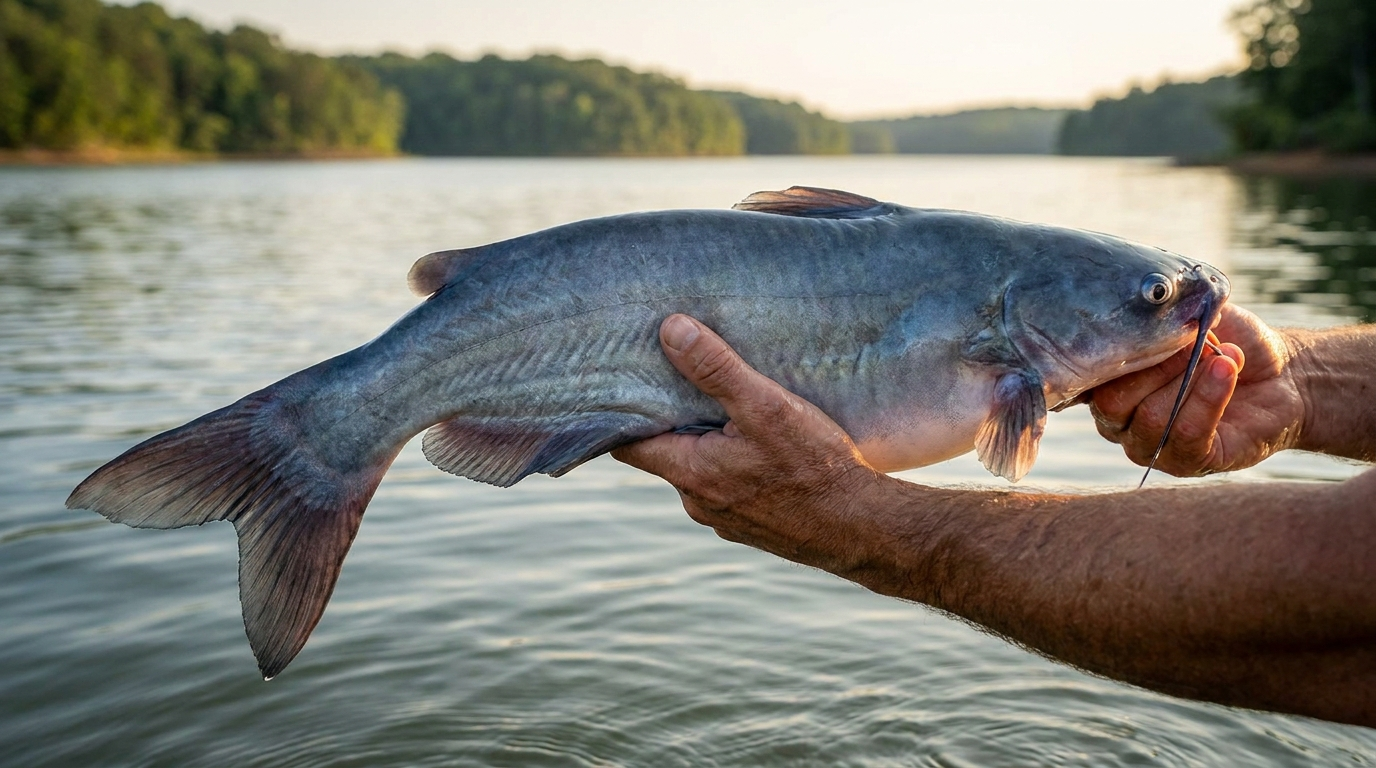
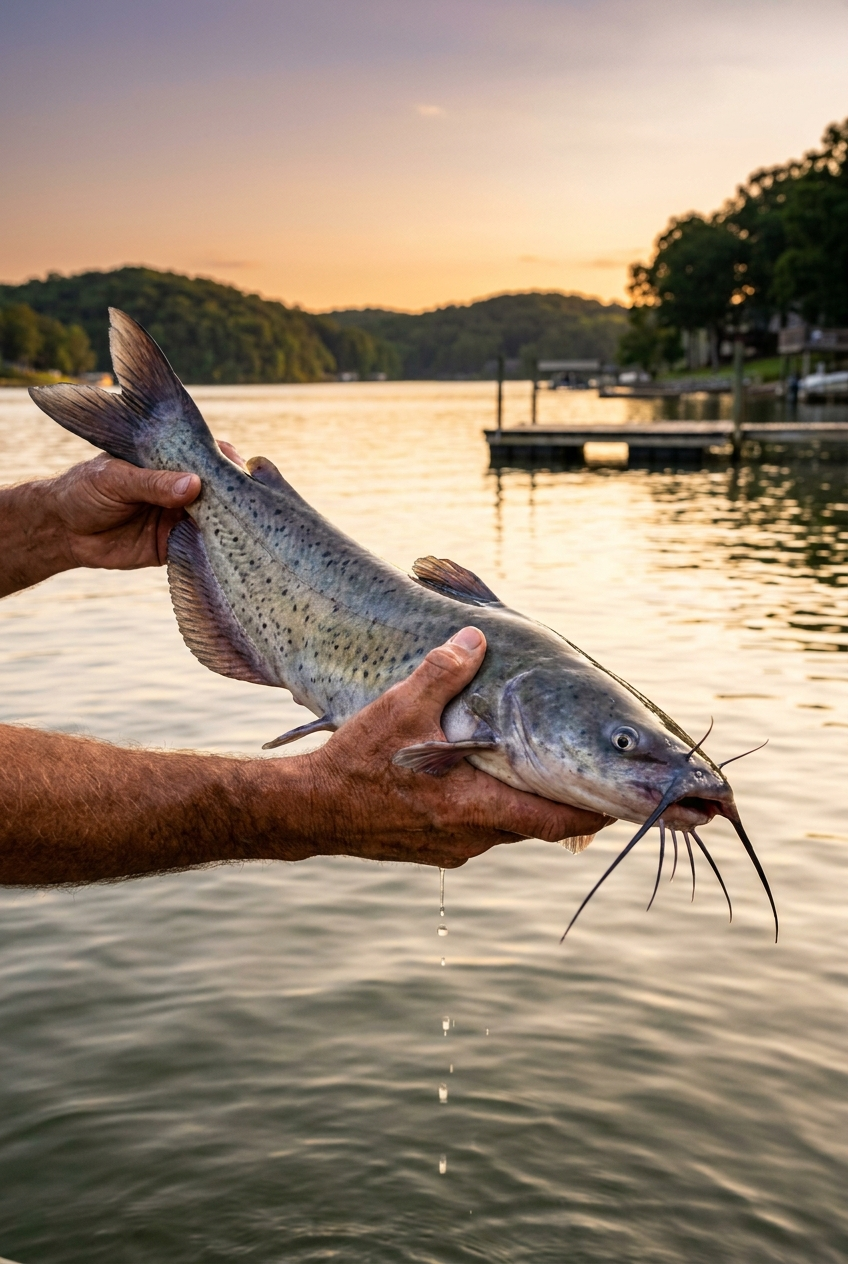
Channel catfish are abundant in Lake Gaston and provide reliable action for bottom-fishing anglers throughout the year. The Roanoke River channel running through the center of the lake is the primary catfish corridor, and fish concentrate in deeper holes and channel bends during summer. Cut bait, stink bait, and chicken liver fished on heavy bottom rigs in 15 to 30 feet of water along the main channel produce channel cats in the 1 to 5 pound range routinely, with larger fish common near the upper end where current from Kerr Dam outflows concentrates baitfish. Night fishing from late June through August is particularly productive as catfish become more active after dark. The creek arm mouths where they enter the main lake are secondary catfish spots worth targeting, especially in spring and fall when fish are staging. Flathead catfish are also present in Gaston and can reach larger sizes than channel cats, but they require live bait such as large bluegill or sunfish and are more difficult to target deliberately. Blue catfish have been documented in the Roanoke River system as well. Check current Virginia DWR and NC Wildlife Resources Commission catfish regulations before keeping fish, as possession limits and size minimums apply.
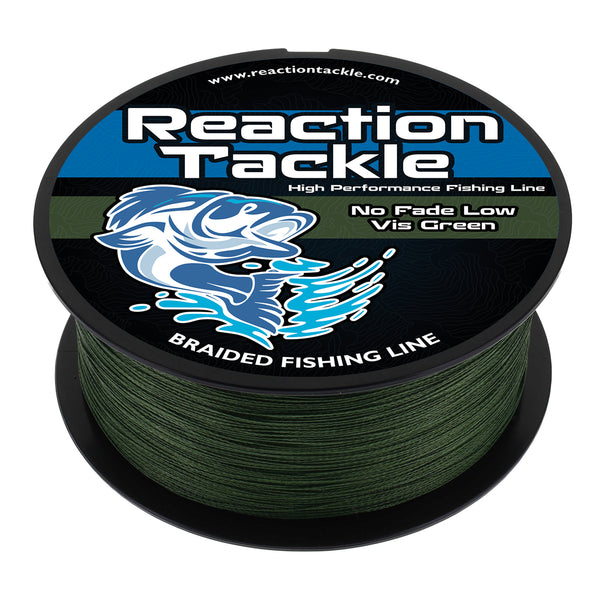
If you haven't replaced your braided line in a season or two, now's the time. Braid holds up better than mono, but abrasion from wood and rock adds up. Reaction Tackle is one of my favorite places to order from.
Top Fish to Target in Lake Gaston
Lures for Lake Gaston
Tackle matched to this lake's species and structure.
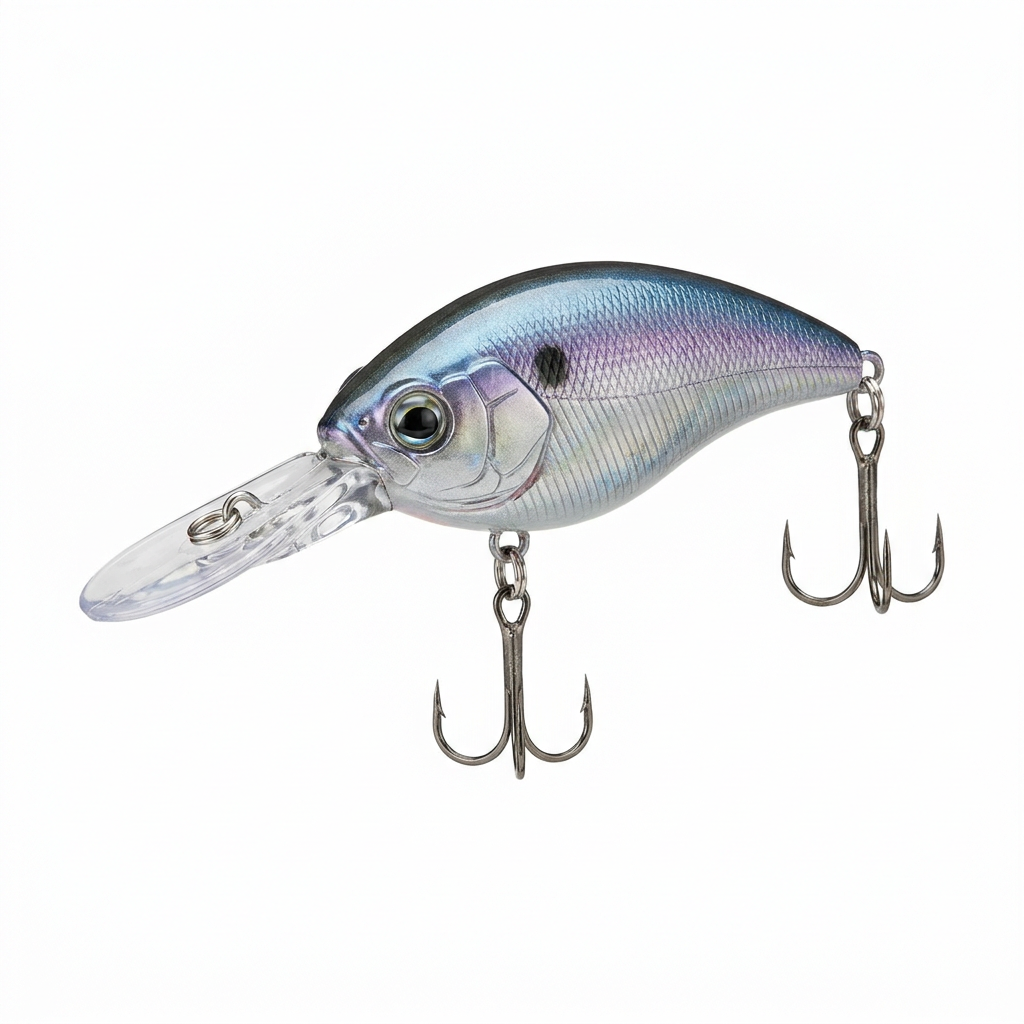
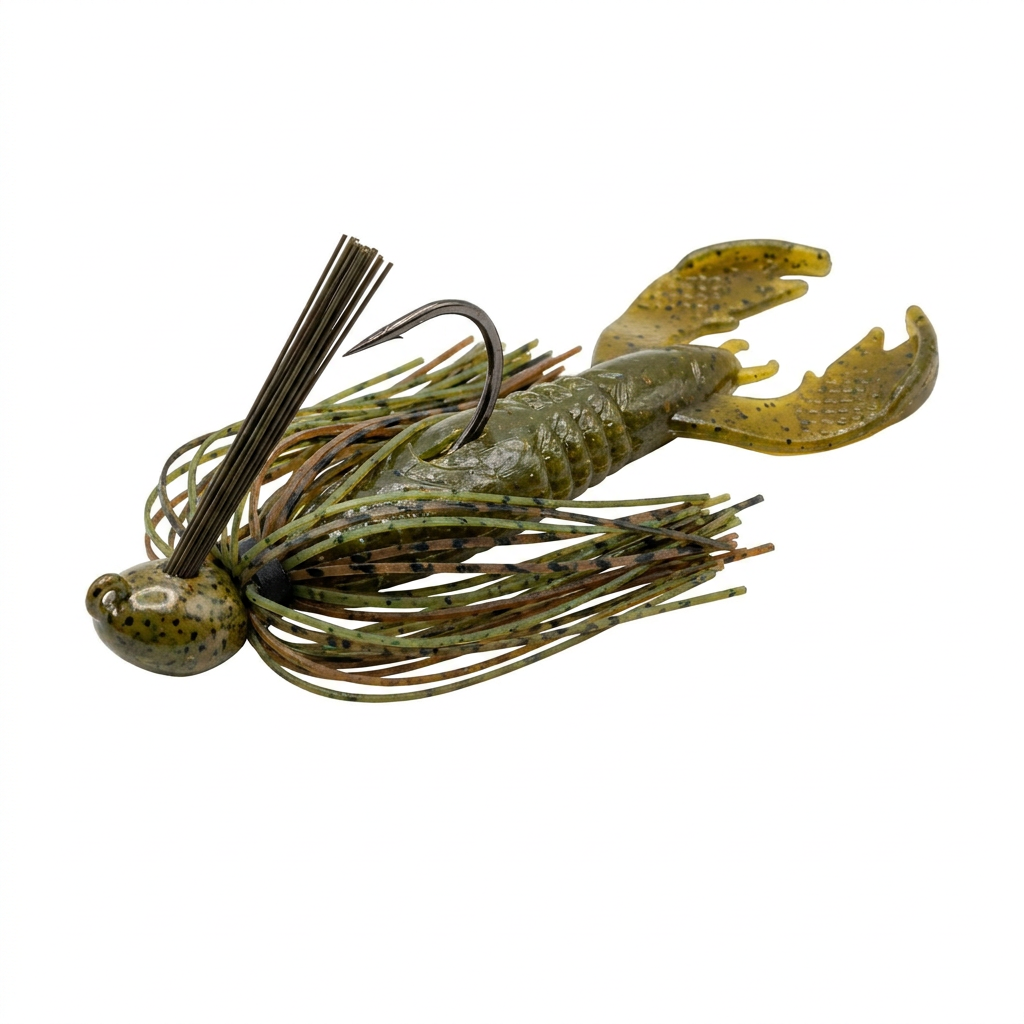
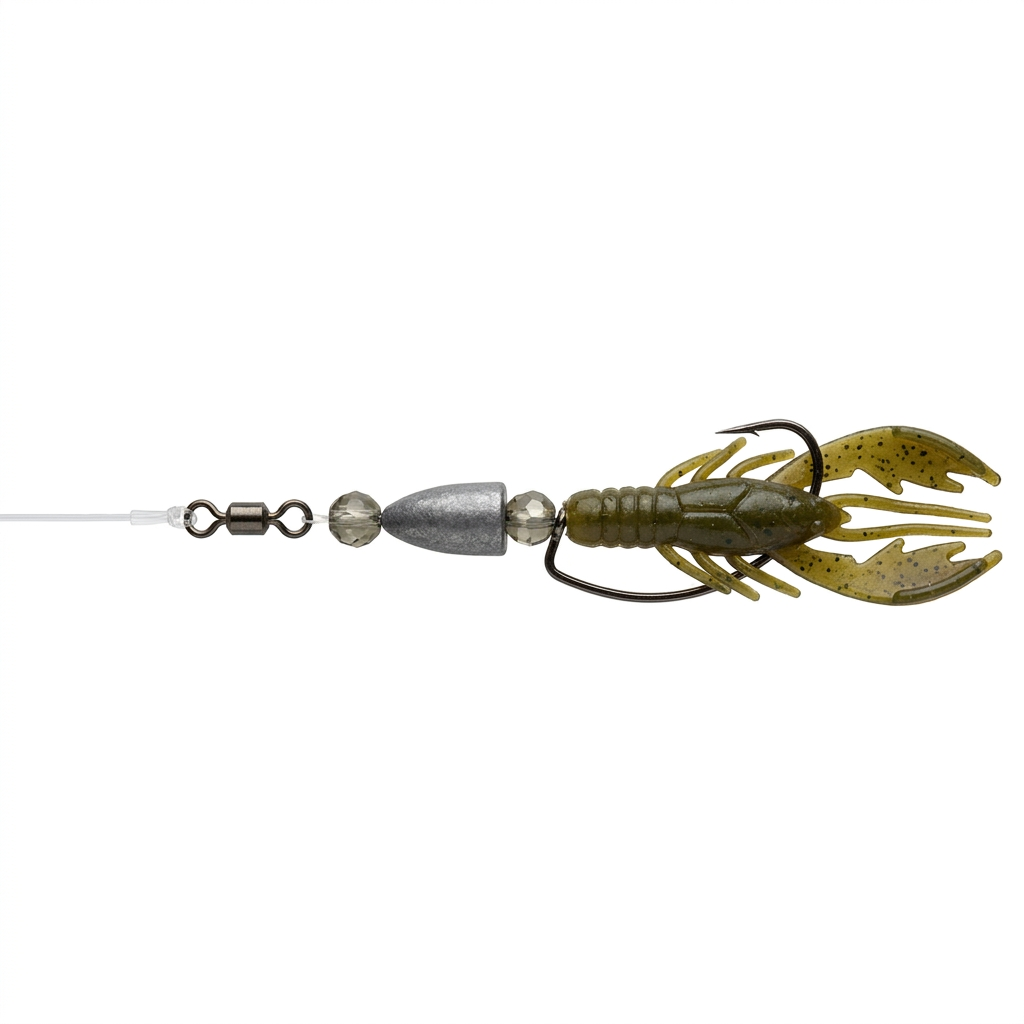
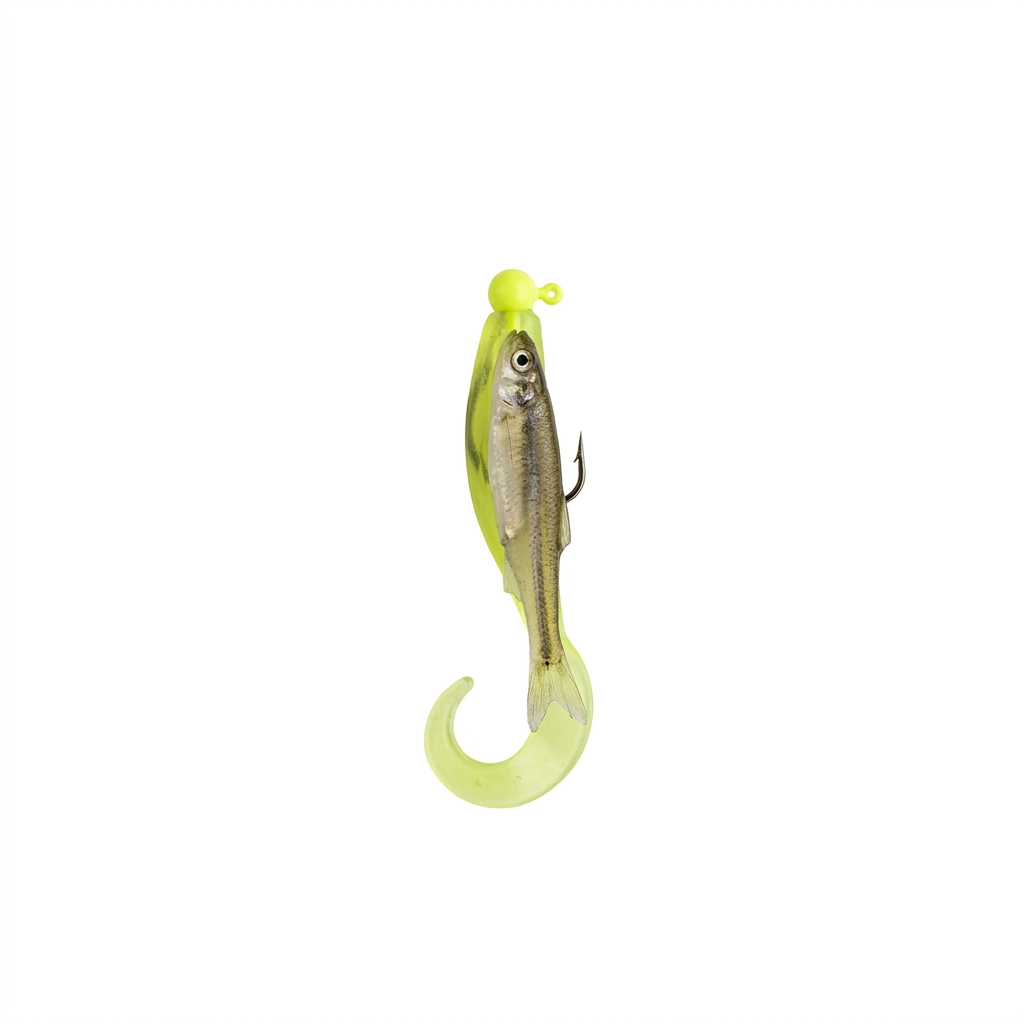
The right line matters as much as the lure. For the presentations that work on this lake, whether flipping timber, fishing main lake structure, or working deep brush, braid is the move. No stretch, more feel, and it lasts. Reaction Tackle is where I get mine.
About Lake Gaston
Lake Gaston sits on the Roanoke River along the Virginia-North Carolina border, stretching roughly 34 miles through Piedmont countryside from Roanoke Rapids to just below Kerr Lake. Dominion Energy operates the lake as part of its hydroelectric system, and the 20,000-acre reservoir has developed a loyal following among anglers from both states. The lake is characterized by a long main channel with numerous creek arms and coves, giving anglers a wide variety of habitats to explore. Water clarity tends to be moderate, with stained water common after heavy rain events in the upper sections and clearer conditions near the dam.
The striped bass fishery is Gaston's calling card. The lake sits just downstream of Kerr Lake, and the combined Roanoke River system below these two reservoirs has supported a self-sustaining landlocked striper population for decades. Stripers found in Gaston do not have access to saltwater and complete their entire life cycle in freshwater, which makes for a fascinating and resilient population. The fish grow large on a robust shad forage base, and trolling the main river channel is the primary method for targeting them year-round. Largemouth bass, crappie, channel catfish, bluegill, and white perch fill out a well-rounded fishery that draws anglers seeking more than just stripers.
The dual-state nature of Lake Gaston is important for anglers to understand before launching. The state line runs through the main body of the lake, meaning Virginia regulations apply in the northern sections and NC regulations in the southern. Both states require a valid fishing license and have separate size and bag limits for various species, including striped bass. It is the angler's responsibility to know which state waters they are fishing. VDGIF and the NC Wildlife Resources Commission both publish current regulation booklets, and checking before each trip is strongly recommended.
Access to Lake Gaston is well developed, with multiple public boat ramps managed by Brunswick and Mecklenburg counties in Virginia and Halifax and Northampton counties in North Carolina. The Virginia side has several marinas, campgrounds, and fishing supply stores. The town of Gaston sits near the dam on the VA side and serves as a convenient base for visiting anglers. Summer weekends can bring significant recreational boat traffic, particularly on the wider sections of the main lake. Early morning starts are strongly recommended for serious fishing, especially during the summer months when pleasure boating peaks.